Clear Sky Science · en
It is a matter of size—manipulating body size with virtual reality modulates reward sensitivity
Why Feeling Bigger Matters
Most of us think of body weight as something measured on a scale. But this study shows that how big we feel can quickly change the way our brains respond to rewards and to food—without any actual weight gain or loss. Using virtual reality to let people temporarily "inhabit" a larger or slimmer body, the researchers uncovered surprising shifts in learning from rewards, attraction to high-calorie foods, and hidden attitudes about body size. These findings hint that our mental picture of our body may quietly shape everyday choices, from what we eat to how we judge others.
Stepping Into a Different Body
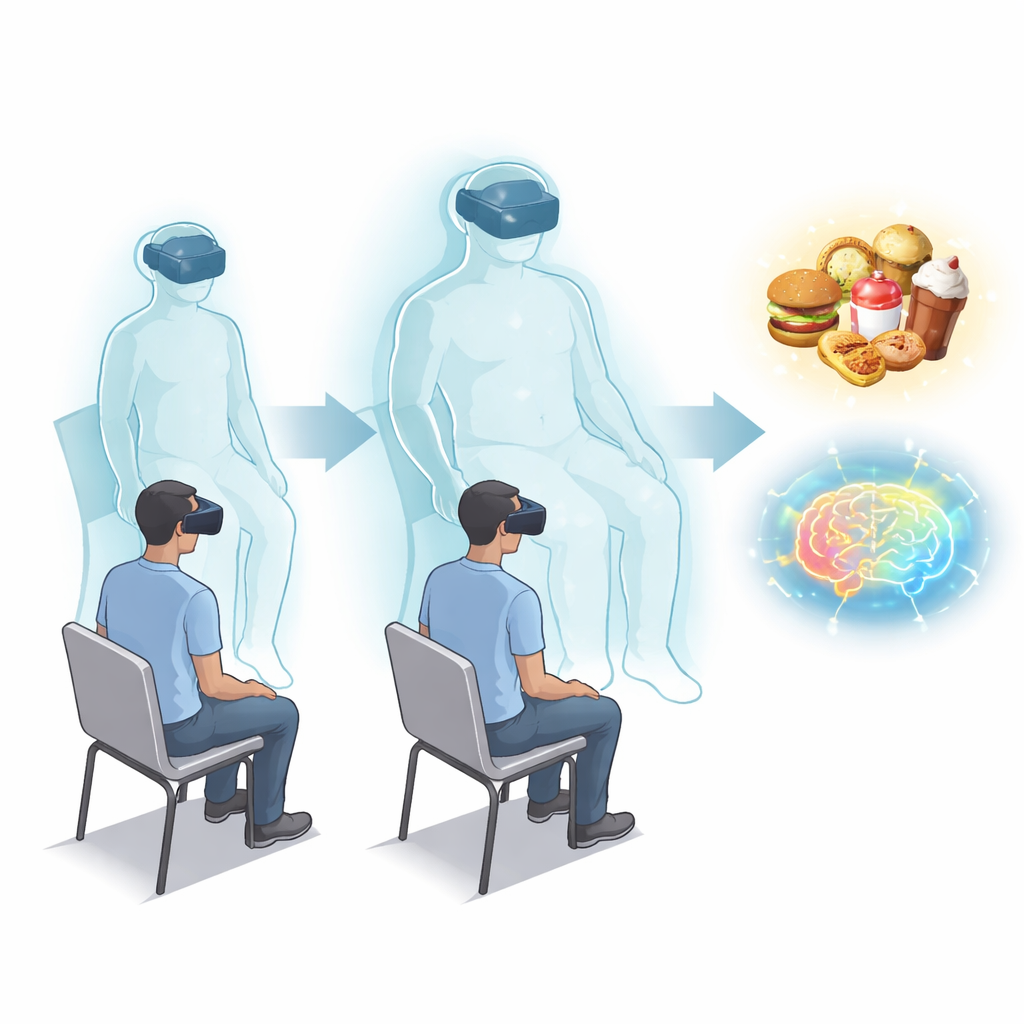
The researchers used a virtual reality "full body illusion" to let 35 young women experience owning a different-sized body. Participants sat in a headset and saw a virtual female body from a first-person view, aligned with their own posture. Gentle, carefully timed touches and visual cues made this virtual body feel like it was truly theirs. On one day, the avatar’s body was made about 15% larger than the participant’s real size; on another day, it was about 15% slimmer. Before and after each illusion, the team measured how big participants felt, how strongly they "owned" the virtual body, how they reacted to pictures of food, how they learned from rewards and punishments in a simple game, and how biased they were toward people of different body sizes.
Feeling Larger Changes Food Pull
The virtual reality trick worked: participants reported a strong sense of owning both the large and the slim avatars. Yet only the larger avatar actually changed how big they felt—their own hips seemed wider afterwards, and this effect was stronger in women with a higher body mass index (BMI), even though all were in the normal range. That change in perceived size had real behavioral consequences. When participants had just embodied the larger body, they became more likely to "pull" high-calorie foods, such as pizza or chocolate, toward themselves in a reaction-time task, revealing a stronger automatic attraction to these foods. No comparable shift appeared for low-calorie foods, nor after embodying the slimmer avatar.
A Bigger Body Boosts Reward Learning
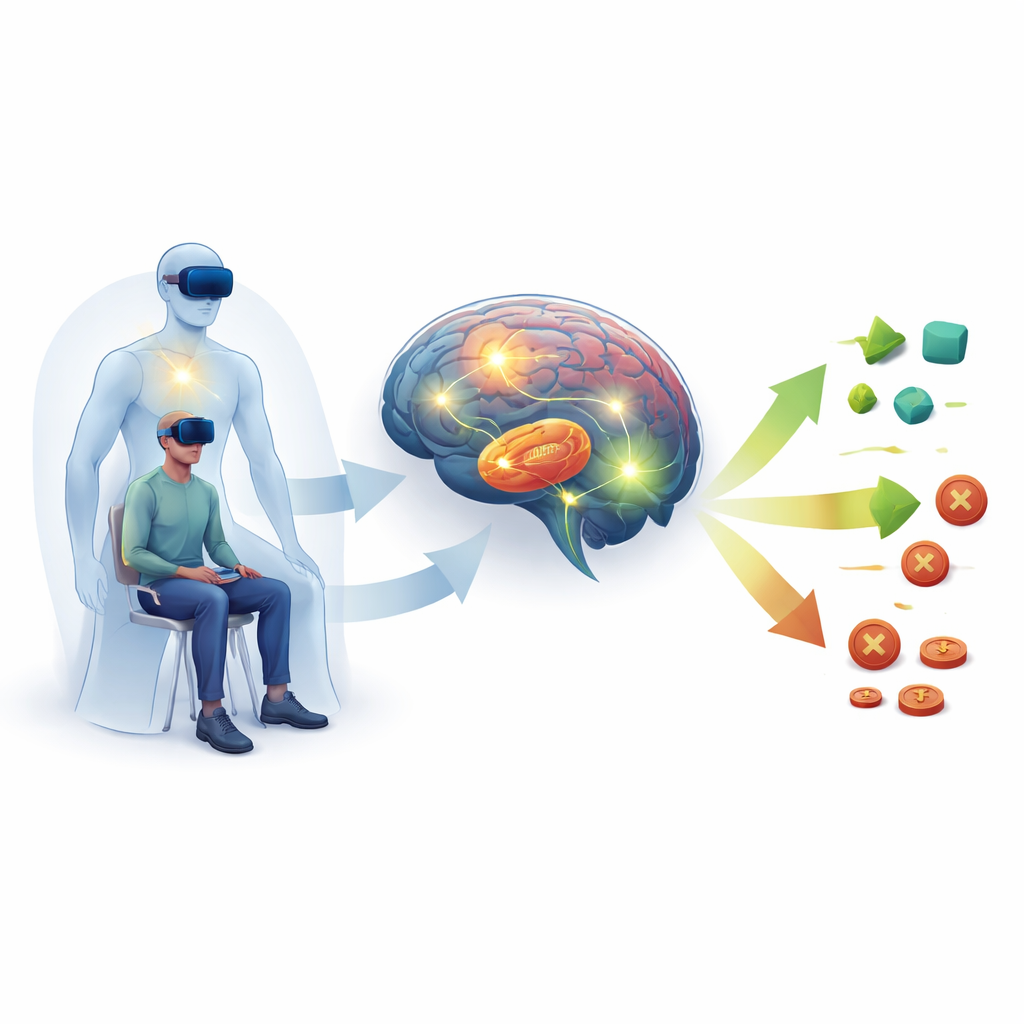
The most striking effect showed up in a learning game where participants had to figure out which choices led to gaining or losing points. Normally, people in this task tend to learn a bit faster from avoiding punishment than from getting rewards. That pattern held at baseline and after the slim-body illusion. But after embodying the larger avatar, the balance flipped: participants, especially those with higher BMIs, became more responsive to rewards than to punishments and learned more quickly from positive outcomes. In other words, simply feeling as if one’s body was larger shifted the brain’s reward system toward seeking gains rather than avoiding losses.
Seeing Bodies Differently, Regardless of Size
The study also probed weight stigma—the often unconscious tendency to associate larger bodies with negative traits. Using an implicit association test, the researchers found that after embodying either a larger or a slimmer avatar, participants showed reduced automatic negativity toward larger bodies. This drop in bias happened regardless of avatar size, suggesting that taking on a different body in virtual reality, even briefly, can soften harsh social stereotypes. Experiencing another body from the inside may foster greater empathy and acceptance of body diversity.
What This Means for Everyday Life
This work suggests that it is not only our actual weight, but also how we experience our bodies, that shapes how strongly we are drawn to rewarding things like rich food and how we learn from positive outcomes. A short-lived illusion of being bigger made people feel larger, increased their pull toward high-calorie foods, and tilted learning toward rewards, while also easing negative snap judgments about larger bodies. For a layperson, the key message is that body and mind are deeply intertwined: changing the way the body is represented in the brain—even virtually and temporarily—can nudge motivation, habits, and social attitudes. In the future, carefully designed virtual experiences might help researchers better understand eating behavior and could even inspire tools to reduce weight stigma and support healthier relationships with food and body image.
Citation: Pia, L., Freedberg, M., Pyasik, M. et al. It is a matter of size—manipulating body size with virtual reality modulates reward sensitivity. Sci Rep 16, 10853 (2026). https://doi.org/10.1038/s41598-026-45811-8
Keywords: virtual reality, body image, reward learning, eating behavior, weight stigma