Clear Sky Science · en
The combined ADHD profile faces the greatest risk of delay, depletion and disengagement in university students
Why this matters for students and families
Starting university can be challenging for anyone, but it is especially demanding for students who live with attention and self-control difficulties. This study looks closely at how different patterns of attention-deficit/hyperactivity disorder (ADHD) symptoms show up in everyday student life, from last‑minute cramming to constant tiredness and even thoughts of dropping out. By tracking how these symptom patterns relate to delay, perfectionism, and mental exhaustion, the research helps explain why some students struggle more than others—and where hidden strengths may also lie.
Different kinds of attention difficulties
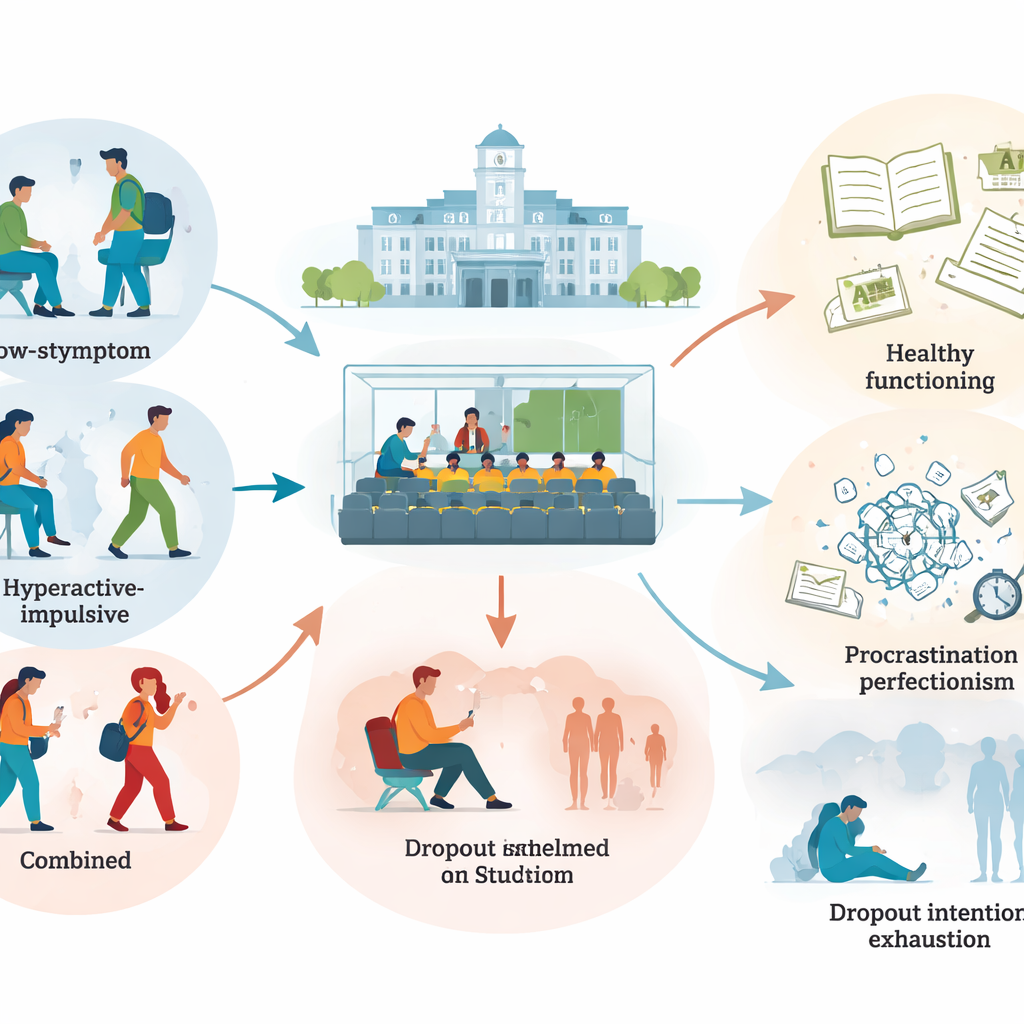
The researchers surveyed 1,879 Hungarian university students aged 18 to 35 using online questionnaires. Rather than simply labeling people as having ADHD or not, they grouped students into four profiles based on two symptom dimensions: inattention (such as drifting off or losing track) and hyperactivity‑impulsivity (such as restlessness or acting quickly without thinking). This produced a Combined group (high on both), an Inattentive group, a Hyperactive‑Impulsive group, and a Low‑symptom group. The team then examined how these four profiles differed on six key study‑related experiences: two types of procrastination, two types of perfectionism, feelings of mental depletion, and intention to drop out.
When delay becomes harmful—or helpful
Procrastination is usually seen as a bad habit, but the study distinguishes between maladaptive delay—putting things off and then feeling stuck—and adaptive delay, where a person intentionally waits and then works effectively under pressure. Students in the Combined ADHD group showed by far the highest levels of maladaptive procrastination, reporting chronic postponement and difficulty getting started despite consequences. In contrast, the Hyperactive‑Impulsive and Low‑symptom groups scored highest on adaptive procrastination. For them, waiting until closer to a deadline often went hand‑in‑hand with actually finishing tasks, suggesting that carefully timed delay can work as a coping strategy rather than a flaw.
Perfectionism and the pressure to be flawless
Perfectionism also came in two flavors. Maladaptive perfectionism involves harsh self‑criticism and worry over mistakes, whereas adaptive perfectionism reflects aiming high while staying organized and realistic. The Combined ADHD group again stood out: they showed the strongest levels of both maladaptive and adaptive perfectionism. This pattern hints that some students with many ADHD symptoms may respond to their difficulties by trying extra hard to control their work, which can bring both strengths (high standards, motivation) and costs (self‑doubt, stress). By comparison, students with few ADHD symptoms had the lowest perfectionism scores, and those in the Inattentive group looked more similar to low‑symptom peers than to the more complex Combined group.
The hidden toll of mental fatigue and dropout risk
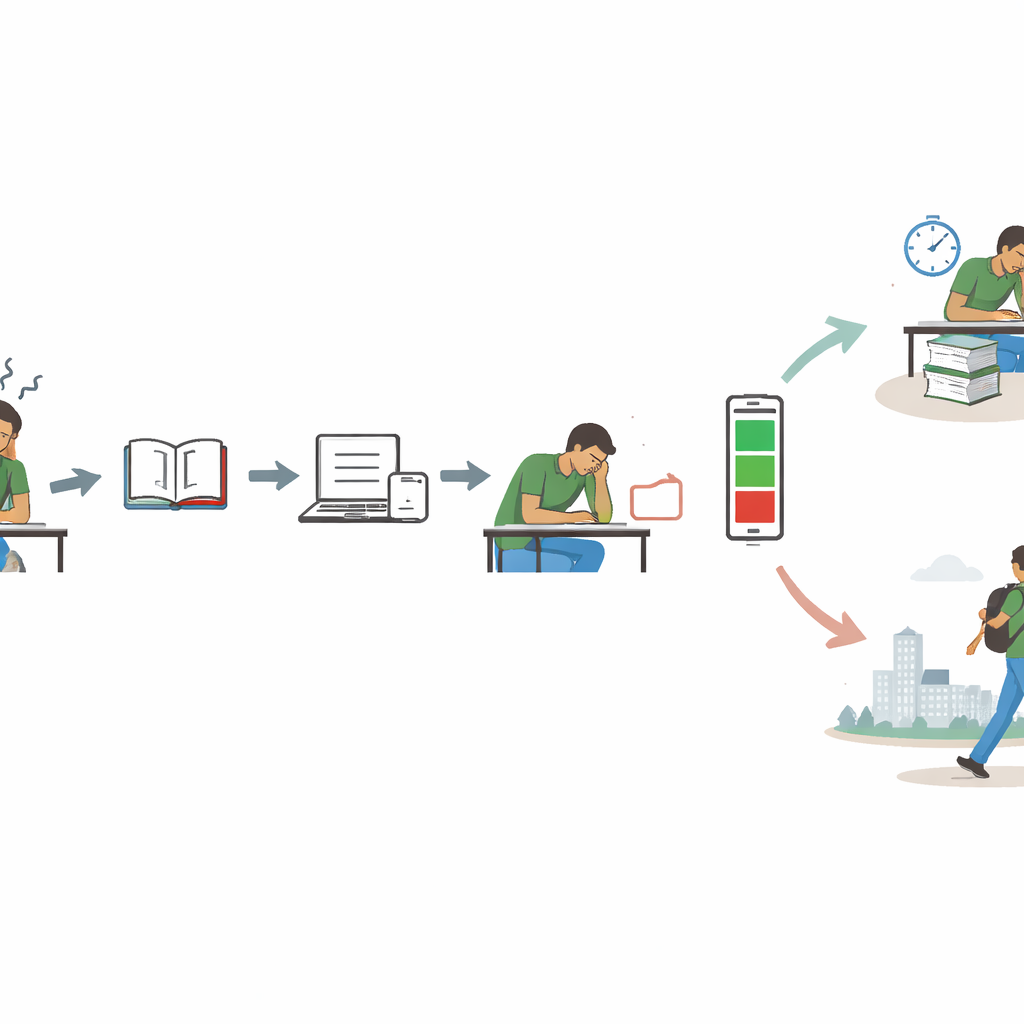
One of the clearest findings involved ego depletion—the sense of being mentally drained after long periods of self‑control. Students in the Combined group reported the highest depletion scores, followed by the Inattentive and then the Hyperactive‑Impulsive groups, with the Low‑symptom group reporting the least fatigue. The same pattern appeared for dropout intention: the more severe and mixed the ADHD symptoms, the more often students thought about leaving their studies. These differences remained even after taking age and biological sex into account. Women tended to report slightly more perfectionism, depletion, and dropout intention than men, but these gaps were small. Together, the results suggest that for many students, the real burden of ADHD is not only distraction but the constant effort needed to keep going.
What this means for support and success
Overall, the study shows that university students with the Combined ADHD profile—high in both inattention and hyperactivity‑impulsivity—face the greatest risk of harmful delay, exhaustion, and disengagement from their courses. At the same time, the stronger adaptive procrastination seen in some other ADHD profiles suggests that deliberate use of time pressure can sometimes help students stay engaged. For families, educators, and counselors, these findings argue for going beyond simple checklists of symptoms. Asking about styles of procrastination, perfectionism, and feelings of mental depletion can reveal who is most at risk and who may already be using clever, if unconventional, strategies. Tailored support that reduces mental fatigue and encourages strategic, rather than chaotic, delay may help more students with ADHD symptoms reach graduation instead of burning out along the way.
Citation: Müller, V., Pikó, B. The combined ADHD profile faces the greatest risk of delay, depletion and disengagement in university students. Sci Rep 16, 10353 (2026). https://doi.org/10.1038/s41598-026-41256-1
Keywords: ADHD in university students, academic procrastination, perfectionism and stress, student burnout, college dropout risk