Clear Sky Science · en
The differences in levels of poly- and perfluoroalkyl substances (PFASs) in the hair of wild terrestrial mammals with various feeding behaviour
Why animal hair can reveal hidden pollution
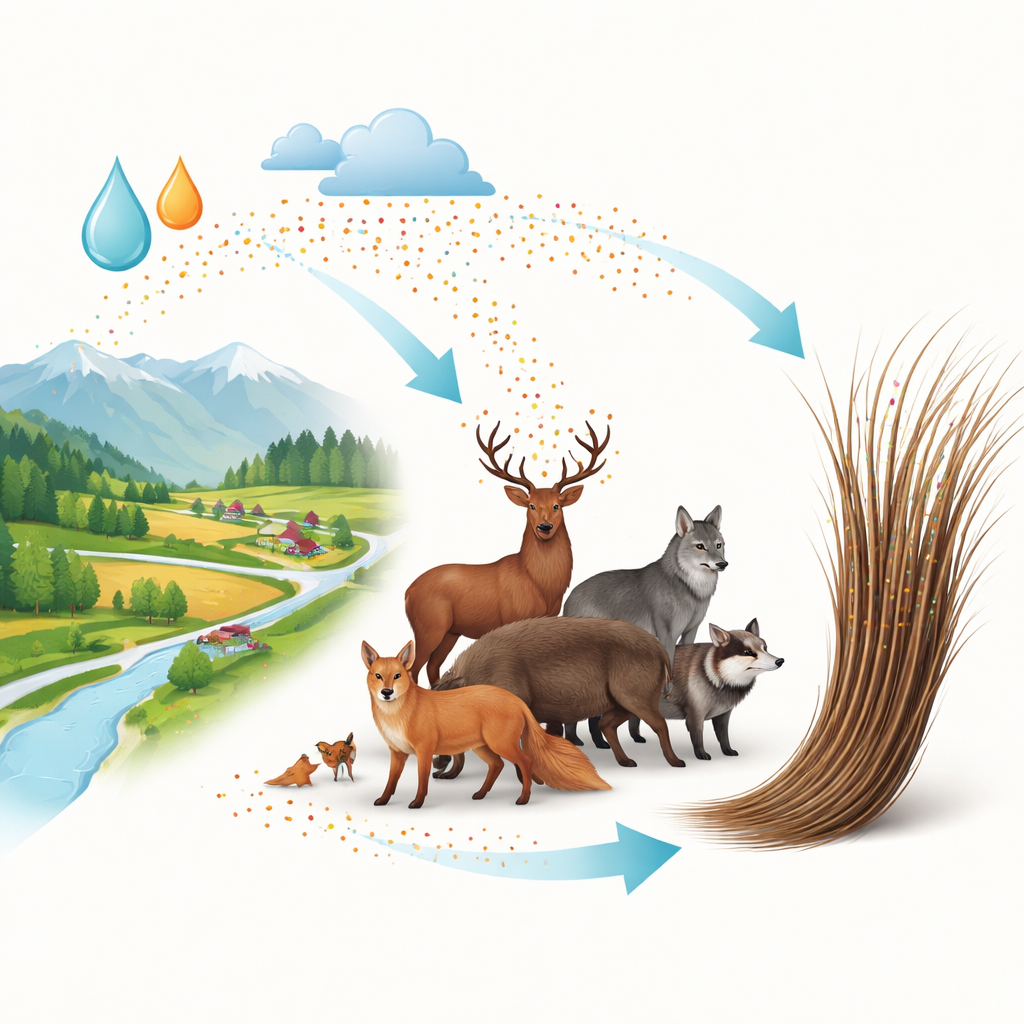
Invisible industrial chemicals are spreading through the air, water, and soil, and many of them linger in the environment for decades. Among the most worrying are PFAS, often called “forever chemicals,” which are used in everyday products from nonstick pans to raincoats. This study asked a simple but powerful question: can a few strands of hair from wild animals tell us how much of these chemicals they are exposed to, and does diet—eating plants versus meat—change that exposure?
Everyday chemicals that never go away
PFAS are man‑made compounds prized for being tough: they resist heat, water, and grease. The same durability that makes them useful also means they do not break down easily once released into the environment. Over decades of use, PFAS have leaked out during manufacturing, use, and disposal of countless products. They now show up in rivers and lakes, in soil and plants, and even in remote places like Antarctica. Studies in people and laboratory animals link PFAS to problems in the hormone, immune, heart, and reproductive systems, prompting scientists to track how these chemicals move through ecosystems.
Using hair as a long‑term record
Most research on PFAS has focused on humans or aquatic animals and has relied on blood or urine. These fluids reflect only recent exposure and can change quickly. Hair grows slowly and can trap chemicals over weeks or months, offering a kind of exposure timeline. Hair samples are also easy to cut, store, and even collect from dead animals, which is especially useful when working with protected wildlife. Despite these advantages, very few studies had examined PFAS in the hair of wild land mammals, and none had directly compared animals with different feeding habits.
What the researchers measured in wild mammals
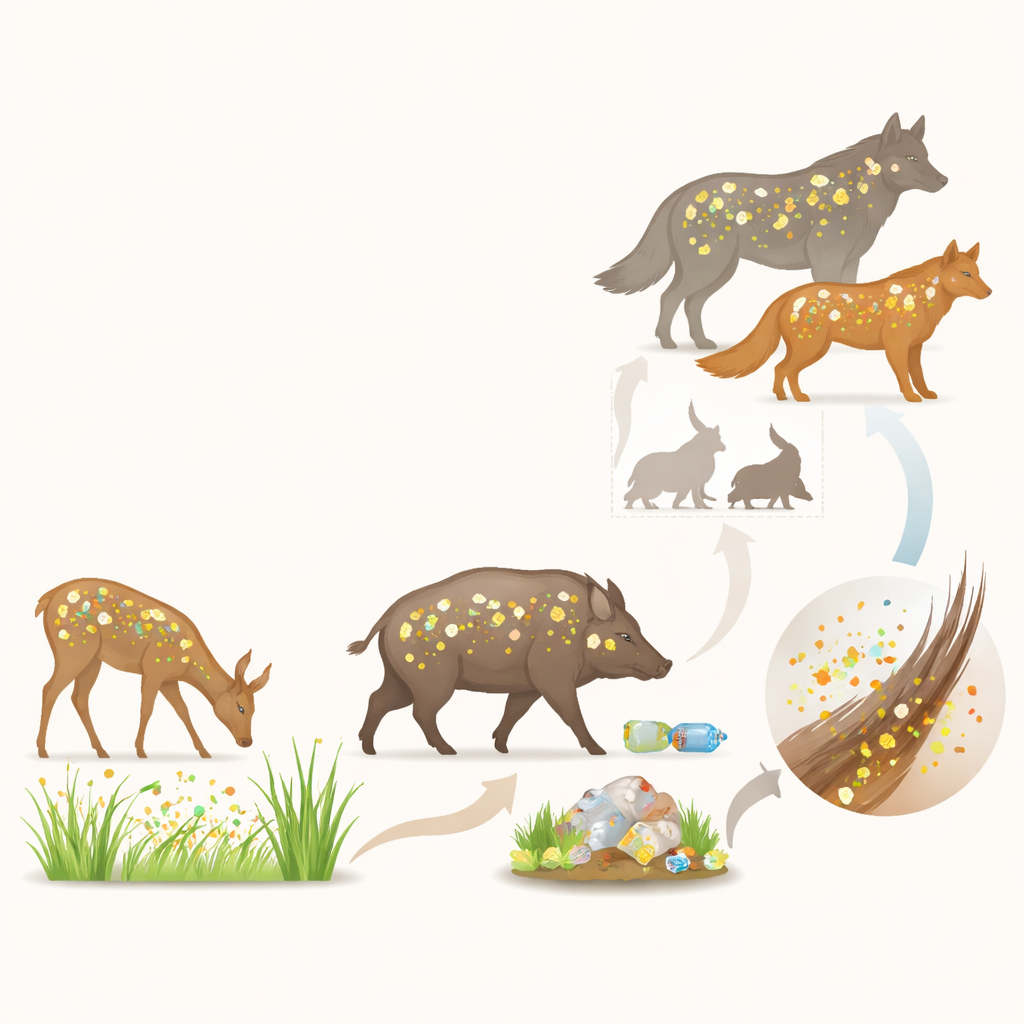
The team collected hair from 58 wild mammals found in Italy’s Abruzzo region after road accidents. These animals fell into three groups: plant‑eating herbivores (mostly deer), meat‑eating predators (wolves, foxes, badgers), and omnivores that eat both plants and animals (wild boar). In the laboratory, the hair was carefully washed to remove contamination stuck to the outside, cut into tiny pieces, and analyzed with a highly sensitive method that can detect trace amounts of 12 different PFAS. Every single animal had at least one PFAS present in its hair above the level that could be reliably measured.
Predators at the top carry the greatest burden
When the researchers compared results across feeding groups, a clear pattern emerged. Overall PFAS levels were highest in predators, lower in omnivores, and lowest in herbivores. For several long‑chain PFAS—forms that tend to build up more strongly in living tissues—predators had significantly higher concentrations than herbivores. This suggests that chemicals climb the food chain: plants take up small amounts, herbivores eat many plants, and predators then consume the herbivores, concentrating PFAS in their own bodies over time. The mix of PFAS seen in hair, dominated by these long‑chain types, supports the idea that diet, rather than direct contact with products, is the main source for these wild species.
Why this matters for wildlife and people
Although the PFAS levels in wild mammals’ hair were generally lower than those reported for humans and pets, even small amounts of these chemicals may affect health, especially when combined with other pollutants. The study cannot yet say exactly how hair levels translate into damage inside the body, but it strengthens the case that hair is a practical, non‑invasive way to monitor long‑term chemical exposure in wildlife. By showing that predators accumulate more PFAS than herbivores, the work also highlights biomagnification—the tendency of some contaminants to become more concentrated at the top of food chains. Understanding this process helps scientists and regulators gauge risks not only for wild animals, but ultimately for people who share the same environments and resources.
Citation: Gonkowski, S., Menozzi, A., Petrini, A. et al. The differences in levels of poly- and perfluoroalkyl substances (PFASs) in the hair of wild terrestrial mammals with various feeding behaviour. Sci Rep 16, 11826 (2026). https://doi.org/10.1038/s41598-026-39984-5
Keywords: PFAS, wildlife pollution, biomagnification, hair biomonitoring, endocrine disruptors