Clear Sky Science · en
Knowledge, attitudes, and practices of Brazilian physicians regarding abortion care: a nationwide cross-sectional study
Why this study matters
Abortion is highly restricted in Brazil, yet many pregnancies still end this way, sometimes in unsafe conditions that threaten women’s health and lives. In this context, doctors who work in maternity hospitals are gatekeepers for the care women receive—whether a miscarriage is treated promptly and respectfully, or a legal abortion is quietly blocked. This nationwide study asks a simple but crucial question: what do Brazilian physicians actually know, believe, and do when they care for women facing abortion or pregnancy loss?
How the study was carried out
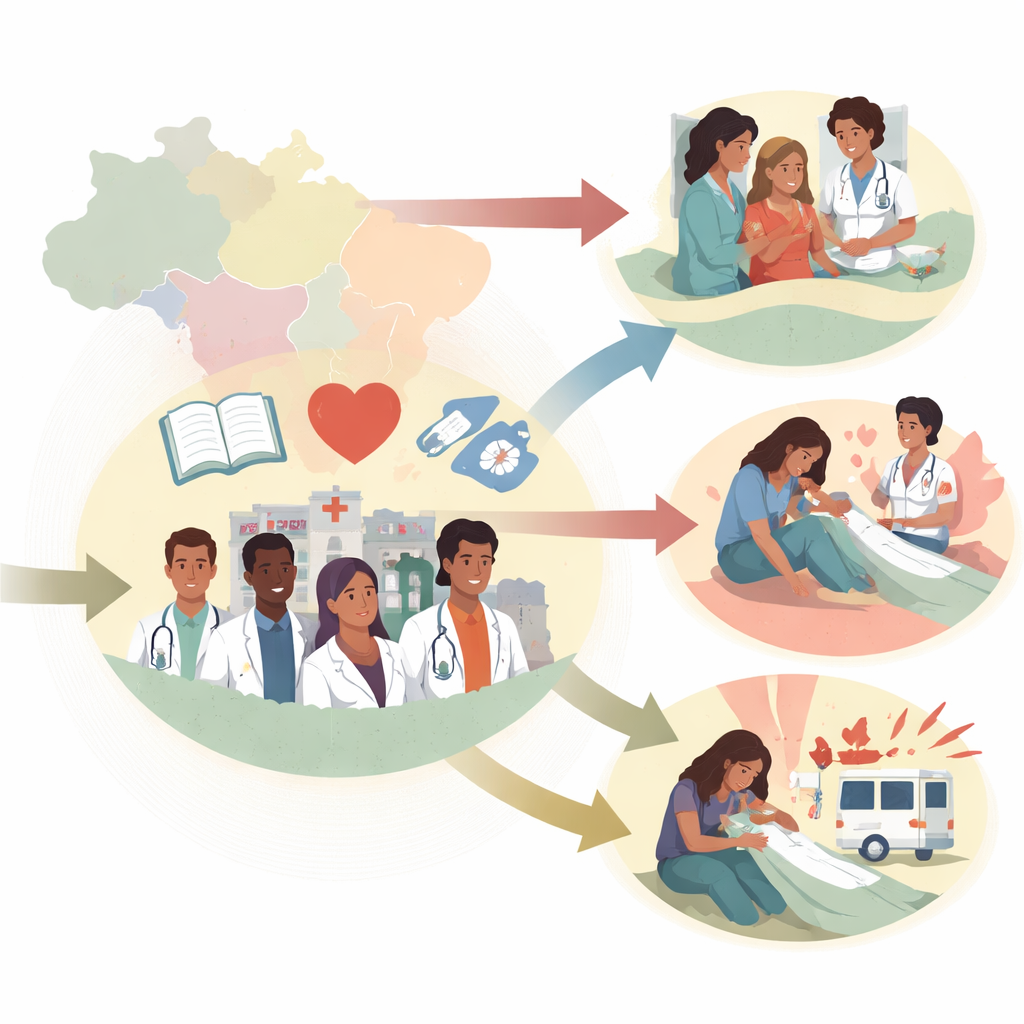
To answer this, researchers surveyed 1,267 doctors working in public and private maternity hospitals across all regions of Brazil between 2021 and 2025. These physicians provide day‑to‑day care for childbirth and abortion-related admissions. The team used an anonymous, self‑completed questionnaire so that participants could respond more freely on such a sensitive topic. The questions explored three areas: knowledge of national and international guidelines, personal attitudes toward when pregnancy termination should be allowed, and real‑world care practices in their hospitals. The results were weighted to reflect different hospital sizes and regions, building a national snapshot of how abortion care is handled on the front lines.
What doctors know and how they are trained
The survey revealed major gaps in professional training and knowledge. While almost all physicians had learned about the use of one common drug (misoprostol) and about surgical curettage during medical school, only about three‑quarters had training in manual vacuum aspiration, a safer and less invasive method for early pregnancy evacuation. Even fewer had in‑service training on legal abortion care once they were already practicing. About one-third of doctors did not know Brazil’s official standards for humane abortion care, and roughly half misunderstood the rules for “conscientious objection” — when a doctor refuses to perform a legal abortion. Knowledge about the safe use of misoprostol outside hospital walls, which global guidelines support for early pregnancies under proper supervision, was particularly low.
What doctors believe about women’s access
Physicians’ attitudes were generally conservative. Around nine in ten agreed with abortion in situations already allowed by Brazilian law, such as risk to the woman’s life or severe brain malformation in the fetus. But support dropped sharply when asked about expanding legal reasons—such as contraceptive failure, financial hardship, or impact on a woman’s studies or work—usually remaining below one in five. For cases where the woman’s physical or psychological health might be harmed, fewer than half supported broader access. Many doctors believed in the advantages of manual vacuum aspiration but were less comfortable with the idea of women using abortion medications outside hospitals. About three-quarters said they would keep professional confidentiality when caring for a woman suspected of having ended a pregnancy, yet only half thought that conscientious objection should be used only if another professional is available to help the patient.
What happens in hospitals
Everyday practice did not always match best medical evidence. Only about 60% of doctors reported that their hospital had a written abortion-care guideline, and just over half said these were followed routinely. Manual vacuum aspiration was always available in only two out of five services, even though more than 90% of doctors used it when they could—suggesting simple lack of supplies, not resistance to the technique. Most physicians had treated women who likely induced their own abortions, but fewer than half described feeling empathy; many acknowledged that hospitalized women face prejudice from staff. Around one in ten said women were reported to legal authorities in at least some cases. About 60% of doctors had ever provided legal abortion care, yet half worked in services where colleagues frequently invoked conscientious objection, and some hospitals required police reports or court orders even when the law did not.

Regional differences across Brazil
The study also highlighted important contrasts among Brazil’s five major regions. The North reported the highest share of hospitals offering legal abortion, but it also had more physicians who never joined abortion teams, more frequent reporting of women to authorities, and a higher proportion of professionals for whom religion was central in life. The Southeast and South, with more large and mixed public‑private hospitals, had slightly better availability of certain techniques but still showed strong resistance to expanding legal grounds for termination. Differences in staff demographics, type of employment, and hospital ownership help explain some of these patterns, but in all regions, many doctors simply did not know how their own services were organized for legal abortion care.
What this means for women’s health
For a lay observer, the take‑home message is stark: even when abortion is legal in Brazil, access to safe and respectful care depends heavily on which hospital a woman reaches and which doctor happens to be on duty. Gaps in training, shortages of safer equipment, and moral objections—often used without safeguards—combine with stigma to limit care and sometimes expose women to unnecessary risk. The authors conclude that expanding safe abortion access in Brazil will require more than just laws on paper. It will mean updating drug approvals, ensuring hospitals stock safer tools like manual vacuum aspiration, involving nurses and other health workers in care, and training professionals to respect women’s sexual and reproductive rights as a core part of medical practice, not an optional extra.
Citation: Domingues, R.M.S.M., Hamui, R.M., Dias, M.A.B. et al. Knowledge, attitudes, and practices of Brazilian physicians regarding abortion care: a nationwide cross-sectional study. Sci Rep 16, 10253 (2026). https://doi.org/10.1038/s41598-026-39934-1
Keywords: abortion care, Brazilian physicians, reproductive rights, unsafe abortion, manual vacuum aspiration