Clear Sky Science · en
Implementation of the NHS England Lung Cancer Screening Programme over 5 years
Why lung checks matter
Lung cancer is the leading cause of cancer death, largely because it is often found only after symptoms appear. This article describes how England has begun offering special low-dose chest scans to people at higher risk, aiming to find lung cancer early when it is far more treatable. Over five years, this national program has shown that large-scale screening is not only possible within a busy health service, but can shift diagnoses toward earlier stages and reach many people in deprived communities who have historically missed out on preventive care.
How the new lung check works
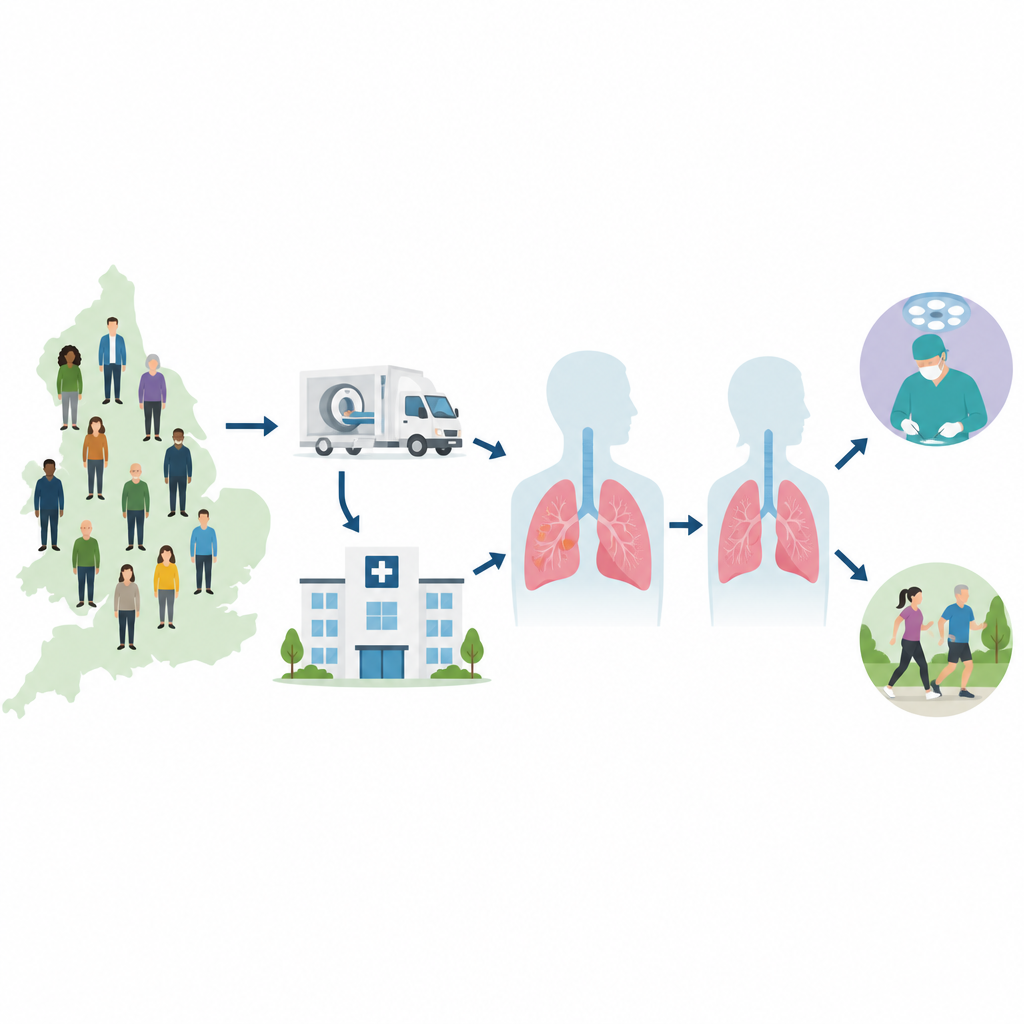
The NHS England Lung Cancer Screening Programme invites people aged 55 to 74 who have ever smoked to a "lung health check." Most of these appointments happen by phone, followed by a face-to-face visit if the person appears to be at higher risk. Staff ask about smoking history, general health and any chest symptoms, then use prediction tools to estimate the chance of developing lung cancer. Those whose risk passes a set threshold are offered a low-dose CT scan of the chest, usually on a mobile scanner in the community. These scans use much less radiation than standard CT and are read by trained lung specialists who look for tiny spots in the lungs that might be cancer.
Reaching millions and catching cancer early
Between 2019 and March 2025, more than 2.5 million people in England were invited for a lung health check, and nearly 1.23 million attended. About half of those seen were judged high risk, and more than 528,000 went on to have a baseline CT scan. From these scans and their follow-up rounds, 7,193 lung cancers were diagnosed. Crucially, almost three in four of these screen-detected cancers were found at stage 1 or 2, when cure is much more likely, compared with the later stages usually seen in routine care. National cancer registry data show that, since the program started, the overall share of lung cancers caught at an early stage has risen across England, suggesting that screening is reshaping the stage at which people first receive a diagnosis.
Who takes part and who is left behind
The researchers looked closely at who responded to invitations in the early rollout sites. Just under 40 percent of eligible people came for a lung health check, and this varied by age, sex, ethnic background and level of deprivation. People living in the least deprived areas were more likely to attend the first appointment, but those from the most deprived areas were more likely to go on to scanning once they were found to be at higher risk. At the same time, people from ethnic groups other than white were substantially less likely to attend a check or scan, even when they were eligible. Women were slightly less likely than men to undergo scanning when classed as high risk, but among those scanned, women and older adults were more likely to be diagnosed with cancer. These patterns highlight both the success in reaching hard-hit communities and the need to address gaps in participation.
Findings beyond lung cancer
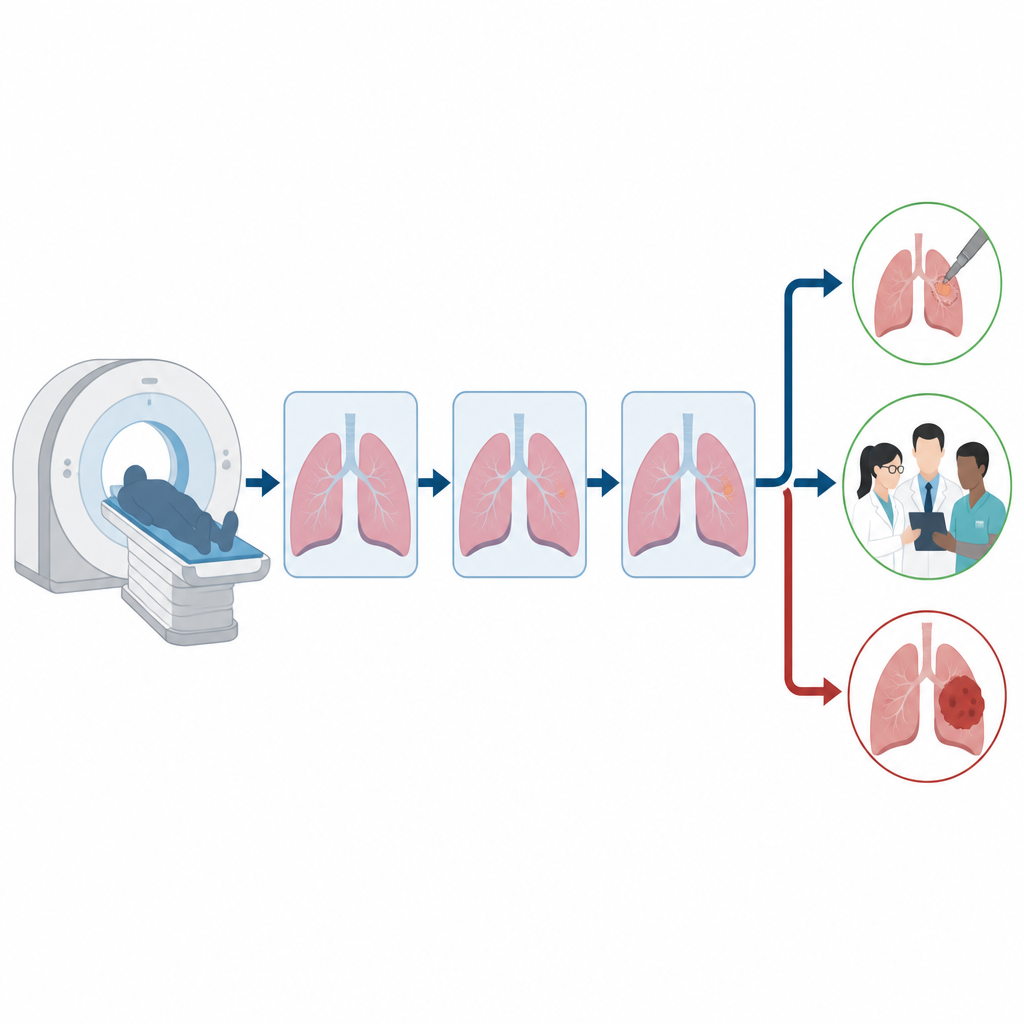
Low-dose CT scans can reveal more than just lung tumors. In over 114,000 baseline scans from the initial phase, almost half showed calcium in the heart’s arteries, and smaller groups had signs of lung damage such as emphysema or conditions affecting other organs. The program developed guidance so that only findings likely to help patients are acted upon, aiming to avoid unnecessary worry and extra tests. For example, moderate or severe heart artery calcification can trigger a reminder to primary care teams to review heart risk prevention, while very minor changes may simply be noted. The authors argue that managing these extra findings carefully is essential to keep the program safe, efficient and acceptable for both patients and clinicians.
What this means for people and health systems
Overall, the NHS England experience shows that a national lung cancer screening service can be rolled out quickly using a single shared protocol, mobile scanning, phone-based checks and strong central support. Early data indicate that this approach is shifting lung cancer toward earlier stages at diagnosis, especially in more deprived areas, and doing so within real-world pressures such as staff shortages and the COVID-19 pandemic. The program still faces challenges, including lower take-up in some communities and the need for more surgery and cancer treatment capacity. However, the authors suggest that the English model offers a practical blueprint for other countries that want to introduce lung cancer screening and adapt it to their own health systems.
Citation: Lee, R.W., Nair, A., Balata, H. et al. Implementation of the NHS England Lung Cancer Screening Programme over 5 years. Nat Med 32, 1817–1826 (2026). https://doi.org/10.1038/s41591-026-04292-y
Keywords: lung cancer screening, low-dose CT, early detection, public health programme, NHS England