Clear Sky Science · en
Matcha alleviates sneezing response in a murine model of allergic rhinitis
A cup of tea and a quieter nose
For millions of people with seasonal allergies, a simple sneeze can signal weeks of itchy eyes, runny noses, and restless nights. This study asks a surprisingly everyday question with serious science: could drinking matcha, the vivid green powdered tea, calm allergy-related sneezing? Using a carefully controlled mouse model of hay fever–like symptoms, the researchers explore whether matcha changes the immune system, the gut’s bacteria, or the nerves that trigger sneezes—and uncover a new way this traditional drink may soothe the nose.
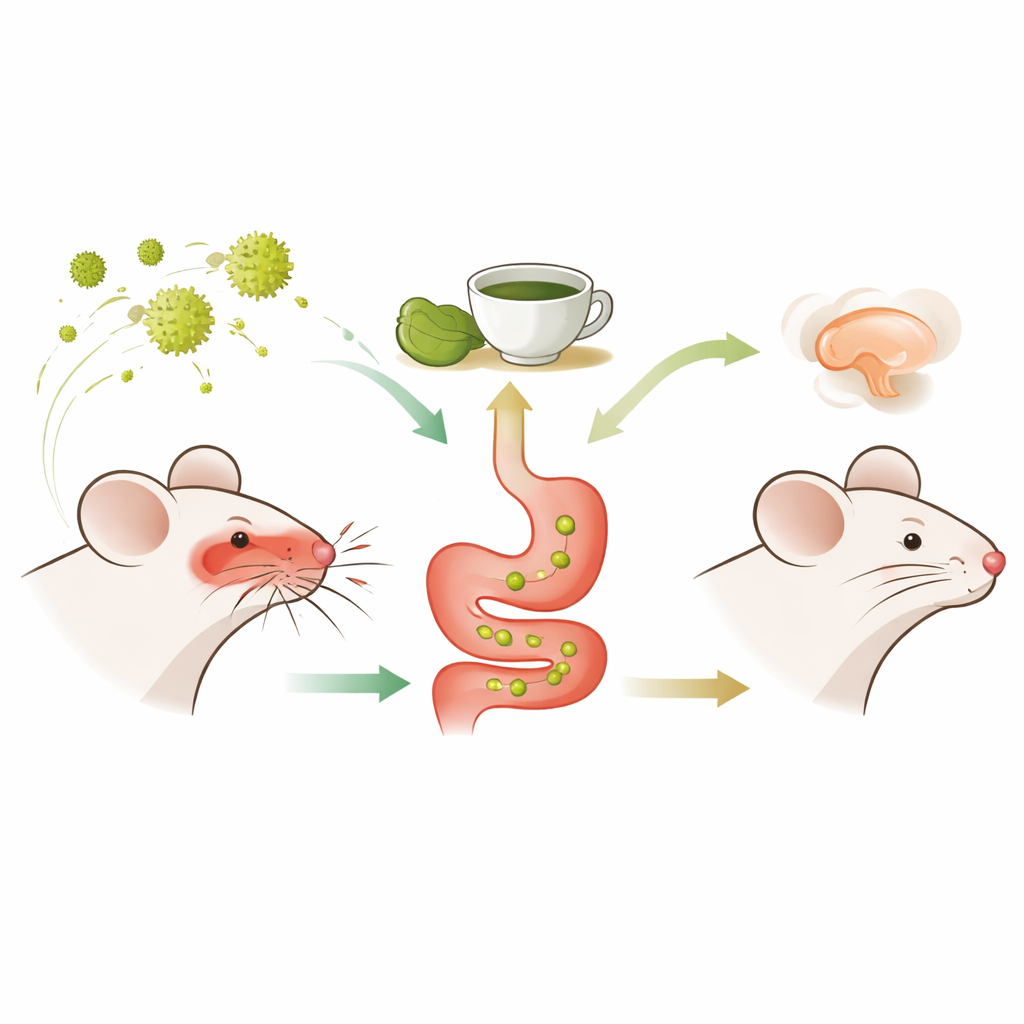
From pollen-like triggers to sneezing mice
To mimic human hay fever, the team sensitized mice to ovalbumin, a standard stand-in for airborne allergens, and then repeatedly exposed their noses to it. As expected, the animals developed an “immediate nasal response,” measured by bursts of sneezing right after allergen exposure, and “nasal hyperresponsiveness,” an exaggerated sneeze response to histamine, a common irritant. Mice that regularly received hot water–extracted matcha by mouth, alongside the solid tea residue, sneezed far less in both situations. Importantly, the matcha-treated mice maintained normal weight and overall health, showing that the tea did not simply weaken them or make them generally less reactive.
Immune defenses stay the same
Allergic sneezing is often blamed on antibodies called IgE and on inflammatory cells that surge into the nasal tissues. Yet matcha’s benefits seemed to bypass these classic pathways. Blood levels of total IgE and allergen-specific IgE rose in immunized mice as expected, but matcha did not lower them. Similarly, the tea did not reduce the numbers of eosinophils and other inflammatory cells that had moved into the nasal cavity. In a separate test of skin-based allergic swelling—a passive cutaneous anaphylaxis model that directly probes IgE–mast cell activity—matcha again had no effect. Even CD4 T cells, key immune players in this allergy model, were not broadly suppressed; if anything, matcha slightly enhanced their growth in culture and nudged a few genes linked to iron handling and cell proliferation, rather than genes tied to inflammation.
Gut microbes shift with allergy, but not with matcha
Because tea and other plant foods can reshape the community of bacteria in the intestines, the researchers examined whether matcha might work through the gut. Using DNA sequencing of fecal samples, they confirmed that allergen exposure altered the mix of bacterial strains: some groups such as certain Lactobacillus and Candidatus Arthromitus declined, while others like Muribaculaceae and Ruminococcus rose. These shifts echoed patterns seen in other allergy studies and may influence how strongly symptoms develop. However, within the limits of a small sample size, adding matcha did not meaningfully change overall diversity or the abundance of specific bacterial groups. That suggests that, at least in this experiment, the tea’s sneeze-soothing effect does not primarily flow from reshaping the microbiome.
Nerves, not antibodies, take center stage
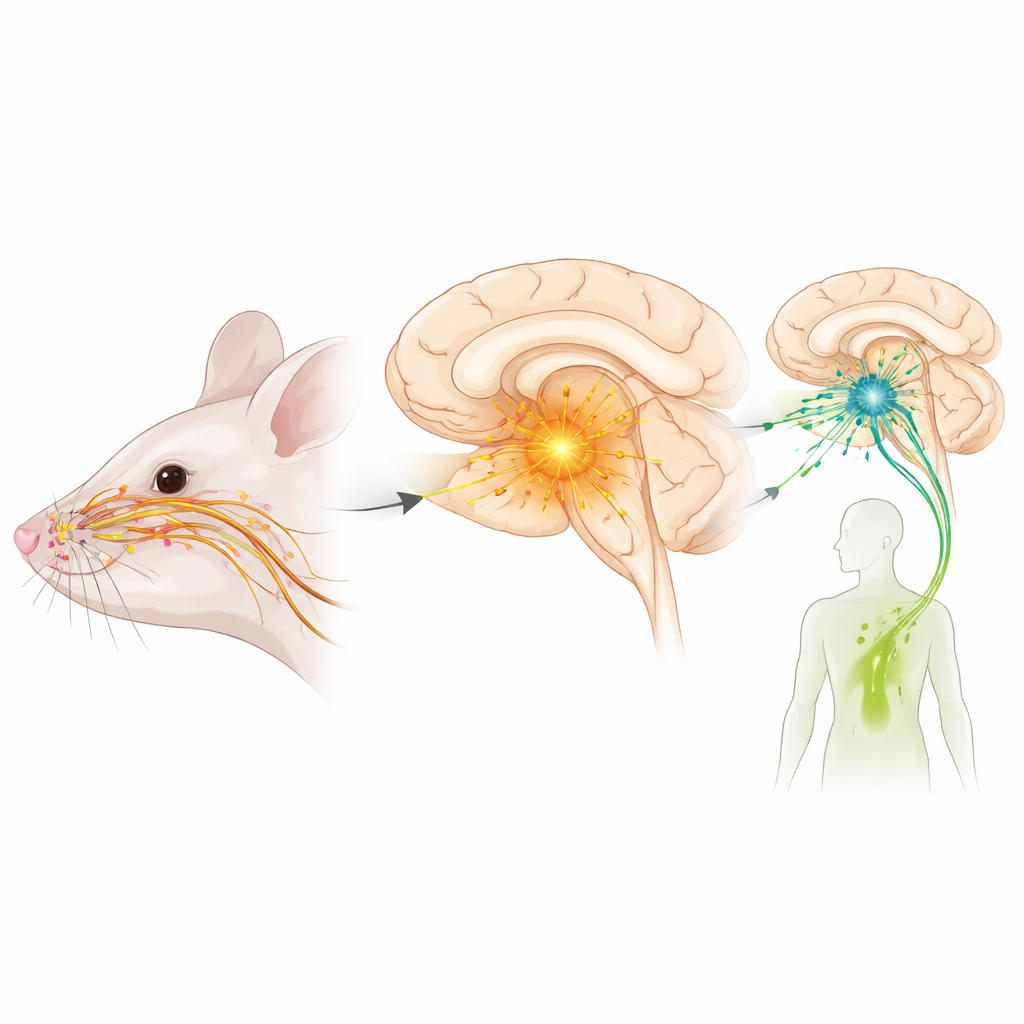
The most intriguing clues came from looking directly at the nerves that control sneezing. When histamine or the nerve-signaling molecule substance P was placed in the noses of unprimed mice, it triggered robust sneezing. Matcha-treated animals tended to sneeze less, hinting that the tea might dampen the reflex itself. To test this more directly, the researchers measured c-Fos, a marker of recent activity in neurons, within a brainstem region called the ventral spinal trigeminal nucleus caudalis, a key relay for nasal sensory input. Histamine strongly lit up these neurons, but in mice given matcha the signal dropped back to near-normal baseline levels. In other words, despite leaving IgE, mast cells, and most immune genes untouched, matcha appeared to dial down the brain’s processing of the itch-and-tickle signals that ordinarily provoke a sneeze.
What this might mean for allergy sufferers
Viewed together, the findings suggest that matcha can lessen allergy-like sneezing in mice mainly by softening the neural reflex that drives it, rather than by blocking the immune reactions that start the process. The tea did not cure the underlying allergy, and the work was done in animals with relatively small experimental groups, so careful human studies are still needed. But the results open an intriguing possibility: some components of matcha—potentially compounds such as L-theanine, arginine, caffeine, or catechins known to influence stress and brain function—may quietly tune the balance between sensory nerves and the autonomic nervous system that coordinates sneezing. If future research confirms and extends these observations, enjoying a bowl of matcha could one day become part of a broader, evidence-based strategy to make seasonal sniffles a little more bearable.
Citation: Ogata, S., Uda, N., Miura, K. et al. Matcha alleviates sneezing response in a murine model of allergic rhinitis. npj Sci Food 10, 107 (2026). https://doi.org/10.1038/s41538-026-00777-9
Keywords: matcha, allergic rhinitis, sneezing reflex, neuroimmune interactions, green tea