Clear Sky Science · en
Learning lessons from over-crediting to ensure additionality in forest carbon credits
Why Forest Carbon Credits Matter to Everyone
As governments and companies race to claim “carbon neutral” status, many rely on forest carbon credits—paying to protect tropical forests so they can keep emitting elsewhere. This paper asks a simple but crucial question: are those credits really buying the climate benefits they promise? By dissecting how early forest conservation projects calculated their impact, the authors reveal that many credits overstated their real contribution to slowing deforestation, with big implications for climate policy, corporate claims and the future of nature-based solutions.
Paying to Protect Trees
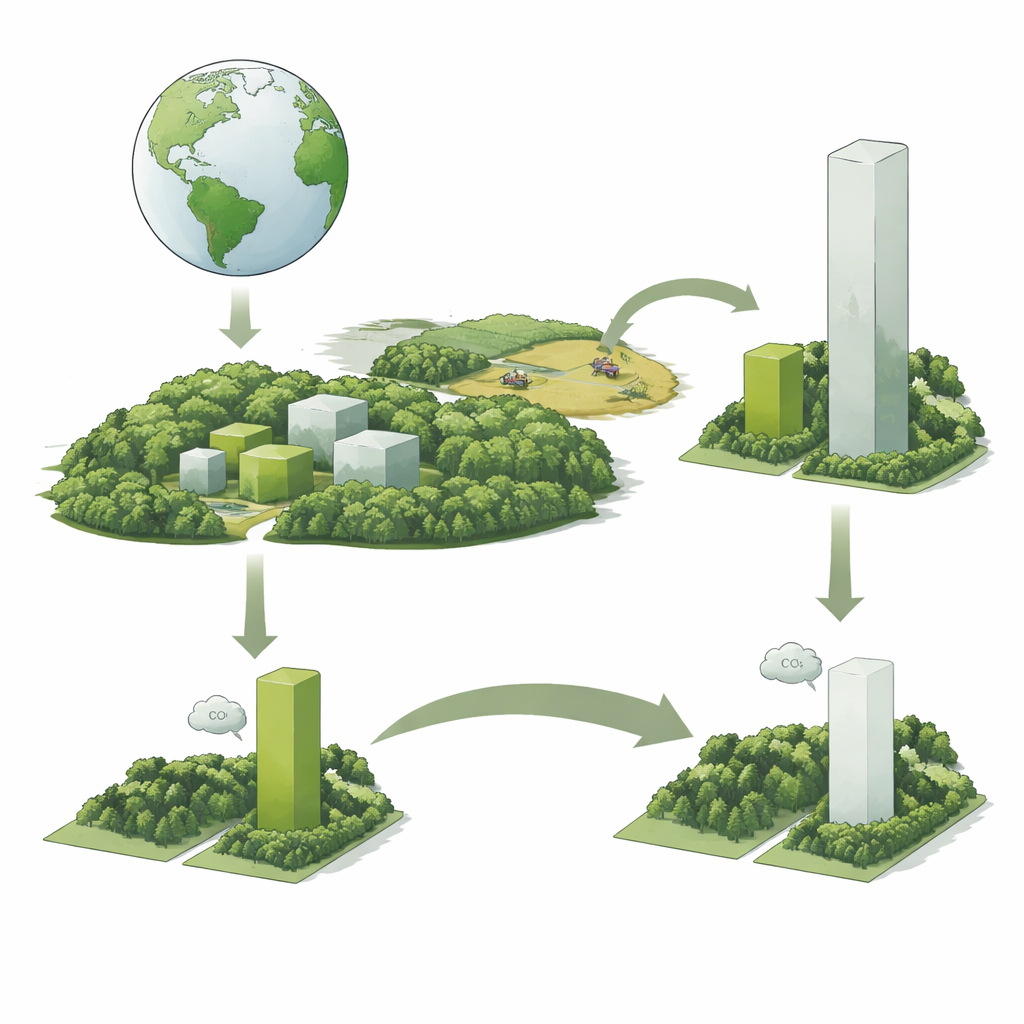
Forest carbon credits are meant to channel money into threatened tropical forests. Under schemes known as REDD+ projects, developers estimate how much forest would be cut down without their intervention, then compare that to what actually happens once the project starts. The difference becomes “avoided deforestation,” which is converted into carbon credits and sold on voluntary markets. In theory, each credit should stand for a tonne of carbon that genuinely stayed out of the atmosphere because a forest remained standing.
Checking the Scorecard
The researchers combined six independent evaluations of 44 forest projects across the tropics, covering almost half of all such projects that had issued credits by 2020. These independent teams used modern statistical tools to build “control” areas—patches of forest with similar conditions but without the project—to estimate what would have happened otherwise. Most projects did reduce deforestation compared with these controls, showing that they did some real good. But when the authors compared these independent estimates to the numbers projects used to issue credits, they found that, on average, projects claimed about 10.7 times more avoided deforestation than the independent studies supported.
Where the Extra Credits Came From
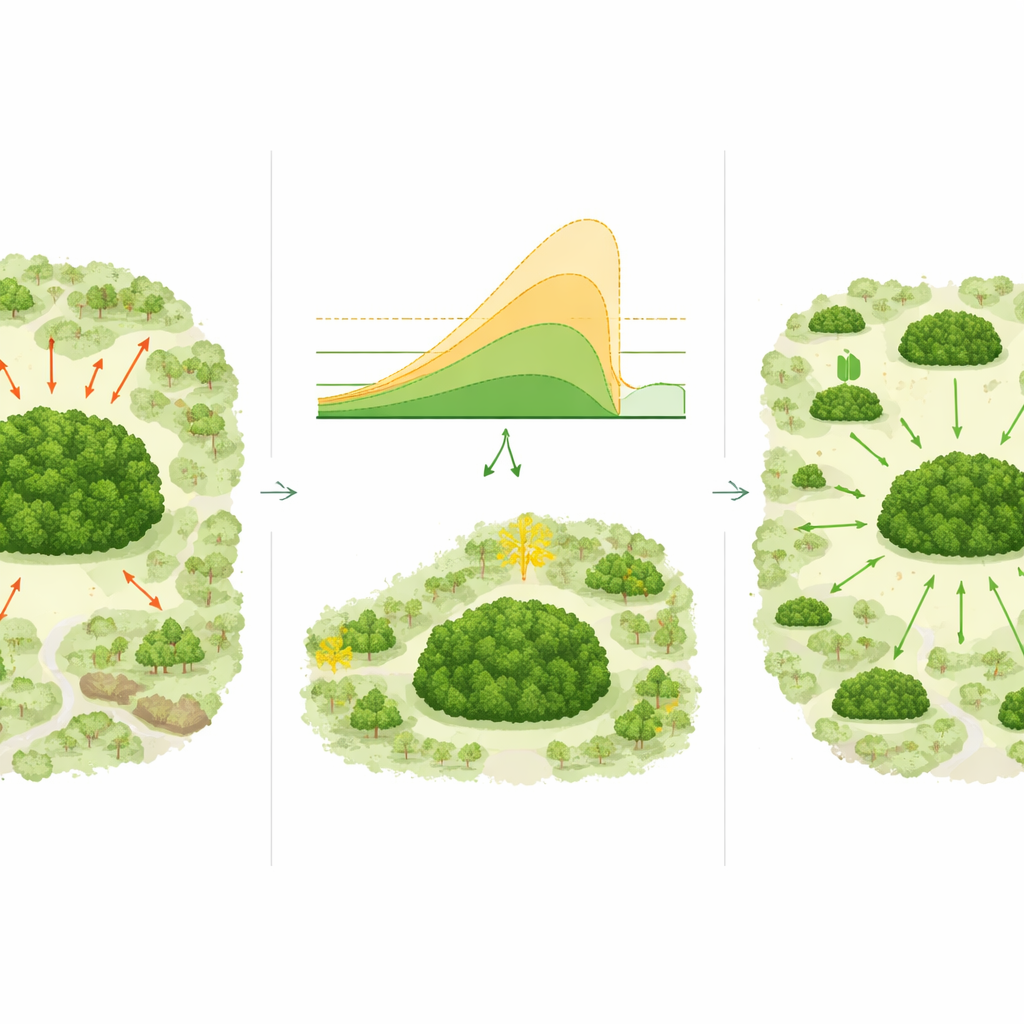
To understand why the gap was so large, the authors tested several explanations. Industry critics had argued that global satellite datasets used by independent analysts might simply miss more forest loss than the finely tuned local maps used by projects. Instead, the study found the opposite: global data often detected equal or higher deforestation inside project areas than the projects’ own measurements. The bigger problem lay in how projects chose comparison areas and predicted the future. Reference areas used in official crediting tended to be more accessible and already more degraded than the project sites, meaning they were under higher pressure to be cleared. This made it look as though projects were protecting forests from unusually intense threats, inflating the number of credits they could claim.
Problems with Predicting the Future
Beyond biased reference areas, the way projects forecasted future deforestation turned out to be another major source of overstatement. Early REDD+ rules allowed project developers and certifiers considerable freedom to pick from several approved modelling methods and tune how those models were applied. By reconstructing credit calculations for a subset of projects, the authors estimate that unrealistic forward-looking deforestation models may account for roughly three-quarters of the over-crediting that remained after removing the effects of mapping choices and reference-area bias. In other words, many projects assumed that deforestation would surge more than was plausible, so any real-world slowdown appeared larger on paper than it actually was.
Fixing Forest Credits for the Future
The study concludes that first-generation forest carbon projects often sold many more credits than their true impact on deforestation could justify, even though many did achieve worthwhile conservation outcomes. Because over-credited offsets let buyers claim greater climate progress than actually occurred, this practice risks undermining global climate goals. The authors argue that new systems should drastically limit the flexibility projects have in choosing methods, put independent bodies in charge of assessments and, crucially, rely on “ex post” evaluations that measure what really happened rather than speculative forecasts. Done this way, far fewer but more trustworthy credits would be issued—meaning higher prices, more honest climate accounting and a better chance that money spent on forest protection truly helps stabilize the climate.
Citation: Swinfield, T., Williams, A., Coomes, D. et al. Learning lessons from over-crediting to ensure additionality in forest carbon credits. Nat Commun 17, 3944 (2026). https://doi.org/10.1038/s41467-026-71552-3
Keywords: forest carbon credits, tropical deforestation, REDD+ projects, carbon offsets, climate policy