Clear Sky Science · en
Antibody waning and Bordetella pertussis resurgence after the COVID-19 pandemic in the Netherlands
Why this matters now
As strict COVID-19 measures paused many common infections, some germs quietly regrouped. In the Netherlands, whooping cough—caused by the bacterium Bordetella pertussis—virtually disappeared for almost three years, only to roar back with the largest outbreak in more than a decade. This study asks a pressing question for parents, doctors, and policymakers: did our defenses against whooping cough fade while the germ was offstage, and what does that mean for future vaccination strategies?

A silent germ returns
During the COVID-19 pandemic, school closures, distancing, and masks sharply reduced the spread of many respiratory infections, including whooping cough. Routine health reports showed very few pertussis cases from 2020 through early 2023. But about a year after most restrictions were lifted, reported whooping cough cases in the Netherlands began to climb steeply, mirroring similar patterns seen across Europe. Because reported cases capture only the tip of the iceberg, the authors used blood samples from a nationwide cohort to uncover the true scale of infection.
Following immunity in real people
The researchers drew blood from 418 people aged 2 to 87 years at five points between late 2022 and late 2024. They measured antibodies that recognize key pertussis components, focusing on pertussis toxin and a surface protein called filamentous hemagglutinin. By looking for clear rises in these antibody levels over time, they could detect new infections—even when people never went to a doctor. They also distinguished natural infections from booster shots by tracking antibodies against tetanus, which are boosted by the combined tetanus–diphtheria–pertussis vaccines.
Hidden infections in school‑age children
Across the whole population, about 6 percent had evidence of a new pertussis infection over the two-year period. In school‑aged children and teenagers (6–18 years), however, roughly one in three was infected. Children aged 6–12 years—who had received their last booster at age 4—started the study with the lowest levels of pertussis toxin antibodies. Those levels then rose sharply as infections swept through this group. Despite this surge in infection, illness was often mild: only about 16 percent of infected 6–18‑year‑olds reported prolonged cough, and very few sought medical care. This gap between infections and reported cases shows that official statistics miss most whooping cough infections in older children.
When protection quietly fades
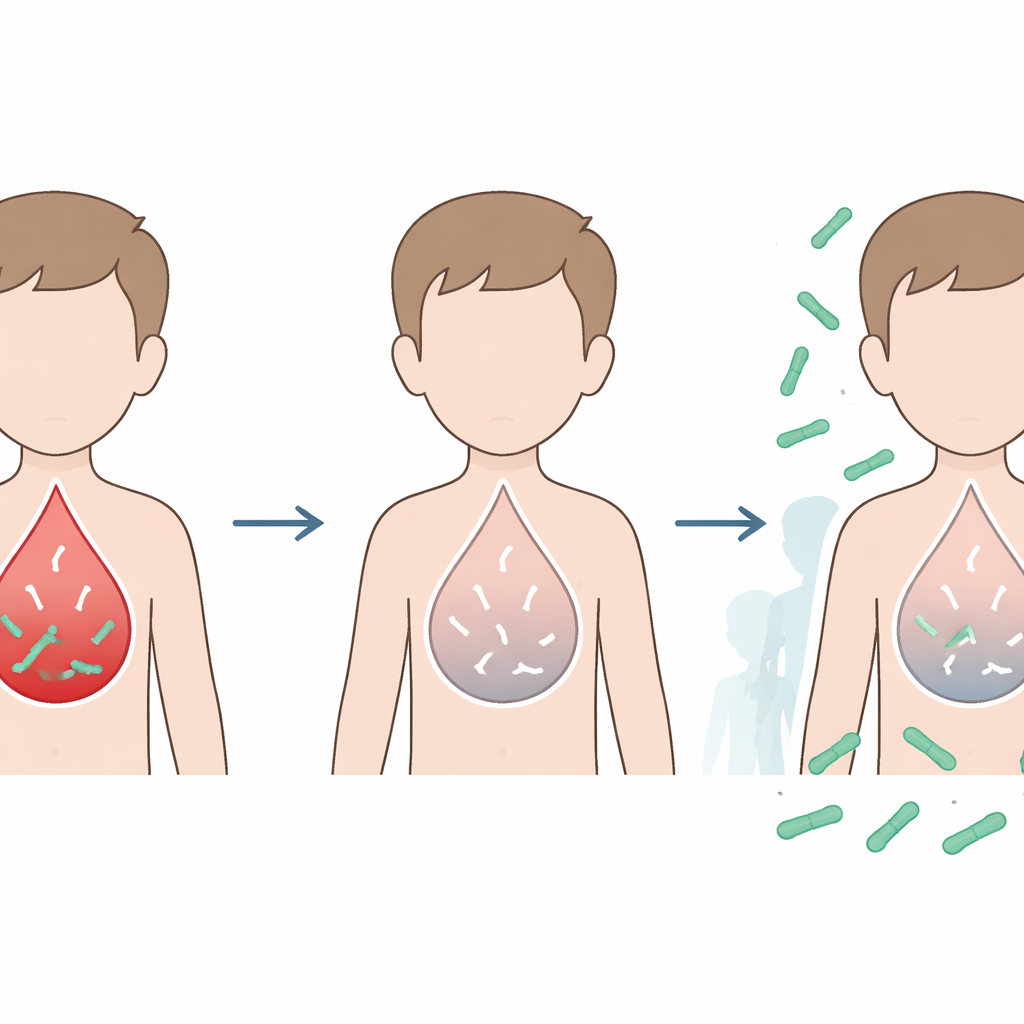
To understand why children were hit hardest, the team examined how antibodies declined over time in people who were not recently infected or vaccinated. All age groups showed a gradual drop, but young children had the steepest early decline. By the time children reached 6–12 years, their pertussis toxin antibody levels were clearly lower than those of adults, indicating waning protection after the booster given at 4 years of age. The study also found that, before infection, children who later caught pertussis tended to have lower levels of antibodies against filamentous hemagglutinin than their uninfected peers, hinting that this particular antibody may help block the bacterium from taking hold in the airways.
What this means for families and policy
Together, the findings paint a clear picture: a long period with almost no circulation of whooping cough allowed vaccine‑induced immunity—especially after the acellular booster given at age 4—to fade in many children. Once the bacterium began circulating again, these children were highly susceptible to infection, even though most remained protected from severe disease. This combination of silent spread, falling vaccination coverage, and waning antibodies underscores the importance of maintaining high vaccine uptake and improving vaccines so they better prevent both disease and transmission. The Netherlands has already shifted the booster from age 4 to 5 years to better cover later childhood, but the study suggests that truly durable control of whooping cough will likely require vaccines that more strongly block colonization of the airway.
Citation: Gaasbeek, C.M., Vos, E.R.A., van Roon, A.M. et al. Antibody waning and Bordetella pertussis resurgence after the COVID-19 pandemic in the Netherlands. Nat Commun 17, 2989 (2026). https://doi.org/10.1038/s41467-026-69885-0
Keywords: whooping cough, vaccine immunity, antibody waning, COVID-19 measures, childhood infections