Clear Sky Science · en
Amelioration of colorectal cancer-associated fibroblasts in immunosuppressive microenvironment by ferroptosis-based nanotherapy
Why this research matters for colon cancer patients
Many people with colorectal cancer do not benefit from today’s breakthrough immunotherapies because their tumors are surrounded and protected by a tough layer of support cells. This study explores a new way to break that shield using specially designed magnetic nanoparticles that selectively damage these support cells, opening the tumor to the body’s own immune defenses while also helping to kill cancer cells.
The hidden helpers that shield tumors
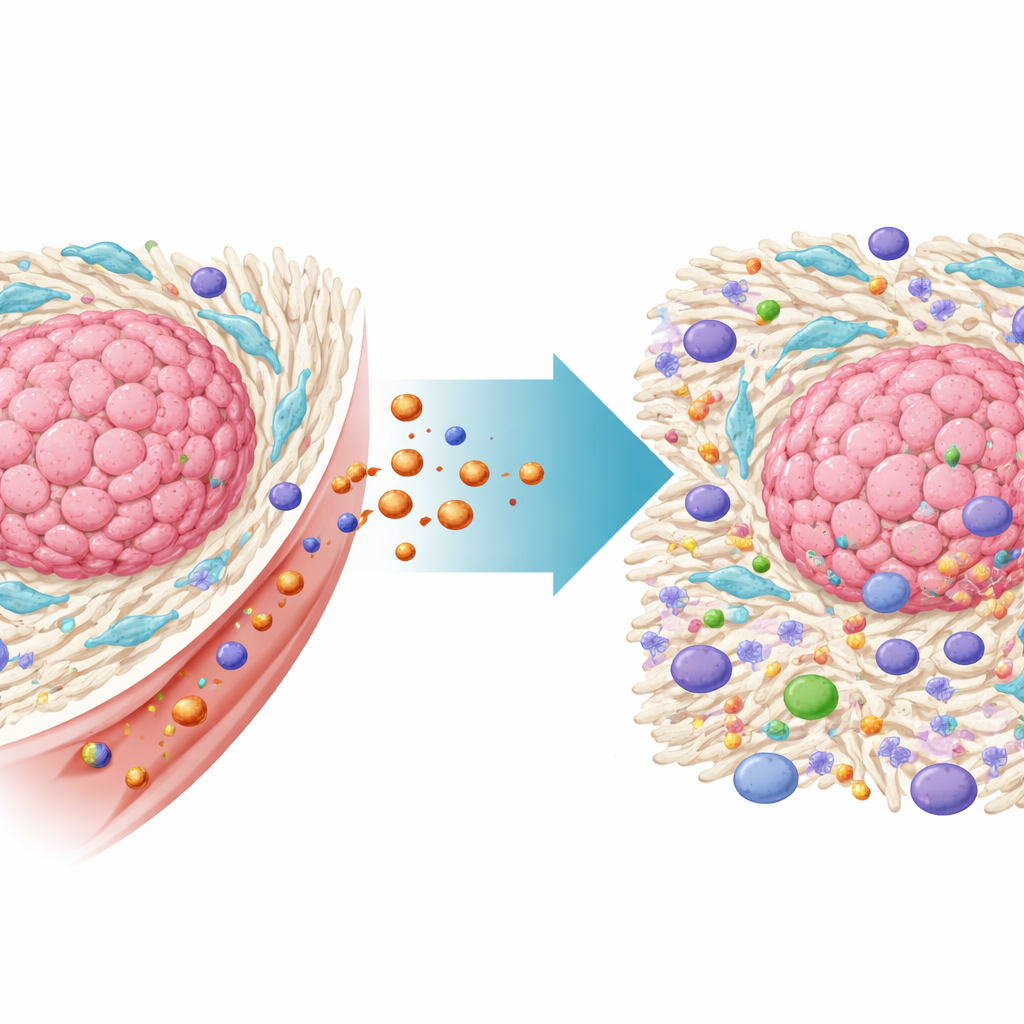
Colorectal tumors grow within a complex neighborhood of non-cancerous cells called the tumor microenvironment. Among the most important of these are cancer-associated fibroblasts, or CAFs, a type of connective-tissue cell that becomes co-opted by the tumor. CAFs build a dense scaffold of extracellular matrix around the cancer, which physically blocks immune cells and drugs from entering. They also release chemical signals that weaken immune responses and help cancer cells resist therapy. Large-scale patient data in this study confirmed that colorectal cancers rich in CAFs were linked to poorer survival and resistance to immunotherapy, underscoring the need to target these cells directly.
A smart nanotherapy aimed at the tumor’s support cells
The researchers developed tiny copper–iron magnetic nanoparticles with a core–shell structure designed to be especially attractive to CAFs. These particles have two key physical properties: they can convert near-infrared laser light into heat, and they can catalyze the formation of toxic oxygen-based molecules inside cells. Because CAFs naturally take up more nanoparticles than normal fibroblasts or many tumor cells, they become the primary target. The team also attached a short DNA-like aptamer called AS1411 to the surface of some particles, guiding them more efficiently to fibroblasts and tumor cells that display a protein called nucleolin on their outer membrane.
Triggering a new form of cell death and rewiring tumor signals
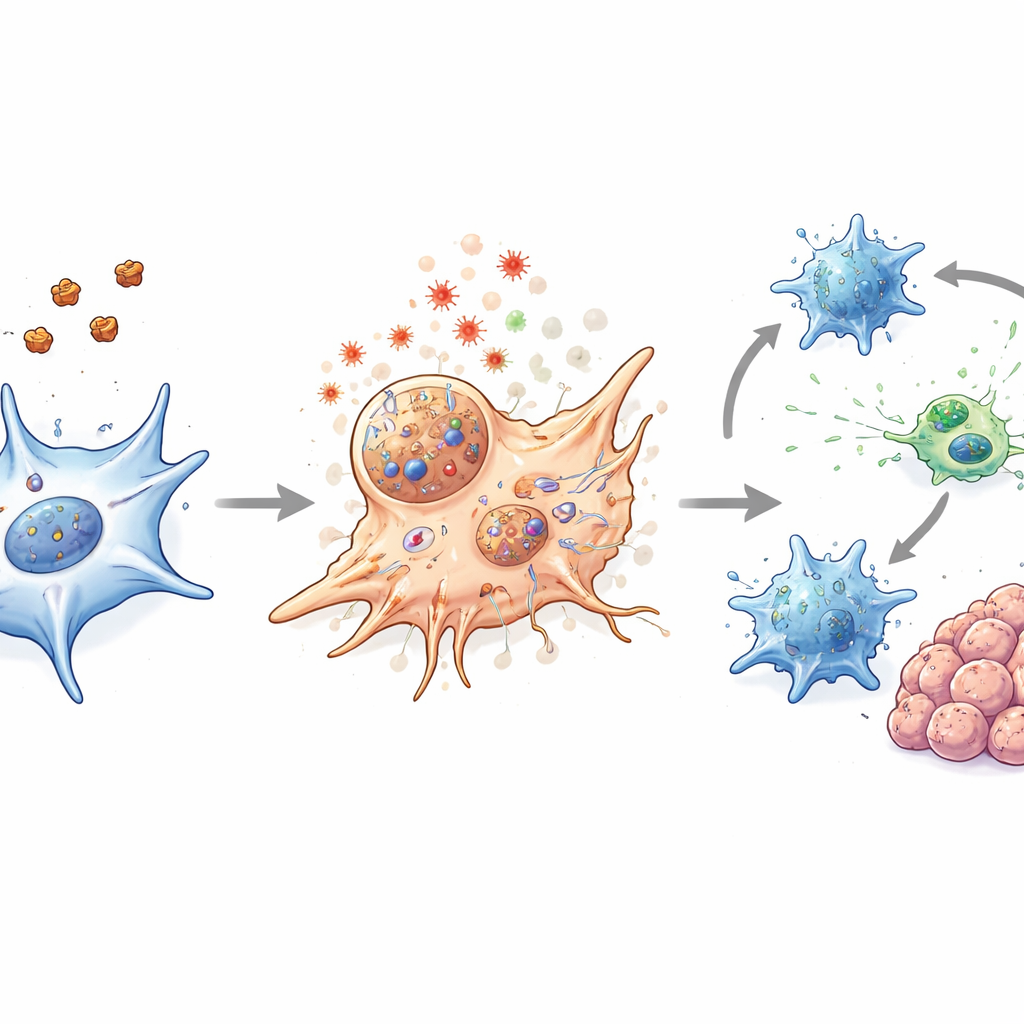
Once inside CAFs, the nanoparticles release iron and copper ions. Iron fuels the production of reactive oxygen species, while copper lowers the levels of a protective enzyme called GPX4. Together, these shifts push CAFs into ferroptosis, a form of cell death driven by uncontrolled oxidation of cell membranes. In dishes and animal models, CAFs proved more vulnerable to this process than normal fibroblasts. At the same time, the treated CAFs changed the mix of chemical messengers they secreted: signals that normally encourage tumor growth and immune suppression were reduced, while others that help recruit and activate immune cells were increased. As a result, cancer cells exposed to the “reprogrammed” fibroblast secretions became less able to grow, migrate, and adopt invasive traits.
Waking up the immune system inside the tumor
In mouse models of colorectal cancer, including standard implanted tumors, a genetic model that develops spontaneous intestinal tumors, and patient-derived tumors and organoids, the nanoparticle treatment shrank tumors and did so safely. Importantly, the therapy did more than just kill CAFs. It also loosened the physical barrier around tumors and shifted the local chemistry in a way that encouraged immune activity. Dendritic cells, which act as sentinels and teachers of the immune system, showed stronger signs of maturation after treatment. Killer CD8 T cells became more active and produced more molecules associated with effective tumor attack, even though their overall numbers did not dramatically change. When nanoparticles were combined with gentle laser heating, these effects were further amplified without noticeable harm to normal tissues.
From laboratory models toward future treatments
To test how broadly this approach might work in real-world settings, the team applied their strategy to tumor samples and mini-tumors (organoids) grown from patients. The nanoparticle therapy, especially the version bearing the AS1411 targeting component and combined with laser activation, strongly damaged cancerous tissues and their surrounding fibroblasts while largely sparing organoids grown from healthy colon tissue. Across multiple sophisticated models, the same pattern emerged: CAF-focused nanotherapy weakened the tumor’s protective shell, reawakened local immune responses, and directly injured cancer cells.
What this could mean for future cancer care
The study suggests that attacking the tumor’s helpers can be as important as attacking the tumor cells themselves. By using ferroptosis-based magnetic nanoparticles to selectively disable cancer-associated fibroblasts, the researchers were able to both dismantle physical barriers and lift chemical brakes on the immune system in colorectal cancer. While this work is still at the preclinical stage, it points toward a new class of treatments that combine targeted nanotechnology, controlled cell death, and immune activation. Such strategies could one day make resistant colorectal cancers more responsive to immunotherapy and improve outcomes for patients whose tumors are currently difficult to treat.
Citation: Wang, S., Wang, Z., Wu, C. et al. Amelioration of colorectal cancer-associated fibroblasts in immunosuppressive microenvironment by ferroptosis-based nanotherapy. Nat Commun 17, 2778 (2026). https://doi.org/10.1038/s41467-026-69462-5
Keywords: colorectal cancer, tumor microenvironment, nanoparticle therapy, cancer-associated fibroblasts, ferroptosis