Clear Sky Science · en
Changes in body mass index among pregnant women during labor over four decades: a retrospective longitudinal analysis
Why This Matters for Families
Across much of the world, people are getting heavier, and this change is especially important during pregnancy, when a mother’s health is closely tied to her baby’s well-being. This study looks back over nearly forty years of births in one Slovak hospital to see how the body mass index (BMI) of women in labor has changed and what that might mean for mothers, babies, and health systems. Its findings help explain why doctors are increasingly worried about weight before and during pregnancy—and what can be done about it.
Looking Back Over Four Decades
To trace long-term trends, the researchers examined the medical records of 13,193 women who gave birth at the same hospital in three time windows: the late 1980s, the early 2010s, and 2024. Using only routine information recorded when women were admitted to the delivery ward, they calculated BMI—a simple measure based on height and weight—for each pregnancy. Because all births came from one institution, the groups could be compared fairly across time, even though the earliest records were handwritten and the most recent came from digital systems.
More Weight, Fewer Normal-Weight Pregnancies
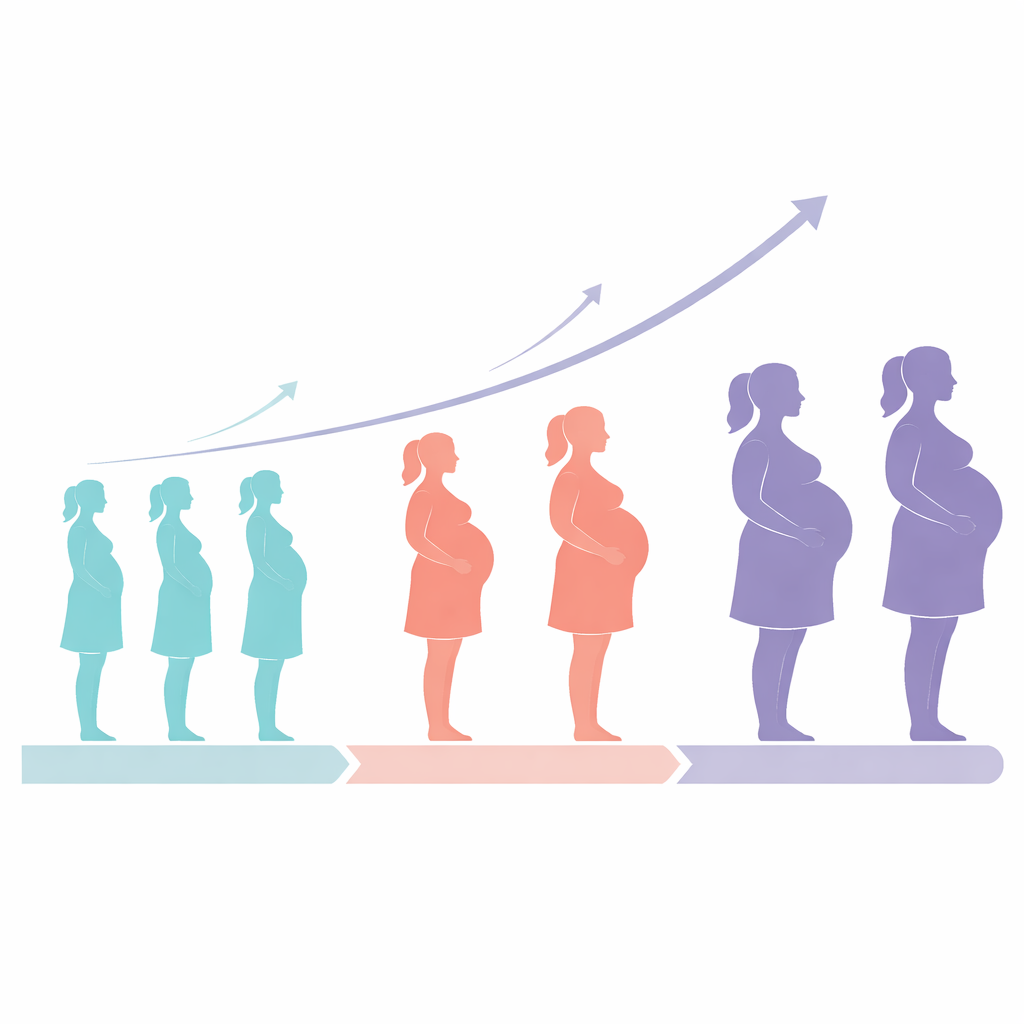
The picture that emerges is striking. In the late 1980s, the average woman in labor had a BMI around the upper end of the “normal” range. By the early 2010s, that average had nudged upward, and by 2024 it had clearly moved into the “overweight” range. At the same time, the share of women with a normal BMI shrank from roughly three-quarters to about one-third. Overweight and obesity together, once the minority, came to describe most women giving birth in the latest group.
A Fivefold Jump in Obesity
The most dramatic change was in obesity. In the oldest group, fewer than one in twenty women in labor met the definition of obesity. By 2024, about one in four did—a more than fivefold increase. A statistical analysis showed that BMI did not just drift up randomly; it rose in a steady, linear way over time, with each newer group heavier than the last. The most recent data also showed a wider spread of BMIs, suggesting growing differences between women—some still in the healthy range, but more at the very high end.
What Rising BMI Means for Birth
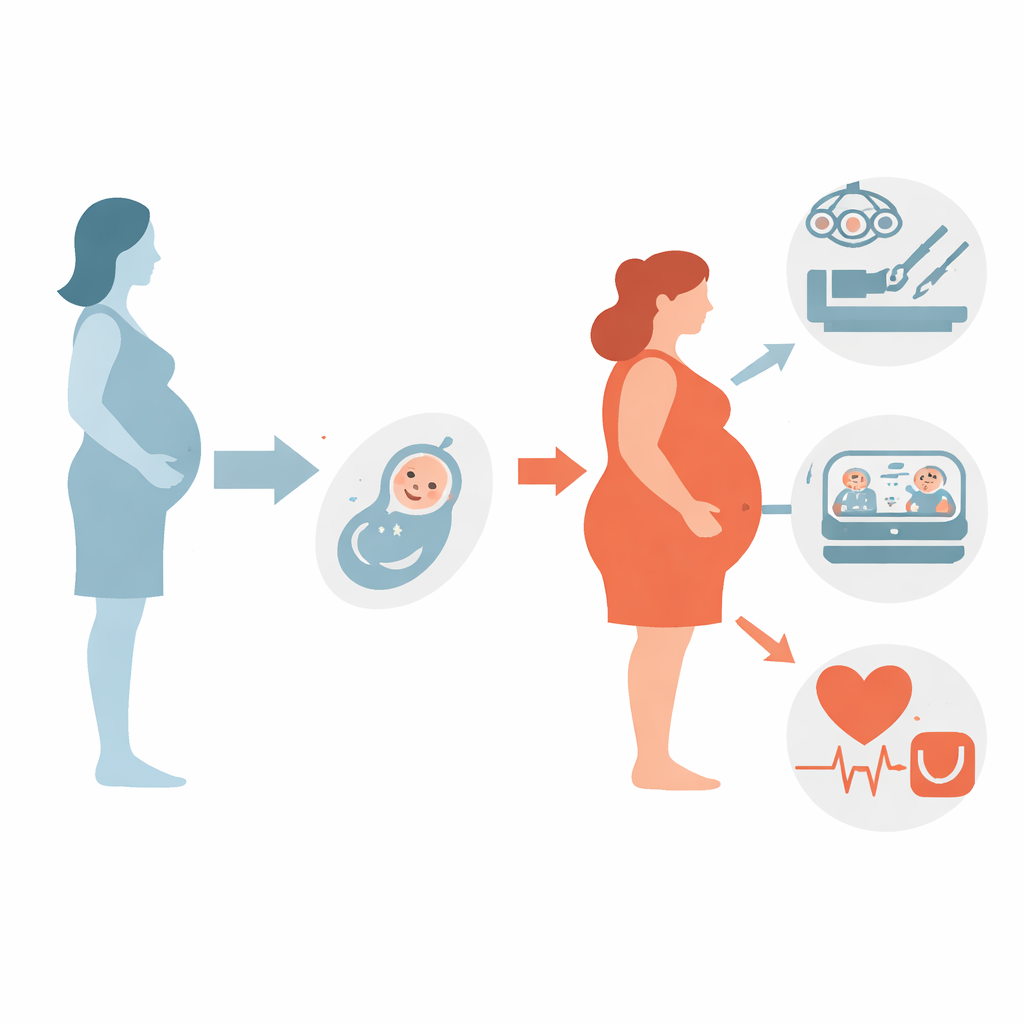
Higher BMI in pregnancy is not just a number on a chart; it is linked to real risks. The authors summarize a wide body of research showing that overweight and obesity increase the chances of high blood pressure, preeclampsia, gestational diabetes, blood clots, and serious complications during labor. Heavier women are more likely to need labor induced, to have very large babies, and to require forceps, vacuum extraction, or cesarean section. Their newborns face greater risks of preterm birth, breathing problems, low blood sugar, birth injuries, and admission to intensive care. These early difficulties can echo into later life, raising the child’s chances of obesity, heart disease, diabetes, and even learning problems.
How Society and Lifestyle Play a Role
The authors place their findings in a broader social context. They note that across Europe, and in Slovakia in particular, more and more adults now live with excess weight, driven by changes in diet, sedentary work, city living, and easy access to processed, calorie-dense foods. Their results fit with European forecasts that maternal obesity will continue to climb in coming years. Because pregnancy is such a sensitive period for both mother and baby, these trends create pressure not only on families but also on healthcare systems that must manage more complicated pregnancies and births.
Steps Toward Healthier Pregnancies
The study concludes that the steady rise in BMI among women giving birth is a clear warning signal. The authors argue that action should begin even before pregnancy, with counseling and support to help women reach a healthier weight beforehand. During pregnancy, care should be tailored to each woman’s situation, with guidance on eating, physical activity, and appropriate weight gain, following established recommendations. Public campaigns can reinforce these messages by highlighting how a healthy lifestyle before and during pregnancy protects both mother and child. By recognizing the problem early and investing in prevention, societies may be able to reverse these trends and give future generations a healthier start in life.
Citation: Gašparová, P., Ballová, Z., Sitáš, M. et al. Changes in body mass index among pregnant women during labor over four decades: a retrospective longitudinal analysis. Int J Obes 50, 895–899 (2026). https://doi.org/10.1038/s41366-026-02021-6
Keywords: maternal obesity, pregnancy health, body mass index, birth outcomes, public health