Clear Sky Science · en
Perceptions of the benefits and limitations of hybrid physical education lessons that combine virtual professors with an in-person professor
Why gym class is going online and staying on the court
Physical education is no longer just whistles and gym mats. Many schools now mix on-site teachers with virtual instructors and digital tools. This study looks at how teachers feel about these hybrid PE lessons after they receive focused training, and whether they see more benefits than drawbacks once they learn how to use the technology well.
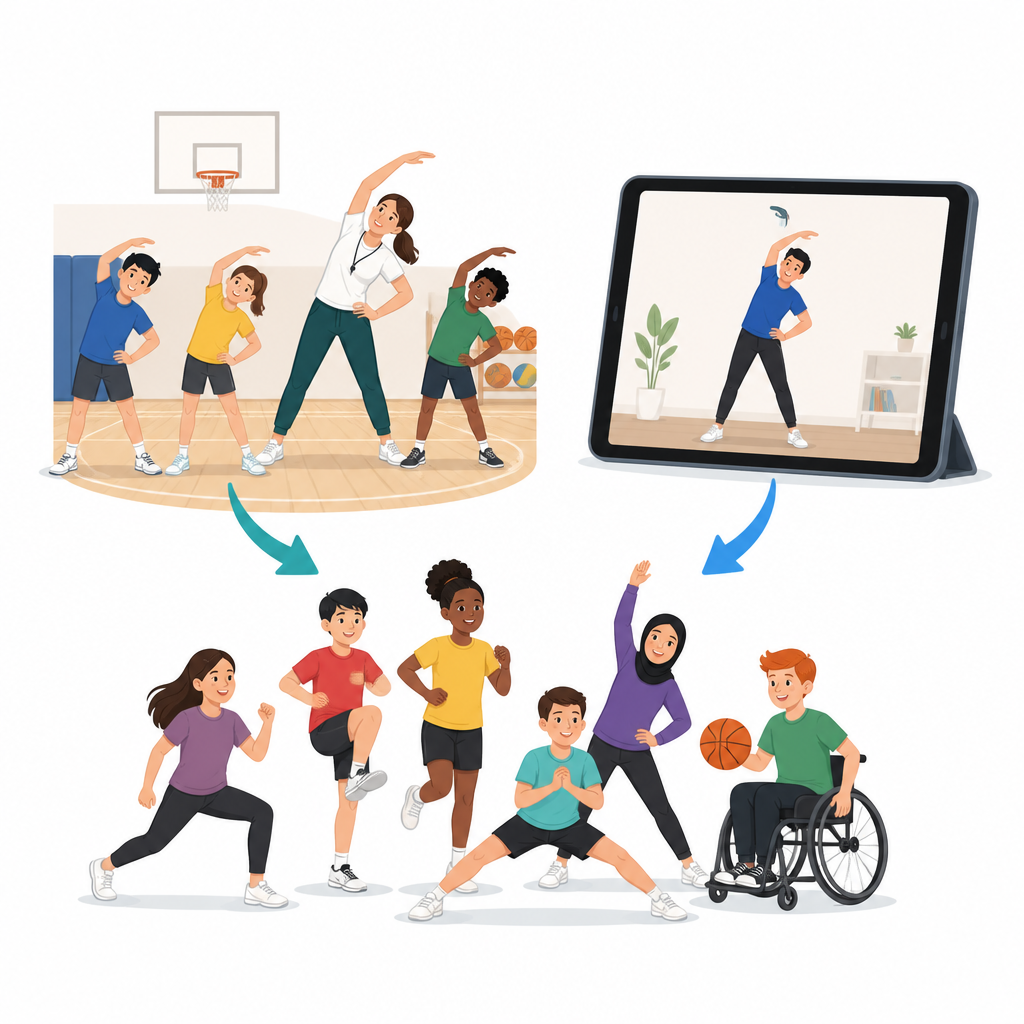
Bringing screens into sports class
The researchers worked with 323 physical education teachers from middle schools, high schools, and universities. These teachers joined a six week online training program that showed them how to combine a virtual professor on a screen with a teacher in the gym. Sessions covered planning hybrid lessons, choosing suitable apps and devices, sharing roles between the on-site and virtual teacher, checking student progress, and talking openly about challenges such as equipment, safety, and access.
Measuring changing views
To track teachers’ opinions, the team used a questionnaire with two parts. One part asked about perceived benefits, such as better feedback, added health content, or support for absent students. The other focused on limits, like safety worries, weaker social ties, or trouble judging movement quality through a screen. Teachers filled in the same survey before and after the training, so the researchers could compare how their views shifted over time.
What teachers liked more after training
After the six sessions, teachers’ appreciation of the hybrid model rose from a middling level to a clearly high one. They especially valued features where the in person teacher and virtual professor worked as a team. Popular examples included video tutorials that support exercise instruction, fitness challenges tracked over time, and lessons that link movement with advice on health and active living. Teachers also liked that recorded or live online sessions could help students who miss class keep up and stay engaged.
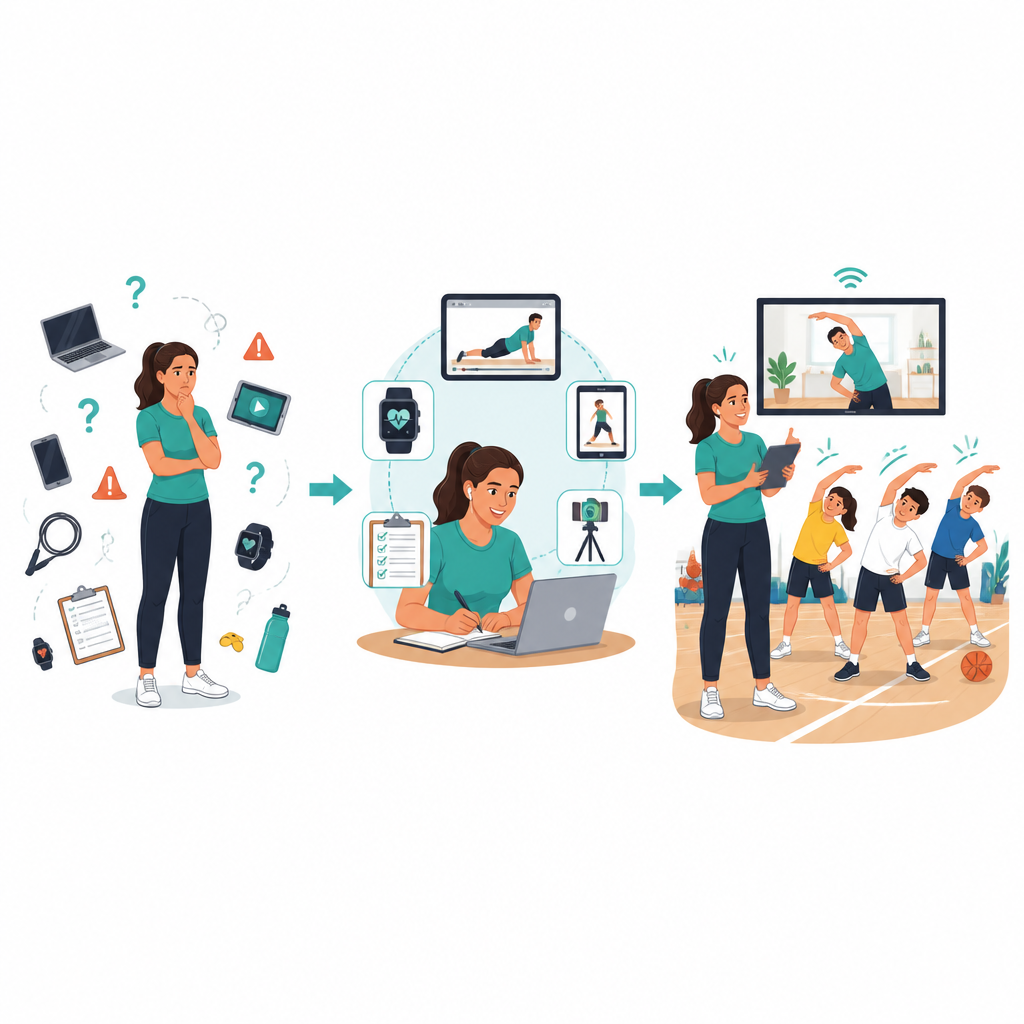
Concerns that did not disappear but shrank
Teachers still saw limits, but they rated these as less severe after training. At first, they were most worried about time pressure, fitting live online sessions into busy schedules, and keeping track of long term fitness progress. These worries eased the most. Some concerns remained, especially safety when students might try moves beyond their ability without close supervision, and the risk that relationships between students and teachers could feel weaker when part of the lesson runs through a screen. Teachers also noted that experience with digital tools and a positive attitude toward virtual teaching made them more comfortable with hybrid PE.
What this means for future gym classes
In simple terms, when PE teachers are properly trained, they tend to see hybrid lessons as a flexible way to enrich gym class rather than to replace it. The study shows that structured support can boost confidence in digital tools, increase awareness of clear benefits, and reduce many perceived drawbacks. Hybrid PE works best when schools invest in teacher training and fair access to technology so that the on site teacher and the virtual instructor can work together to help more students move, learn, and stay healthy.
Citation: Badau, D., Badau, A. Perceptions of the benefits and limitations of hybrid physical education lessons that combine virtual professors with an in-person professor. Humanit Soc Sci Commun 13, 727 (2026). https://doi.org/10.1057/s41599-026-07125-y
Keywords: hybrid physical education, virtual teaching, teacher training, digital tools, student engagement