Clear Sky Science · en
The effect of cognitive strategy instruction enriched with active learning techniques on word problem-solving skills of students with learning disabilities
Why solving story math problems matters
Many children can add or multiply numbers yet freeze when those numbers appear inside a short story. For primary school students with learning disabilities, these word problems can be especially intimidating. This study explored a teaching approach that combines step by step thinking strategies with lively, hands on activities to help such students tackle word problems more confidently and with greater success.
Helping children think through problems
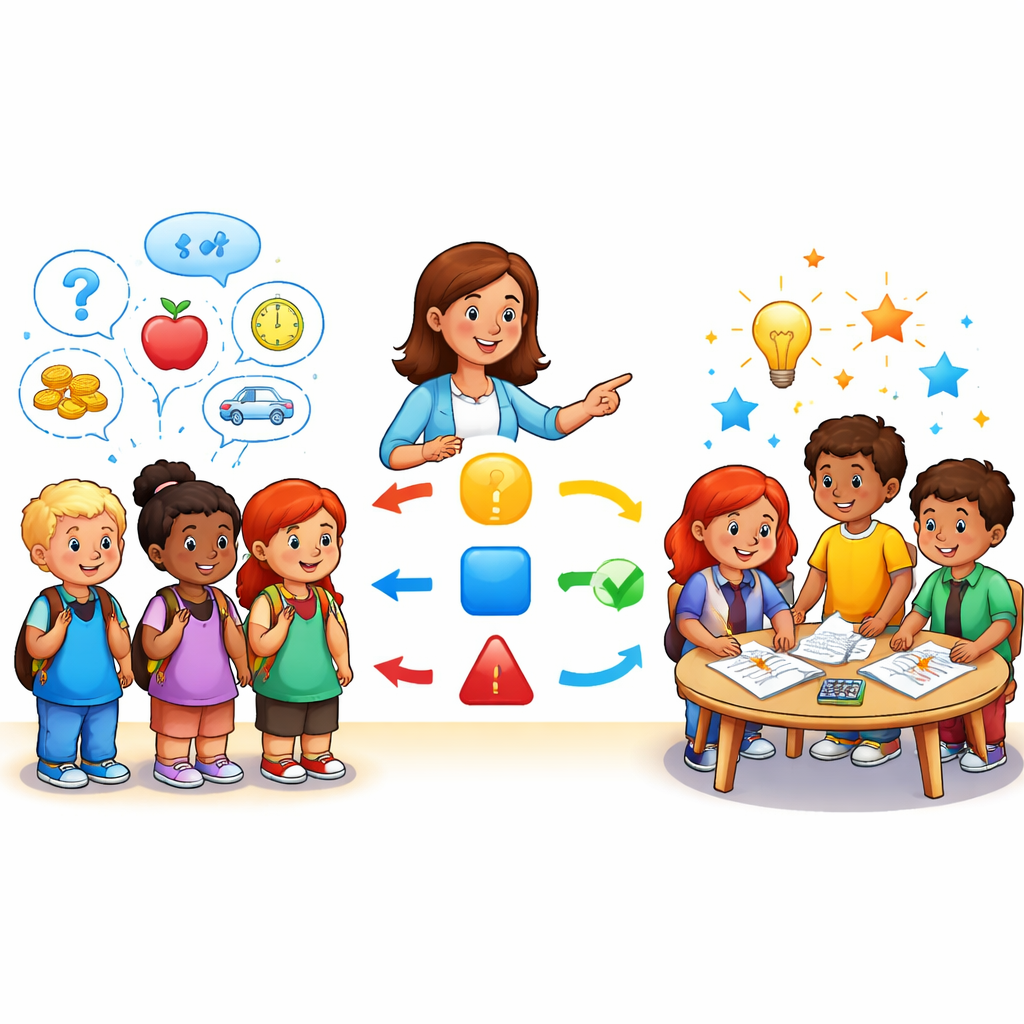
The research focused on an approach called cognitive strategy instruction, which teaches children to follow a clear series of mental steps when they face a problem. Instead of guessing, students learn to first understand the story, then plan how to solve it, carry out their plan, and finally check their answer. The study looked at what happens when this careful way of thinking is blended with active learning, where students discuss, move, use simple objects, and learn together rather than just listen to a teacher explain.
Bringing word problems to life in the classroom
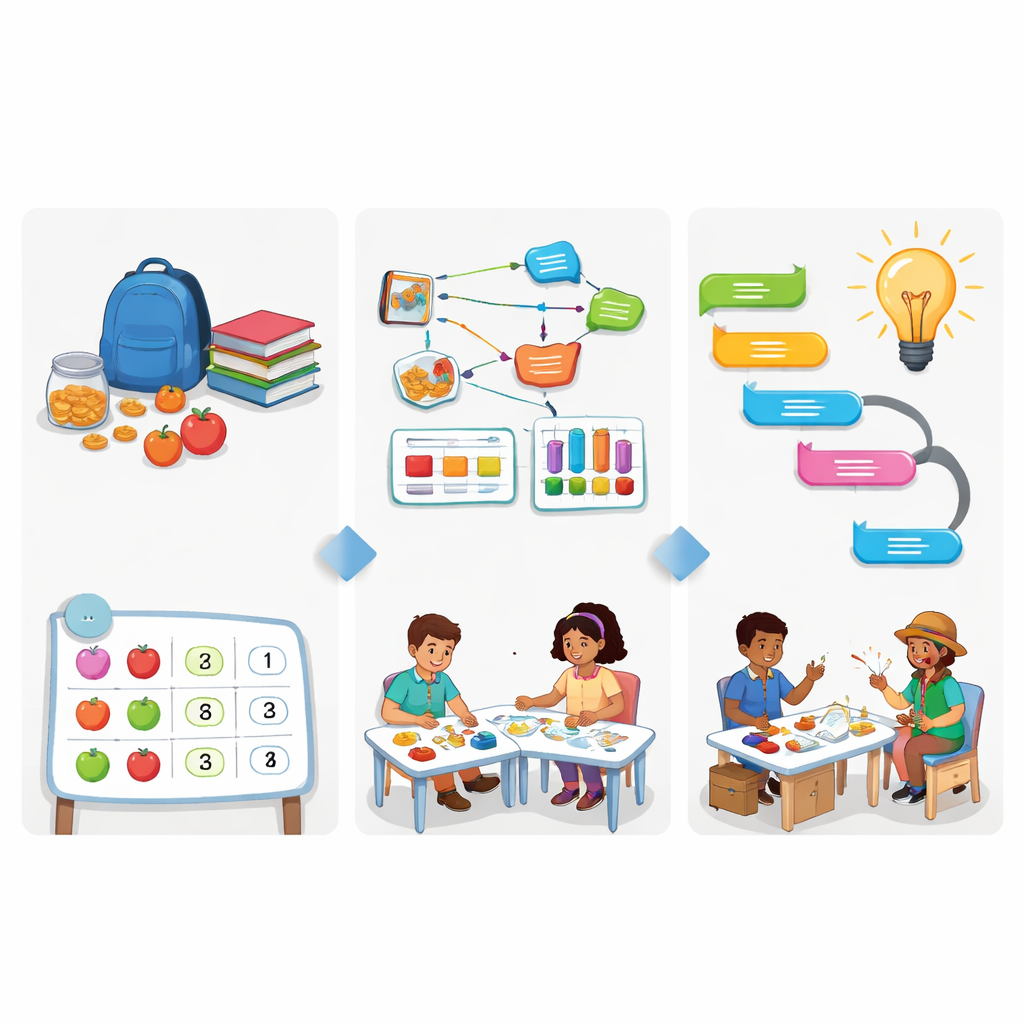
The study involved thirty third grade students in Turkey who had been identified with learning disabilities. Half the students continued with regular math lessons from the national curriculum, while the other half took part in lessons built around the combined strategy and active learning approach. Over six weeks, these students solved word problems about everyday situations using simple four step worksheets, concept maps, drawings, and small group work. They moved through stations linked to art, music, and drama, using items such as blocks, coins, and sticks to act out and model the situations described in the problems.
What the numbers and voices revealed
At the beginning and end of the study, all students took the same word problem test. After the six weeks, those who had used the blended approach scored clearly higher than those in regular lessons, and the size of this difference was large enough to matter in real classrooms. To understand what was happening behind the scores, the researcher also interviewed a smaller group of students from the special lessons. These children said they took a more active role in class, talked more with classmates, and felt less bored or anxious about math when problems involved games, drawings, and shared tasks.
Working together and using tools
Students described how talking with the teacher and their peers helped them see new ways to solve the same problem. One child, for example, first tried counting day by day in a savings problem, then learned from a friend to use a quicker method based on larger jumps. Many students reported that concept maps, tables, and simple sketches made the stories easier to grasp, while physical objects like blocks and sticks helped them keep track of tens and ones without losing their place. Several said they now paused to ask themselves what was known, what was missing, and which plan made sense, rather than rushing to add or subtract any numbers they saw.
What this means for real classrooms
For primary school children with learning disabilities, word problems often feel like a confusing mix of reading and arithmetic. This study suggests that guiding students through a small set of repeatable thinking steps, while also letting them move, talk, and handle concrete materials, can make these problems less mysterious. Students not only improved their test scores but also became more engaged, more willing to work with others, and more able to explain how they reached an answer. Although the work was limited to a small group, it points to a practical way for teachers to reshape math lessons so that story based problems become an achievable challenge instead of a barrier.
Citation: Filiz, T. The effect of cognitive strategy instruction enriched with active learning techniques on word problem-solving skills of students with learning disabilities. Humanit Soc Sci Commun 13, 598 (2026). https://doi.org/10.1057/s41599-026-06945-2
Keywords: word problems, learning disabilities, active learning, math education, teaching strategies