Clear Sky Science · en
Using virtual reality to teach climate change in social studies: a case study in teacher education
Bringing Distant Climate Stories Closer to Home
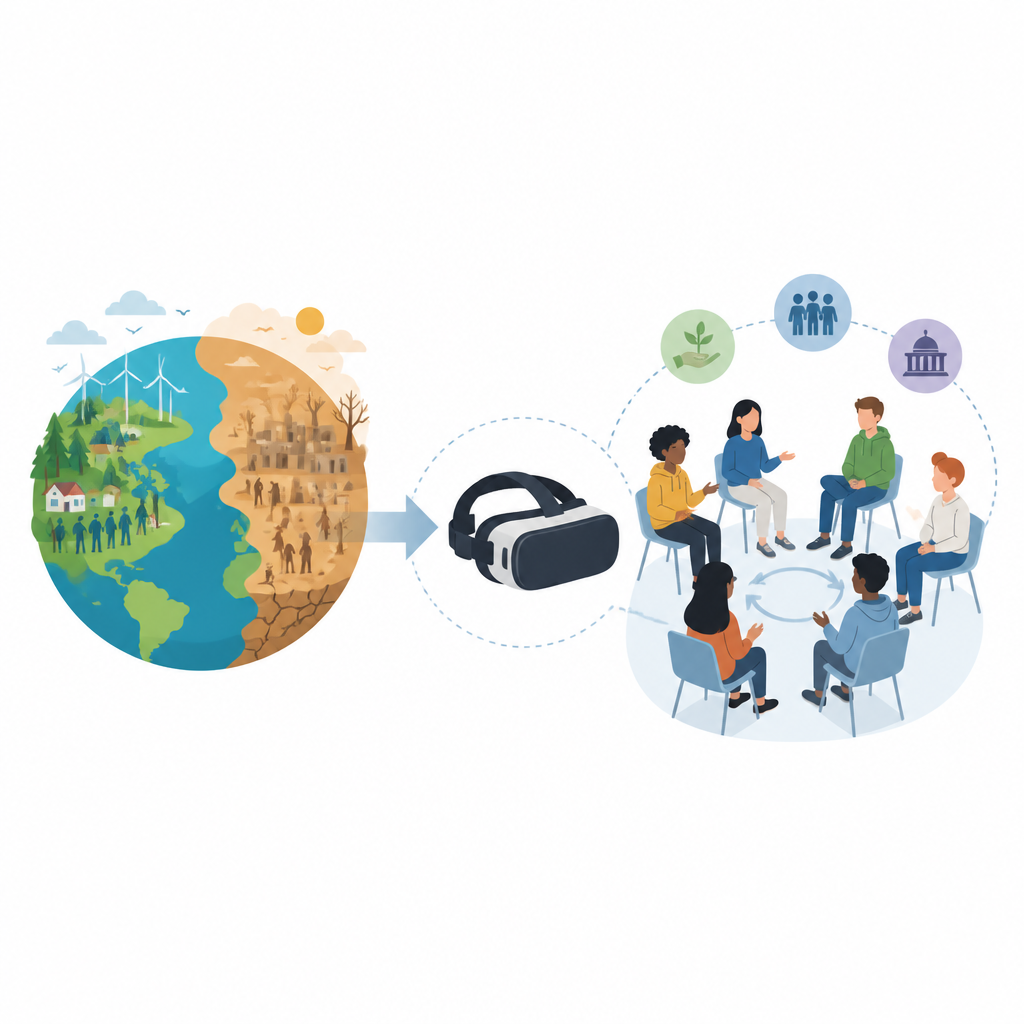
Climate change can feel far away, both in space and time, especially to children. This study looks at how virtual reality headsets can help future primary school teachers turn climate change into something pupils can see, feel and discuss as part of everyday social life. Instead of treating it only as science, the project asks how climate change can be taught as a question of fairness, citizenship and shared responsibility in social studies classrooms.
Why Climate Change Belongs in Social Studies
The authors argue that climate change is not just about melting ice or rising temperatures. It also affects where people live, who suffers most and how societies respond. Poorer and more vulnerable communities are often hit hardest. Because social studies already focuses on democracy, rights and civic action, it provides a natural home for exploring these human sides of the climate crisis. The study set out to help future teachers rethink climate change lessons so they connect environmental facts with questions about justice, power and participation.
A Five Week Journey into Virtual Worlds
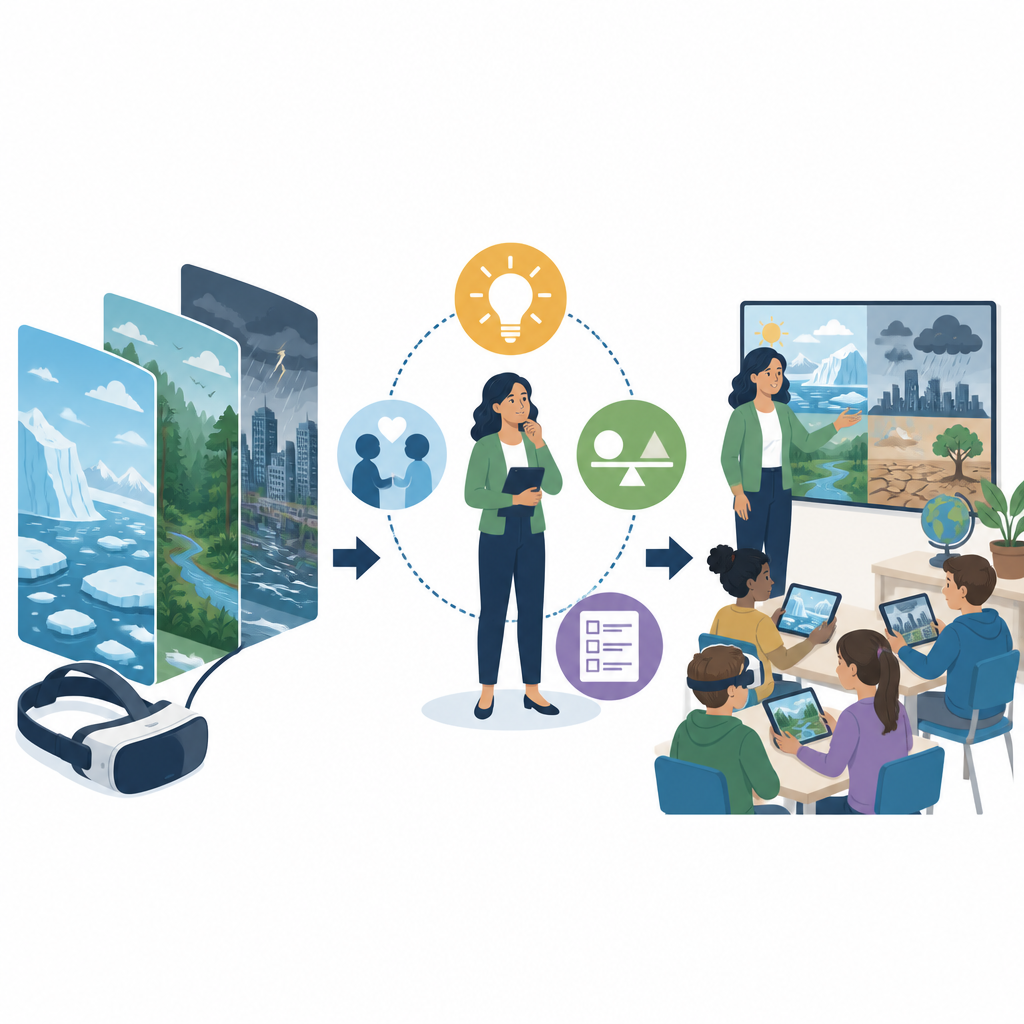
Twenty four pre service primary teachers in Türkiye took part in a five week programme inside a social studies teaching course. They first learned basic ideas about climate change and then explored its social and civic dimensions. Using standalone virtual reality headsets, they experienced scenes such as shrinking glaciers, deforestation and stressed city life from a first person viewpoint. Alongside these sessions, they discussed readings, planned lessons in small groups and wrote weekly reflections. By the end, each group produced a detailed social studies lesson plan that wove VR activities into climate themed topics for primary pupils.
What the Future Teachers Learned and Designed
The reflections showed that VR helped these future teachers turn vague climate stories into concrete experiences. Many wrote that “witnessing” change in immersive scenes made the topic easier to grasp and more emotionally powerful. This, in turn, pushed them to think about how to adapt such strong images for younger children in careful, age appropriate ways. Their lesson plans often went beyond simple presentations, using methods like role play, storytelling and learning stations so pupils could discuss how climate change links to migration, inequality, local communities and global links.
Balancing New Ideas with Real World Limits
The programme also worked as a training ground for creativity and self reflection. Working in groups and giving each other feedback helped participants sharpen their teaching ideas and grow more confident in using new tools. At the same time, they were realistic about obstacles. Many worried that not all schools would have VR headsets, and that lessons using them demanded extra time, planning and classroom management. Rather than rejecting the technology, they began to see it as one powerful option that must fit within real classroom conditions and existing curricula.
What This Means for Tomorrow’s Classrooms
In the end, the study suggests that virtual reality can support climate change education when it is tied to clear goals in social studies, not used as a stand alone gadget. VR helped future teachers link climate science to empathy, fairness and active citizenship, while reflection and feedback kept their plans grounded in practice. For a lay reader, the main message is that headsets on their own will not fix climate education. But when teacher training programmes combine immersive experiences with thoughtful discussion about values and civic life, they can better prepare new teachers to guide children through the complex social questions raised by a warming world.
Citation: Özcan, E., Haşlaman, T. & Nur Yılmaz, G. Using virtual reality to teach climate change in social studies: a case study in teacher education. Humanit Soc Sci Commun 13, 622 (2026). https://doi.org/10.1057/s41599-026-06835-7
Keywords: virtual reality, climate change education, social studies, teacher education, citizenship