Clear Sky Science · en
Longitudinal bidirectional relations between digital literacy and cyberbullying experiences in adolescence
Why This Matters for Teens and Families
As young people spend more of their lives online, parents and educators are searching for ways to keep them safe from cyberbullying. This study follows hundreds of Hong Kong adolescents over two years to ask a simple but pressing question: can stronger digital skills help protect teens from being bullied online—and also keep them from becoming bullies themselves? The answers turn out to be more complex than a simple yes or no, revealing a shifting two-way relationship between how well teens handle digital tools and the hurtful behavior they experience or inflict online. 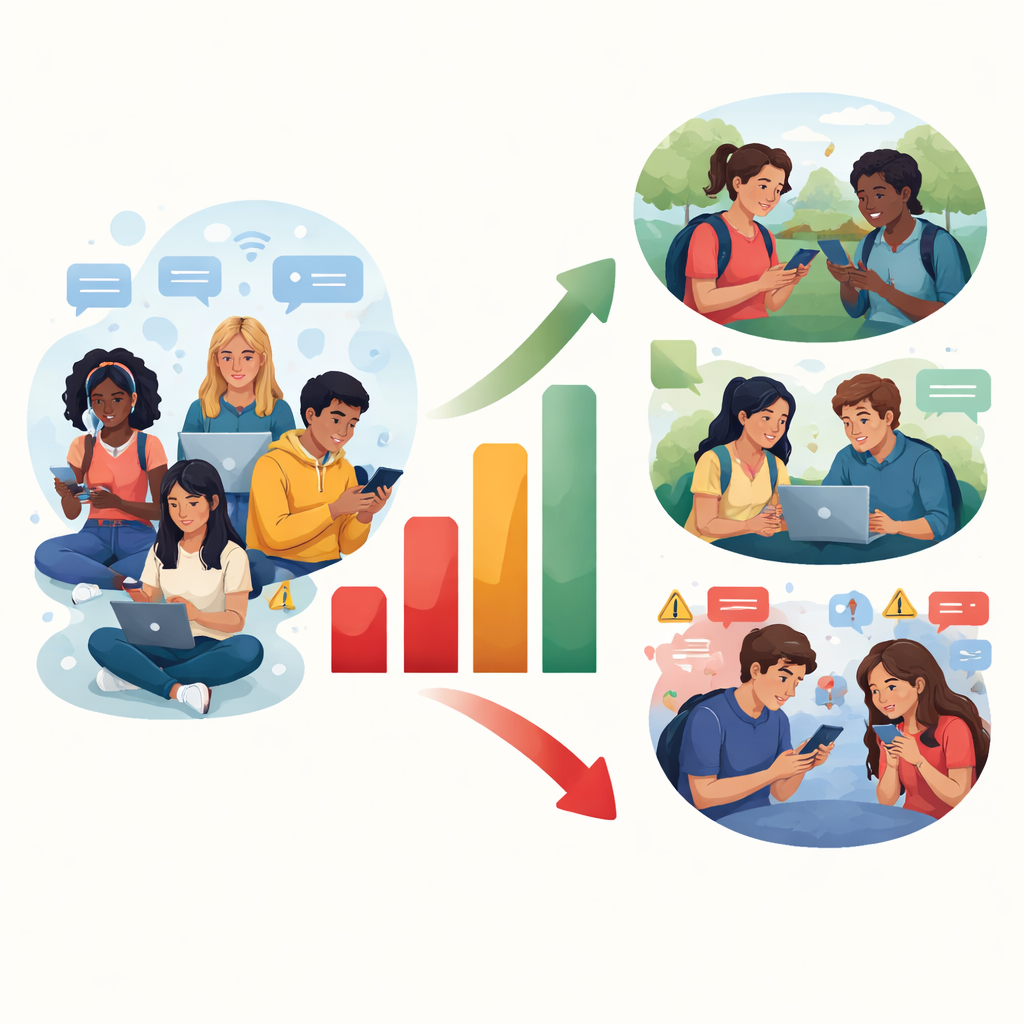
What the Researchers Wanted to Find Out
The authors focused on “digital literacy,” meaning not just knowing how to tap and swipe, but being able to find and judge information, communicate respectfully, protect privacy, and solve problems online. They compared this with two kinds of cyberbullying: cyberaggression (being the one who bullies) and cybervictimization (being the one targeted). Earlier studies often looked at just one moment in time and sometimes mixed these two roles together, making it hard to see cause and effect. This project instead tracked the same students as they grew older, asking whether earlier digital skills changed later bullying experiences—and whether bullying experiences, in turn, changed later digital skills.
How the Study Was Done
The team followed 679 students, aged roughly 12 to 17, from 14 secondary schools in Hong Kong. In 2018/19 and again in 2020/21, students completed two things: an online survey about whether they had ever bullied others online or been bullied, and a performance-based digital literacy test. Rather than simply asking teens to rate their own skills, the test presented tasks linked to five areas such as finding reliable information, communicating and collaborating online, creating digital content, staying safe, and solving problems. Answers were scored for correctness, providing an objective measure of each student’s abilities at both time points.
What Happened to Bullies and Their Skills
The results showed a two-way link between digital literacy and cyberaggression. Teens with stronger digital skills at the first time point were less likely to be cyberbullies two years later. At the same time, those who engaged in cyberaggression early on tended to have weaker digital skills later. This suggests that building digital competence may discourage teens from attacking others online, perhaps because they better understand online etiquette, consequences, and the emotional impact of their actions. It also hints that repeatedly bullying others could go hand-in-hand with other problems—such as emotional difficulties or strained relationships—that may hold back the growth of healthy digital skills.
What Happened to Victims and Their Skills
The story looked different for teens who had been bullied online. Those who reported being victims at the first time point actually showed higher digital literacy two years later. The authors suggest that being targeted may push young people to learn more about privacy settings, blocking tools, and safer ways of interacting online. However, having good skills at the start did not automatically prevent them from being bullied two years on. A closer look revealed an important nuance: teens whose digital literacy barely improved over the two years were the most likely to become new victims by the second survey, while those who escaped victimization tended to show bigger gains in their digital skills. This pattern implies that it is not just having digital literacy once that matters, but continuing to develop it over time. 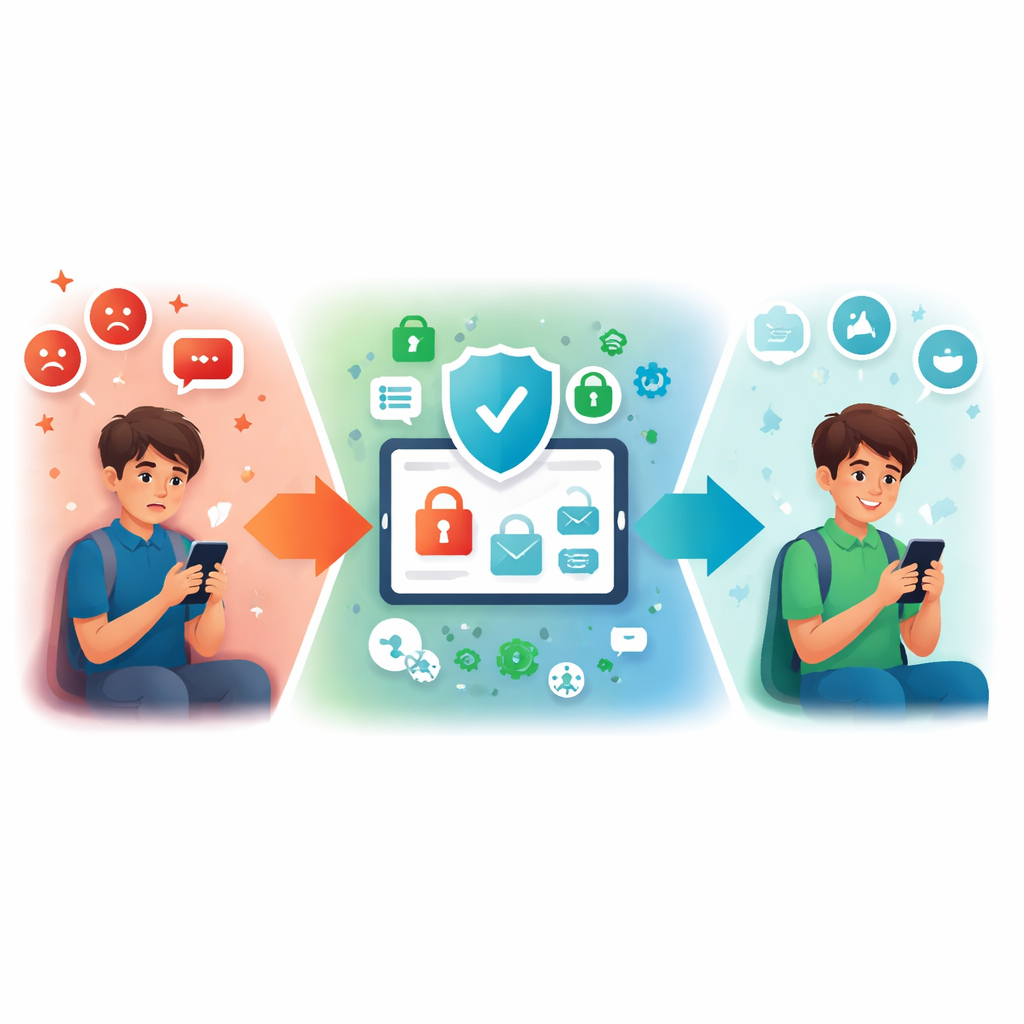
What This Means for Schools and Families
Taken together, the findings show that digital literacy and cyberbullying influence each other. Strong and growing digital skills are linked with less cyberaggression and may help teens avoid or exit victimization, but the protection is not automatic or permanent. Digital literacy needs to be treated less like a one-time vaccine and more like an ongoing training program that grows as technologies and online risks change. For families, schools, and policymakers, this means weaving age-appropriate, long-term digital literacy education into everyday learning—covering not only technical know-how, but also online ethics, empathy, and strategies for coping with hurtful behavior. By doing so, adults can help young people use the internet confidently while reducing the chances that they will be harmed by, or contribute to, cyberbullying.
Citation: Tao, S., Reichert, F. & Law, N. Longitudinal bidirectional relations between digital literacy and cyberbullying experiences in adolescence. Humanit Soc Sci Commun 13, 425 (2026). https://doi.org/10.1057/s41599-026-06788-x
Keywords: digital literacy, cyberbullying, adolescent online safety, cyberaggression, cybervictimization