Clear Sky Science · en
An innovative model of digital pedagogy: digital experience scenes design for cultural heritage properties based on multi-form spatial theory
Why a Historic Home in VR Matters to You
Imagine stepping into a historic performer’s home, not just to look around, but to feel the stories, symbols, and emotions that once lived there. This study shows how virtual reality can turn a single old house into three different kinds of learning spaces that help people remember more, care more, and ask deeper questions about culture. Instead of only rebuilding walls and furniture on a screen, the researchers designed digital scenes that also capture the cultural meanings and inner feelings tied to the residence of the Cantonese opera star Qianliju—and then tested how these scenes change the way students learn.
From Copying Buildings to Creating Experiences
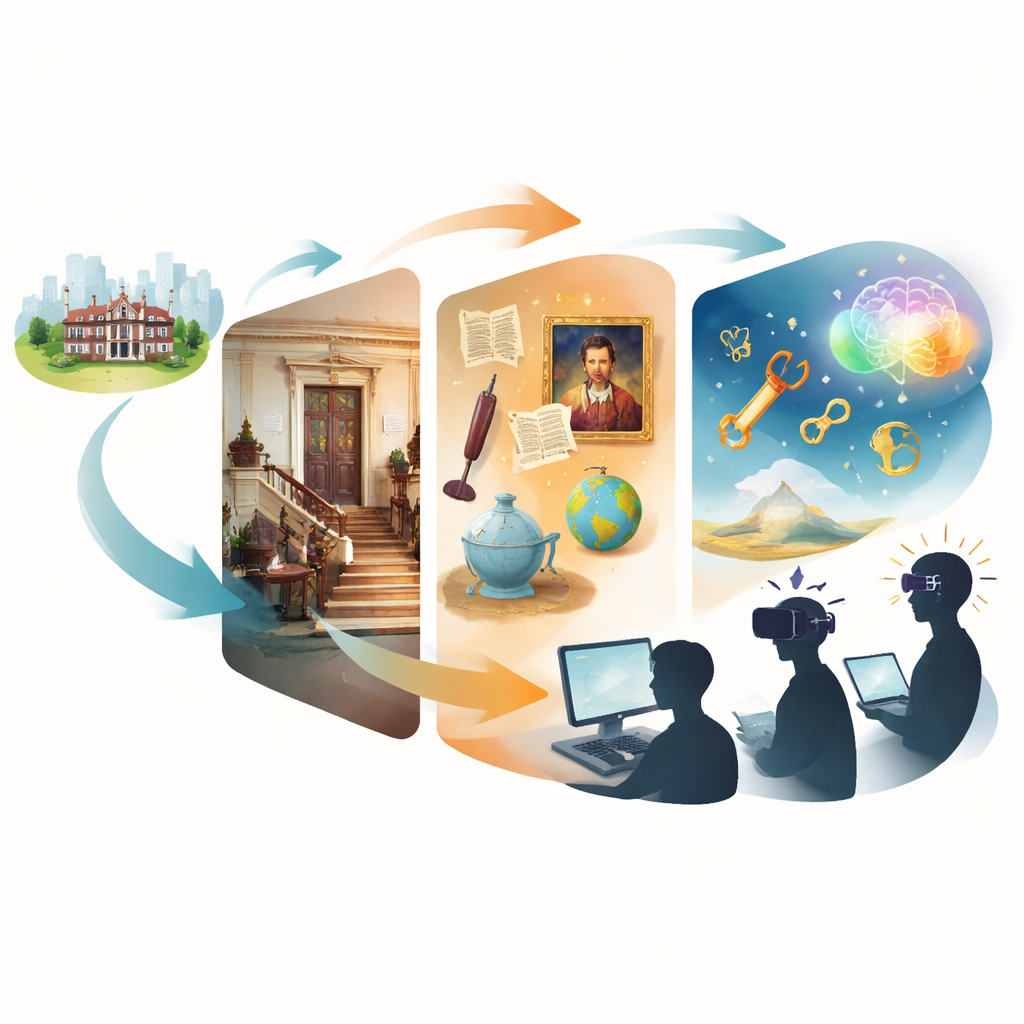
Much digital work on museums and heritage sites has focused on faithful 3D copies: exact textures, precise measurements, and highly realistic visuals. Those projects certainly help protect fragile places and let more people visit them online, but they often stop at the surface. The authors argue that such replicas rarely convey why a place matters today, or how it connects to wider histories, communities, and emotions. Drawing on the French thinker Henri Lefebvre, who described space not just as physical but also social and psychological, the team set out to build a richer kind of digital environment—one that combines what a place looks like with what it stands for and how it makes people feel.
Three Ways of Entering the Same Place
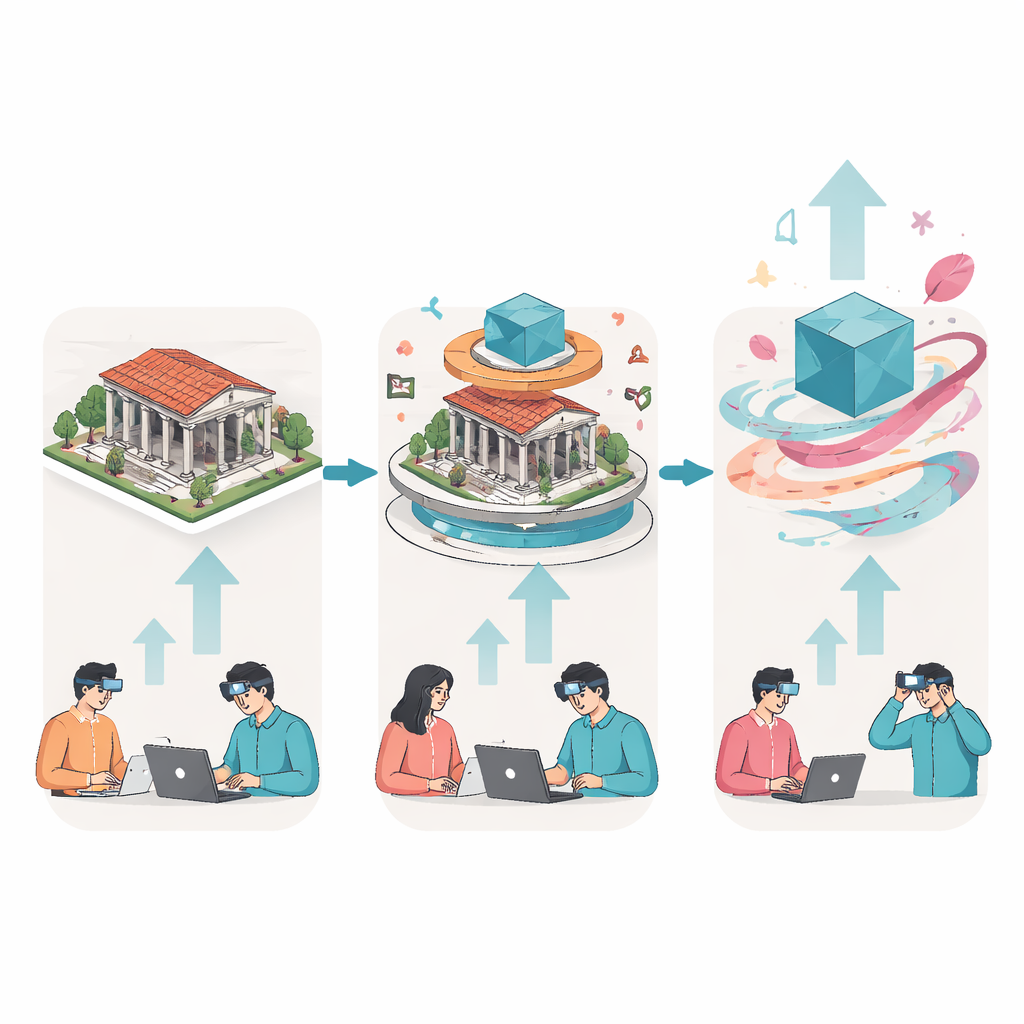
The project focuses on the former residence of Qianliju in southern China, a modest but symbolically rich home tied to the world of Cantonese opera. Using 3D modeling software, game engines, and virtual roaming, the researchers created three distinct but overlapping digital scenes. The material scene closely reproduces the actual house—its Spanish-style façade, courtyard well, trees, and traditional furnishings—so visitors can quickly feel oriented and at ease. The cultural scene rearranges the same building into stylized blocks, rings, and symbolic objects that stand for Qianliju’s mentors, students, life stages, and artistic legacy, inviting users to see the space as a web of stories rather than just architecture. The psychological scene moves even further from literal reality, using flowers, floating ribbons, and cubes to echo how visitors imagine the grace and strength of the female roles she performed.
What Happens When Students Try It
To find out how these three versions shape learning, the team invited 126 university students—none of whom had visited the house in person—to explore one of the scenes. After their virtual visit, students rated how the experience affected their understanding, feelings, and urge to explore further. All three scenes helped, but in different ways. The cultural scene was strongest for clear thinking: students who used it scored highest on recognizing and connecting ideas. It also sparked the most interest and enjoyment, likely because it balanced familiarity with fresh, symbolic twists. The material scene made it easy to jump in and grasp basic facts but did less to stretch imagination. The psychological scene, meanwhile, was the best at prompting curiosity and further inquiry, yet it also divided opinion: some students loved its freedom and mystery, while others found it confusing or too abstract.
Designing Virtual Spaces That Think and Feel
The researchers dug deeper into why reactions differed. Interviews, expert reviews, and usability checks showed that highly realistic spaces feel comfortable and easy to navigate, but can become passive tours. Symbol-rich spaces invite reflection, as long as their metaphors are not so obscure that users get lost. The most abstract scene pushed students to interpret meanings and make their own connections, but it also risked overloading those who lacked guidance. Drawing on theories of cognitive load and user-centered design, the authors suggest future systems blend visual metaphors with gentle cues, flexible navigation, and even community input from local residents and performers, so that digital heritage is shaped by many voices, not just designers.
What This Means for Learning from the Past
In plain terms, the study shows that how we build virtual spaces can change not just what people see, but how they think, feel, and act. A careful mix of realistic, cultural, and psychological scenes can help learners enter quickly, stay interested, and then push themselves to ask harder questions about history and identity. Rather than treating a historic house as a frozen relic, this approach turns it into a living classroom where facts, stories, and emotions interact. The authors see their model as a starting point for future cultural apps, virtual field trips, and museum exhibits that move beyond digital replicas toward deeper, more personal encounters with heritage.
Citation: Xie, X., Wang, C., Dai, T. et al. An innovative model of digital pedagogy: digital experience scenes design for cultural heritage properties based on multi-form spatial theory. Humanit Soc Sci Commun 13, 416 (2026). https://doi.org/10.1057/s41599-026-06768-1
Keywords: digital heritage, virtual reality learning, cultural pedagogy, spatial experience design, Cantonese opera