Clear Sky Science · en
From connectivity to prosperity: assessing the Belt and Road Initiative’s impact on poverty reduction in Pakistan
Why giant roads and power lines matter to everyday lives
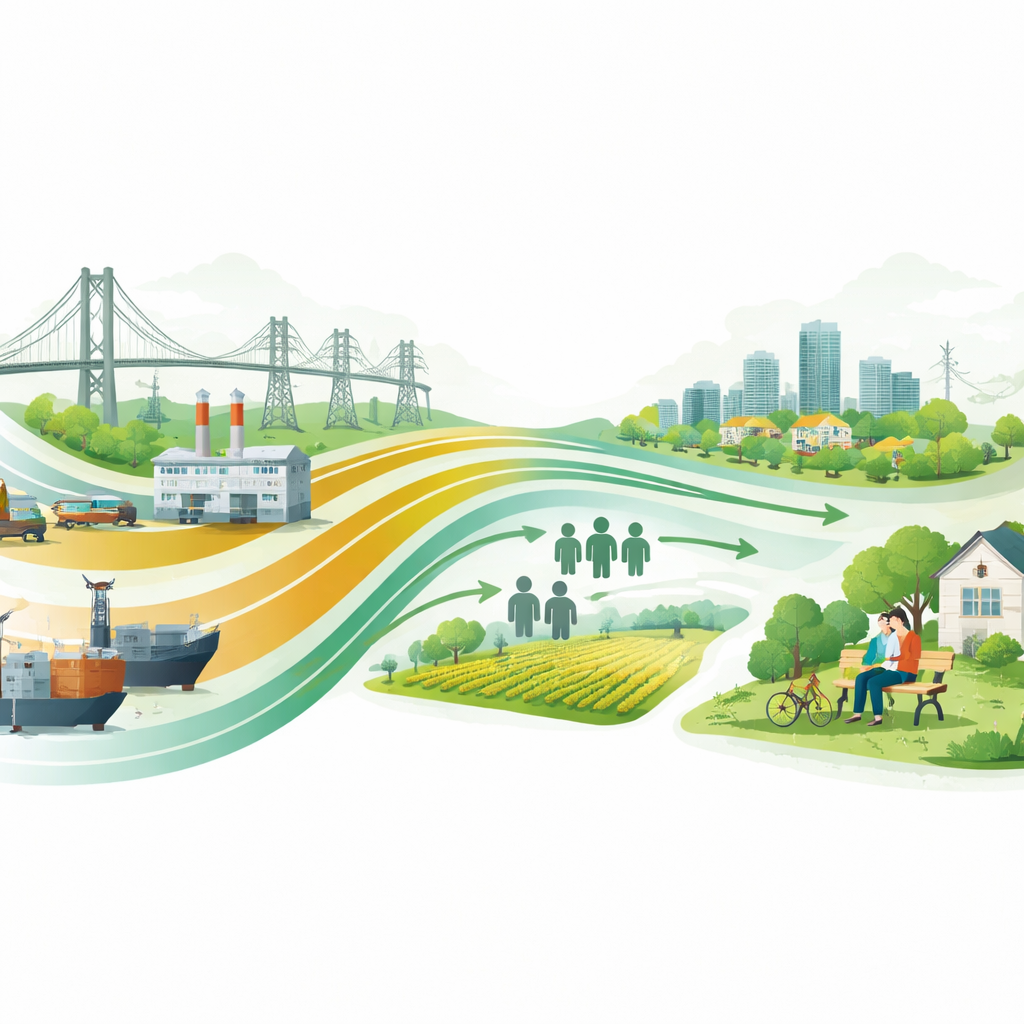
Massive new roads, ports and power plants may seem far removed from the daily struggles of families trying to make ends meet. Yet in Pakistan, these projects, built under China’s Belt and Road Initiative (BRI) and its China–Pakistan Economic Corridor (CPEC), are reshaping how people work, travel and earn a living. This study asks a simple but vital question: do these headline-grabbing investments actually help the poor, or do they mainly benefit big cities and large companies?
Big promises behind a global building spree
Launched in 2013, the BRI is China’s vast effort to link more than 140 countries through trade routes, energy networks and industrial zones. Pakistan sits at the heart of this plan through CPEC, a network of highways, power projects and special economic zones worth tens of billions of dollars. Supporters argue that better infrastructure will spark growth, jobs and new businesses. Critics worry that the gains may bypass poorer regions, deepen inequalities or be offset by rising prices and debt. Pakistan, where a large share of the population still lives near or below the poverty line, offers a crucial test of whether such mega-projects translate into real improvements in people’s lives.
How the researchers traced money to well-being
The authors combined several advanced statistical tools to follow Pakistan’s economic story from 1991 to 2023. They tracked changes in household consumption (a proxy for poverty) alongside foreign investment, economic growth, inflation, employment, urbanization, infrastructure and the arrival of BRI projects. By treating 2013—the year BRI was officially launched—as a turning point, they were able to compare the years before and after Pakistan became a key BRI partner. Their methods allowed them to separate quick, short-lived effects from deeper, long-term shifts, and to see how relationships between variables strengthened or weakened over time during booms, slowdowns and political changes.
What changed—and what held people back
The results paint a nuanced picture. Over the long run, BRI-linked investment appears to reduce poverty in Pakistan: more foreign capital, stronger economic growth, rising employment and better infrastructure are all tied to higher household consumption and improved living standards. Roads, power lines and industrial sites matter because they connect farmers to markets, attract factories and services, and create jobs for young workers. Urbanization and city growth also tend to support poverty reduction when combined with access to services and work. However, these benefits take time to appear; in the short term, the direct impact of BRI projects on poverty is modest, reflecting the long gestation of construction and the delay before new facilities start generating income.
The hidden threat of rising prices
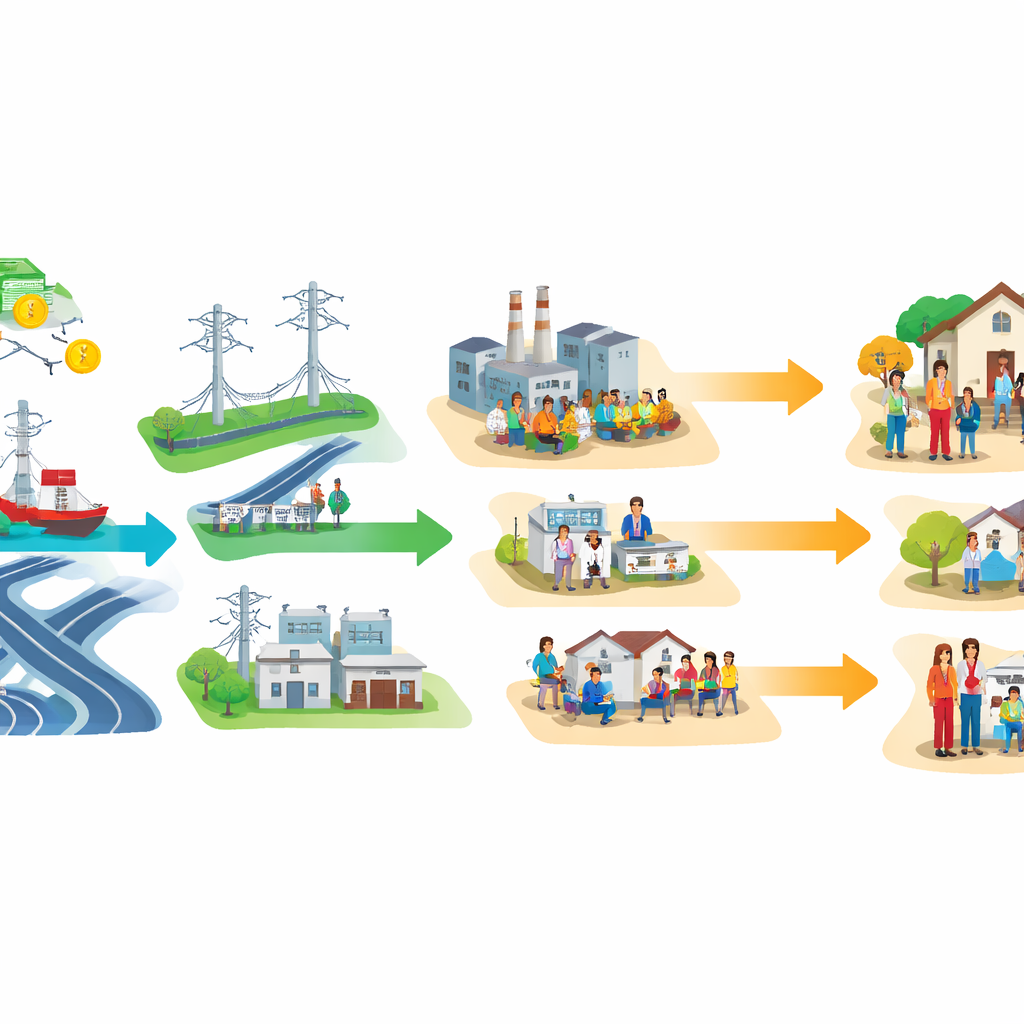
One clear villain emerges from the analysis: inflation. When prices for food, fuel and other essentials climb faster than wages, the poorest households are hit hardest. The study finds that inflation consistently increases poverty, offsetting some of the gains from infrastructure and investment. This means that even as new highways and power plants open, families can still feel worse off if their daily expenses soar. The authors also find that the relationship between foreign investment and poverty runs both ways: investment helps reduce poverty, but high poverty and instability can scare investors away, creating a feedback loop that policymakers must manage carefully.
Turning big projects into fairer futures
To make sure BRI truly helps Pakistan’s poorest citizens, the authors argue that bricks and steel are not enough. Projects need to be paired with policies that encourage local hiring, vocational training and support for small businesses so that nearby communities share in the new opportunities. Investments should be more evenly spread across lagging provinces, not concentrated only around major cities, and should be designed with environmental safeguards. Just as importantly, government must keep inflation in check and protect vulnerable households with targeted support, so that rising prices do not wipe out the benefits of growth. In simple terms, the study concludes that BRI can be a powerful tool for cutting poverty in Pakistan—but only if it is steered deliberately toward inclusive, regionally balanced and price-stable development.
Citation: Abbas, G., Guotai, C., Abbas, Q. et al. From connectivity to prosperity: assessing the Belt and Road Initiative’s impact on poverty reduction in Pakistan. Humanit Soc Sci Commun 13, 431 (2026). https://doi.org/10.1057/s41599-026-06589-2
Keywords: Belt and Road Initiative, China Pakistan Economic Corridor, poverty reduction, infrastructure investment, Pakistan economy