Clear Sky Science · en
Responding to overlapping crises: local authority public health perspective in resettling of Afghan nationals during the COVID-19 pandemic in England
Why this story matters
When tens of thousands of Afghan families fled danger and were flown to safety in the United Kingdom, they arrived in the middle of another global emergency: the COVID‑19 pandemic. This article tells the story of how local public health teams in Kent, England, worked behind the scenes to keep these new arrivals safe from infection while they waited in temporary hotels for more permanent homes. It offers a rare, ground‑level look at how a community can protect some of its most vulnerable residents when two crises collide.
A new home in a time of crisis
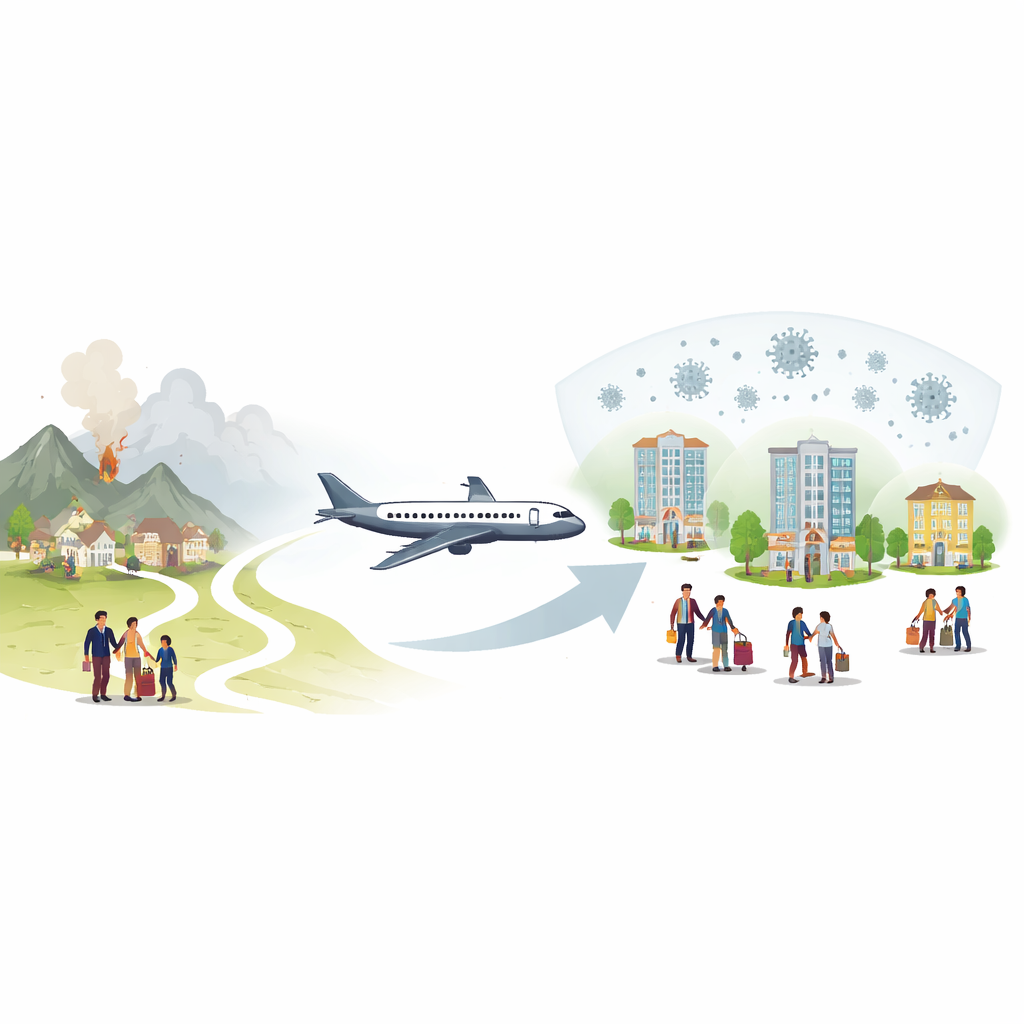
For years, the UK has run special schemes to help Afghan nationals who supported British forces, offering them a chance to relocate with their families. These programmes expanded rapidly after the withdrawal of Western troops and the Taliban takeover in 2021, leading to the evacuation of many thousands of people. After completing government‑run quarantine elsewhere, new arrivals were moved into so‑called “bridging hotels” while long‑term housing was found. In Kent, three such hotels were set up, each hosting families for far longer than the 90 days first imagined—often more than a year. The hotels quickly became busy, semi‑permanent communities made up of adults and many children, all adjusting to a new country in the shadow of a pandemic.
Building a safety net around the hotels
Kent County Council and the UK Health Security Agency pulled together a large partnership to protect residents and staff in these hotels. Local health officials, the National Health Service, district resettlement teams, hotel managers, the Home Office and contact‑tracing services formed a taskforce. Their job was to prevent COVID‑19 outbreaks and react swiftly if the virus appeared. They created local protocols, drawing on national guidance written for the general population and adapting it to this unusual setting. Clear lines of communication were established so that any sign of infection in a hotel triggered rapid advice, testing and support.
Testing, training and daily routines
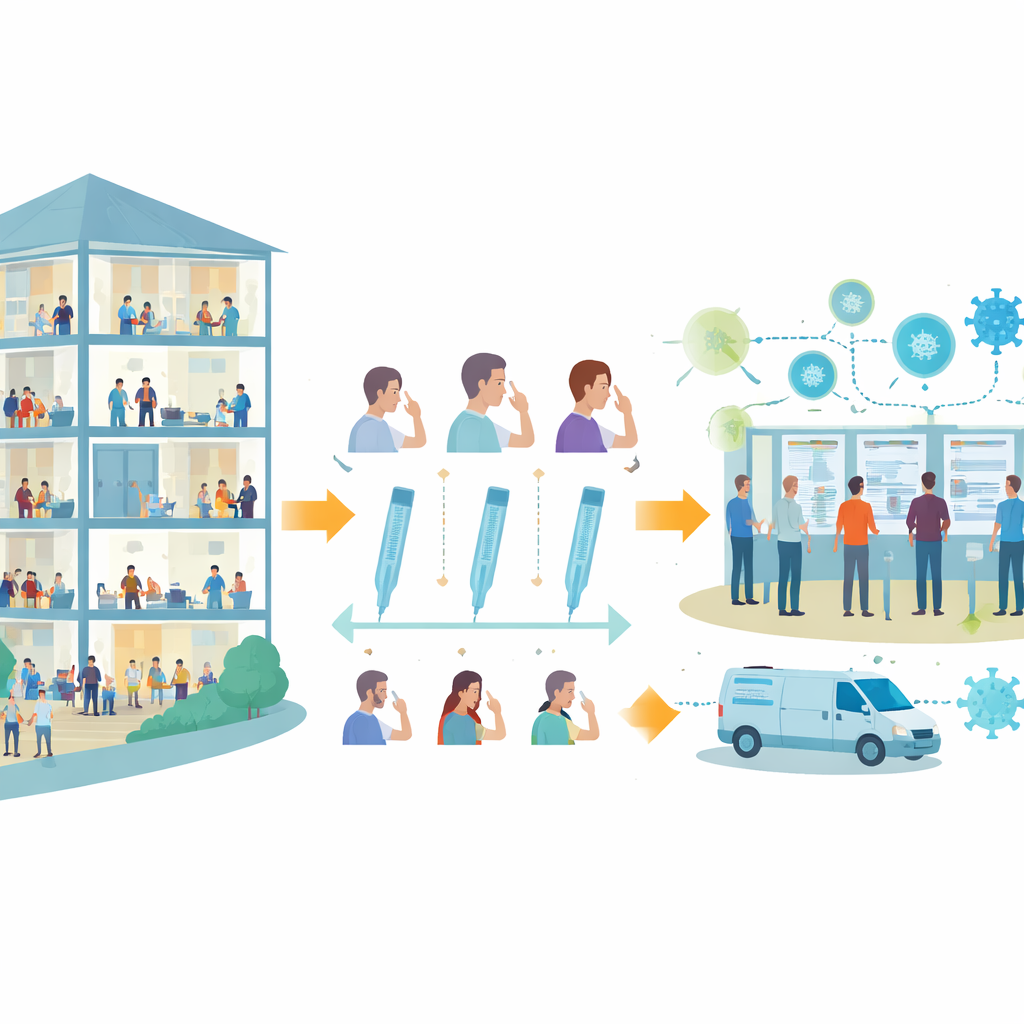
A key defence was regular COVID‑19 testing. The public health team supplied rapid lateral flow tests to the hotels and first asked residents and staff to test themselves every day, later reducing this to three times a week. Staff in the hotels oversaw the process, and local health workers trained Afghan residents—often the heads of households—in how to take the tests, read the results and register them. Training was delivered through a mix of face‑to‑face sessions and online refreshers, and some residents then helped teach their neighbours. When an outbreak was suspected, a mobile unit came to the hotel to carry out more accurate PCR tests, while infection‑control measures, such as isolation and enhanced cleaning, were put in place.
Overcoming barriers and measuring impact
The teams had to work through significant language and cultural barriers, digital exclusion and the stresses of displacement. Many women did not speak or read English, and in practice only men were allowed to attend training sessions, with the expectation they would pass information on to the rest of the family. Not everyone had access to mobile phones, email or a general practitioner registration number, which made it harder to record test results in national systems. Despite these obstacles, Afghan families generally welcomed the support and, informally at least, expressed appreciation for being included in decisions where possible. Crucially, over the core four‑month period of intense support, only ten COVID‑19 cases were confirmed across the three hotels—five among Afghan residents and five among staff. There were just two small outbreaks, no hospital admissions and no deaths.
Lessons from abroad and for the future
The authors briefly compare the UK experience with that of the United States, which ran a more centralised and military‑led programme for Afghan resettlement. In contrast, the UK relied on local authorities and health protection teams to design and deliver much of the response. Both approaches aimed to screen, test and vaccinate new arrivals, but the UK model placed greater emphasis on local coordination and freedom of movement for migrants. The Kent experience also fed into later schemes, including support for people fleeing the war in Ukraine, showing how quickly lessons from one humanitarian emergency can inform another.
What this experience shows
To a lay reader, the central message is reassuring: even in the middle of overlapping crises, a well‑coordinated local public health system can protect people who have already endured immense hardship. By combining clear leadership, practical tools like regular testing and mobile clinics, and sensitivity to culture and language, Kent’s public health team kept COVID‑19 at bay in crowded hotels full of newly arrived families. While the project was not a formal research study and data were limited, the outcome—very low illness and no deaths—suggests that careful planning and strong partnerships can make a real difference when welcoming refugees during a global health emergency.
Citation: George, A., Badrinath, P., Daniyal, M. et al. Responding to overlapping crises: local authority public health perspective in resettling of Afghan nationals during the COVID-19 pandemic in England. Humanit Soc Sci Commun 13, 428 (2026). https://doi.org/10.1057/s41599-025-06349-8
Keywords: Afghan resettlement, COVID-19 response, refugee health, public health coordination, bridging hotels