Clear Sky Science · en
Health insurance and end-of-life healthcare expenditures: evidence from Chinese Longitudinal Healthy Longevity Survey
Why the Last Year of Life Matters for Families
For many families, the final year of an older relative’s life is not only emotionally difficult but also financially overwhelming. This study looks closely at how health insurance shapes what older people in China actually spend on care during that last year. By following thousands of elders over time, the researchers ask a simple but powerful question: does having insurance change how much is spent on doctor visits, hospital care, and day‑to‑day help, and does it make the end of life fairer or more unequal?
China’s Rapid Aging and Uneven Safety Net
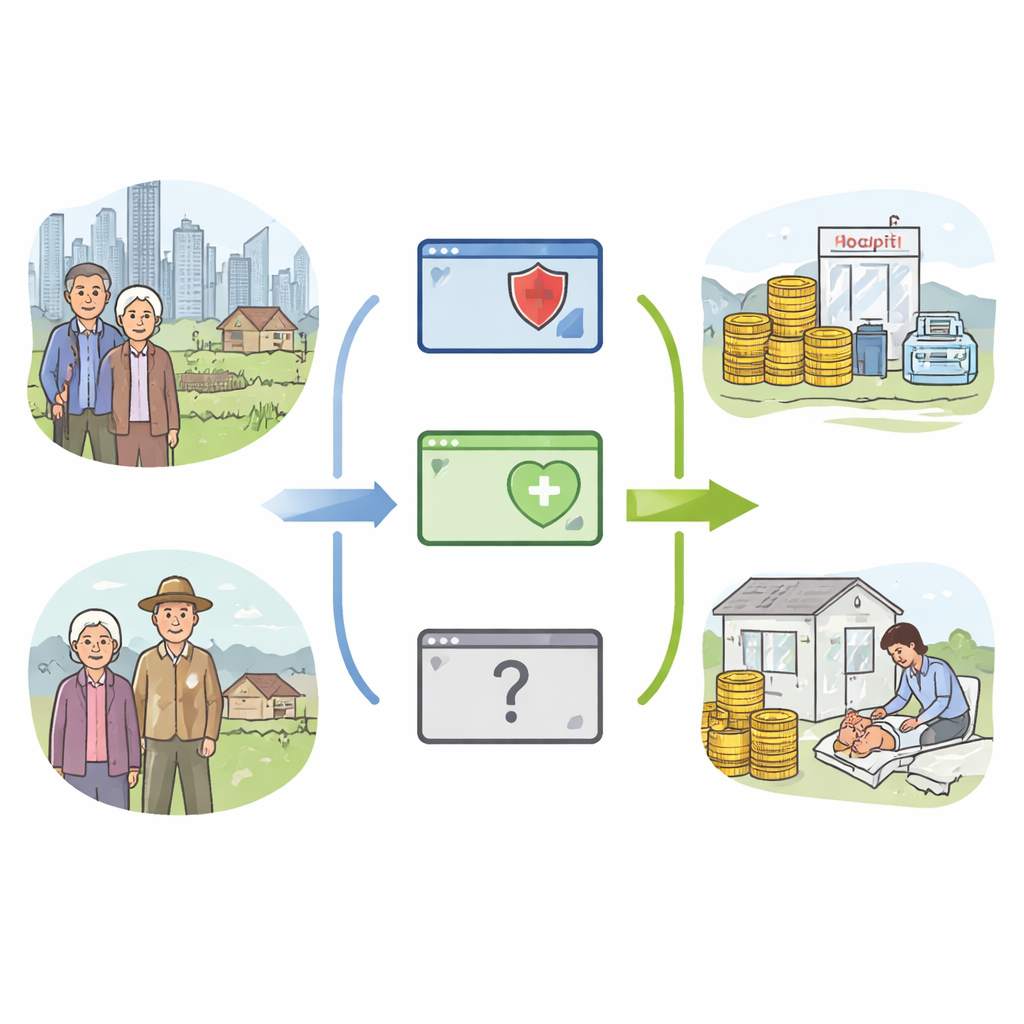
China now has one of the world’s largest older populations, and people are living much longer than in the past. Yet the extra years are not always healthy ones. Many people experience a sharp decline in health shortly before death, when medical needs and costs surge. At the same time, China’s health coverage remains uneven. City dwellers are more likely to have generous insurance tied to formal jobs, while many rural residents and informal workers have thinner coverage. Cultural ideas about a “good death” – such as avoiding being a burden or shunning aggressive treatment – also differ from Western countries and may influence when and how families seek care.
Following People Through Their Final Year
The authors used data from the Chinese Longitudinal Healthy Longevity Survey, which has tracked tens of thousands of very old adults across most provinces since 1998. They focused on nearly 11,000 people who died between 2005 and 2018 and reconstructed what they spent on two types of care in their last year: medical services (such as hospital stays, tests, and treatments) and nursing care (help with daily activities like bathing, feeding, and basic caregiving). People were grouped by whether health insurance was the main way their medical bills were paid, compared with families paying mostly out of pocket.
Sorting Out Who Really Benefits from Insurance
Because people with insurance tend to be better off, live in cities, and have more schooling, the team used statistical matching techniques to compare insured and uninsured elders who looked similar in age, income, health status, and other traits. This “propensity score matching” helps to mimic a fair comparison, like a natural experiment, rather than simply lining up two very different populations. They also tested their findings using several types of regression models and looked separately at city versus rural residents and different regions of China to see how the effects varied across the country.
More Medical Spending, But Little Help with Hands-On Care
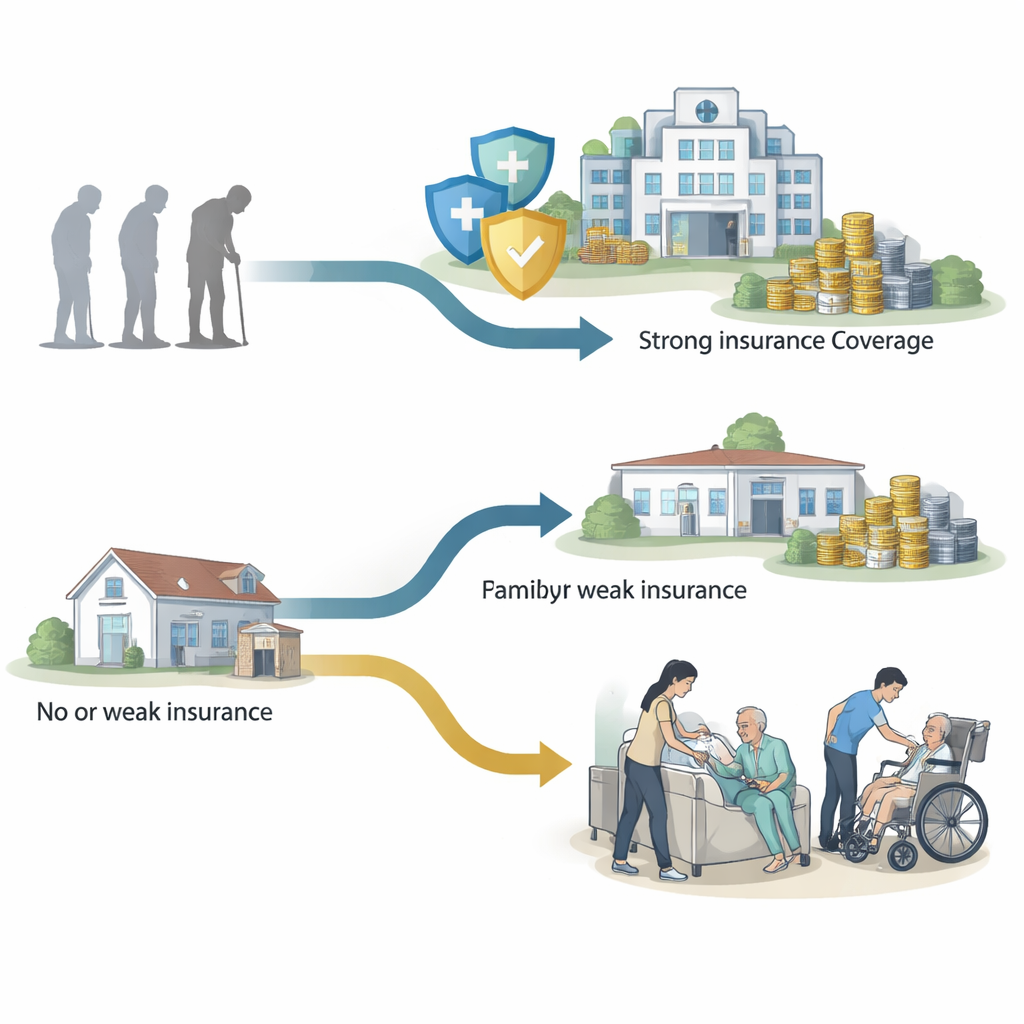
Across all these checks, one pattern was striking: when insurance was the main payer, medical spending in the last year of life was clearly higher. After carefully matching people, those with insurance spent on average about 2,200–2,600 RMB more on doctor and hospital care than similar people without such coverage, and this gap was even larger in some regions and in cities with more generous benefit packages. In contrast, insurance made almost no difference to what families spent on nursing care. More than 90% of day‑to‑day caregiving costs were still covered directly by families themselves, and this did not change meaningfully even for the most disabled elders.
City–Country and Regional Gaps in the Final Chapter
The study also highlights deep geographic divides. Insurance coverage and benefit levels are stronger in urban areas and in China’s more developed eastern region. There, insured elders spent far more on medical treatment than their uninsured peers, suggesting that generous plans encourage greater use of hospital and specialist care near the end of life. In rural areas and less developed regions, the effect of insurance on medical spending was smaller or even absent, likely because services are harder to reach and less plentiful, no matter what coverage people hold. Yet in every setting, families remained the main funders of long‑term hands‑on care, revealing a nationwide gap in support for basic daily needs at the end of life.
What This Means for an Aging Society
Put simply, the study shows that health insurance in China makes it easier for older people to use medical services in their final year, but it does little to ease the financial and caregiving load of everyday support. Insurance boosts hospital and treatment costs, especially in cities and richer regions, while the bills and labor of nursing care still fall mostly on families. For a lay reader, the takeaway is that as societies age, designing a fair health system is not just about paying for doctors and hospitals; it also requires building coverage and services that support the basic, hands‑on care most people need as life draws to a close.
Citation: Song, L., Zhang, X. & Wang, M. Health insurance and end-of-life healthcare expenditures: evidence from Chinese Longitudinal Healthy Longevity Survey. npj Health Syst. 3, 26 (2026). https://doi.org/10.1038/s44401-026-00084-1
Keywords: end-of-life care, health insurance, China aging, medical spending, long-term care