Clear Sky Science · en
The belief in a decline in cooperation in the USA and China
Why we think people are less kind
Many people feel that the world has become colder and more selfish, especially in large countries like the United States and China. News headlines, social media conflicts, and worries about fraying communities seem to confirm that kindness and cooperation are fading. This study asks a simple but important question: are people really becoming less cooperative, or is this mostly a story we tell ourselves about how society is changing?
What the researchers set out to learn
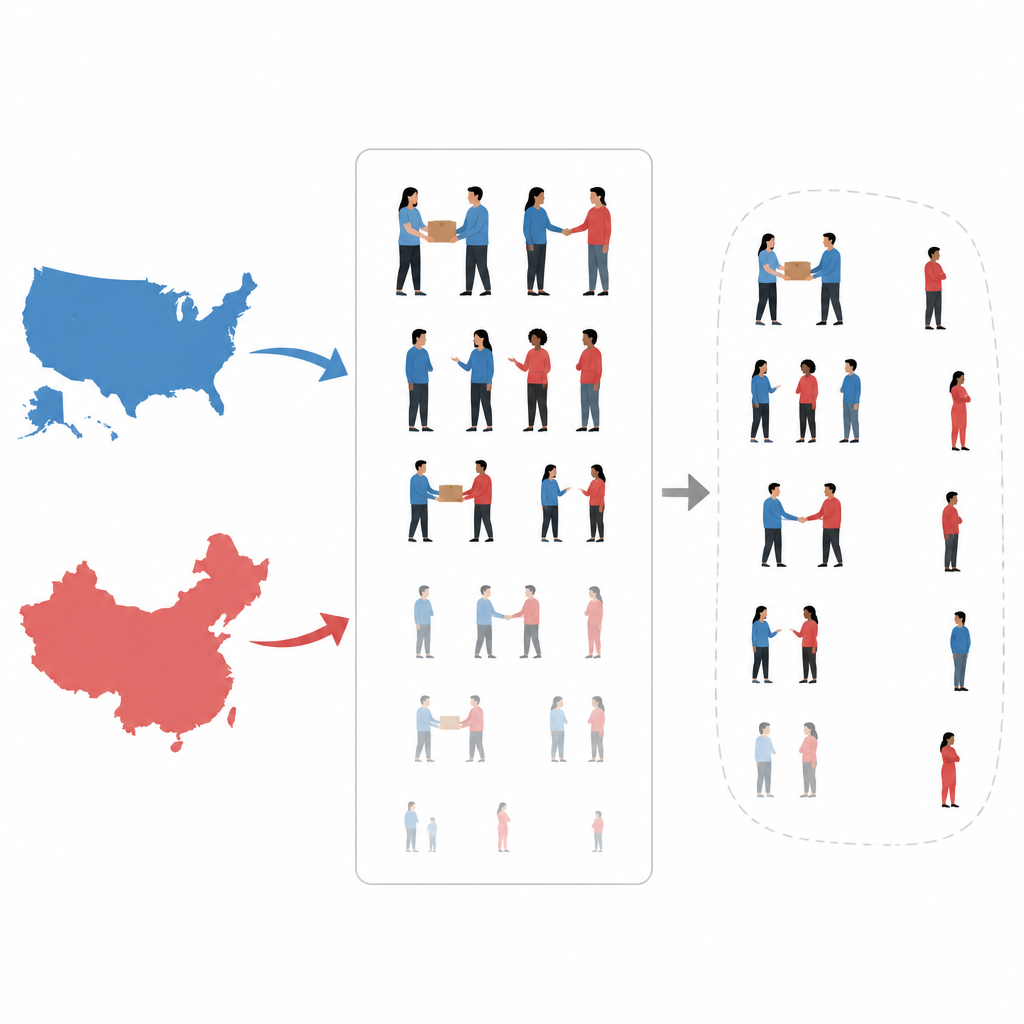
The authors focused on cooperation, the everyday acts of helping and working together that make relationships, communities, and economies function. They compared people’s beliefs about cooperation over time with what earlier experiments actually found. Past research using economic “games” has shown that, in both the United States and China, strangers have become more willing to cooperate over the past decades. Yet surveys suggest that people believe trust and morality have declined. To explore this puzzle, the researchers asked whether ordinary citizens in both countries think cooperation is falling, how far into the future they expect this trend to continue, and what social changes they blame for it.
How the study was done
More than 600 adults in the United States and over 400 in China took part in an online survey. Participants imagined people living in different years, from 1960 up to 2030, and judged how likely those people would be to cooperate in a classic scenario where two strangers can either work together or act selfishly. They also rated how warm, moral, assertive, and competent people from each period seemed. These traits were chosen because warmth and morality are tied to being caring and fair, while assertiveness and competence have more to do with drive and skill. Finally, participants picked the main social changes they thought explained any rise or fall in cooperation, such as stress, wealth, education, trust, or social media.
What people believe about cooperation over time
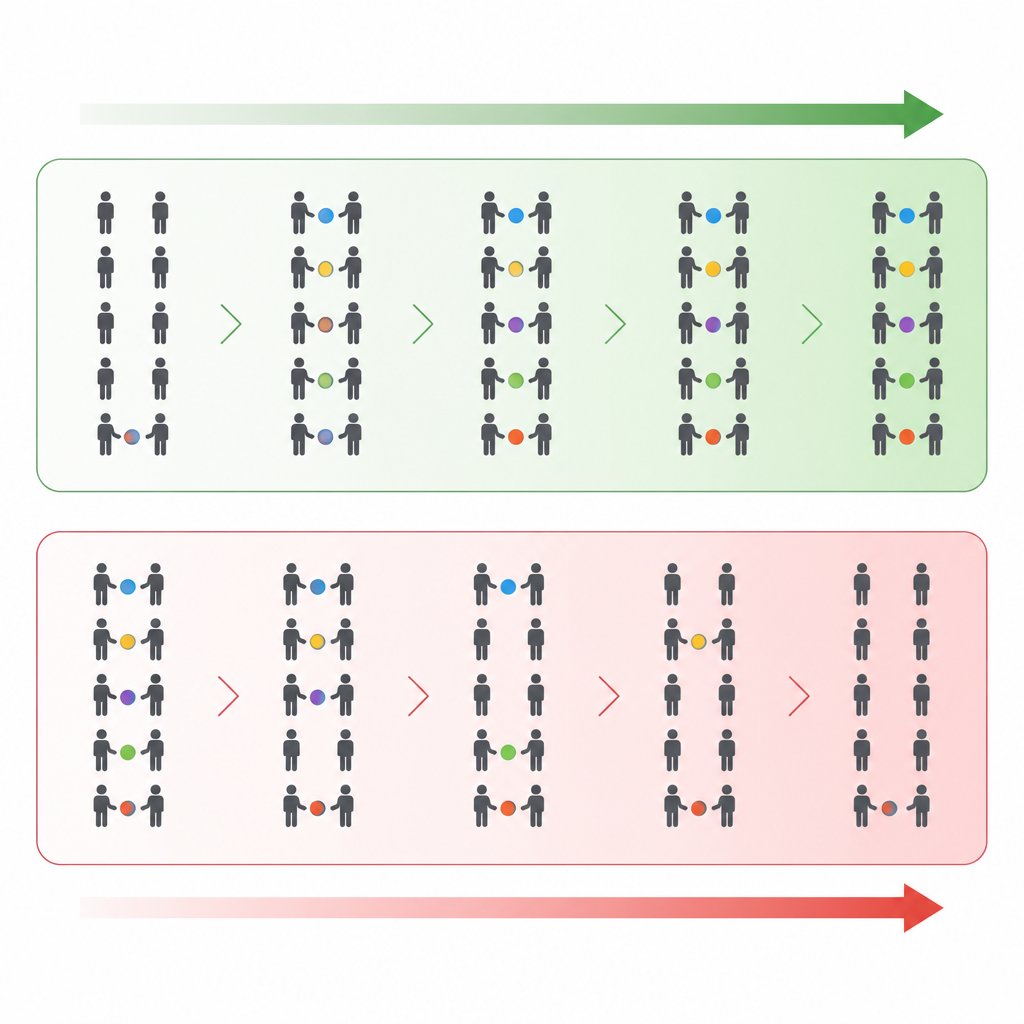
Across both countries, people showed a clear and steady belief that cooperation has been declining from the 1960s to today, and often expect that decline to continue into the near future. They also believed that people have become less warm and less moral over time, and to a lesser degree less assertive and less competent. Chinese participants tended to see a sharper drop in warmth and morality, while participants in the United States saw a stronger decline in assertiveness and competence. Older respondents in both nations were especially likely to think that cooperation, warmth, and morality have fallen. Yet when asked about the jump from 2020 to 2030, participants did not expect things to get dramatically worse, and sometimes even imagined slightly better traits in the future.
Why people think cooperation is fading
When explaining their beliefs, most participants pointed to weakening trust in others, rising stress, greater wealth and income gaps, and growing individualism. People who believed cooperation was falling often blamed increased stress and lower trust, as well as changes in religiosity, face-to-face contact, and social media. Those who believed cooperation was rising tended to credit higher education and growing wealth. There were also cross-country differences: in China, education and wealth were seen as especially important forces shaping cooperation, while in the United States people more often highlighted social media, technology, and changing patterns of in-person contact. Statistical analyses suggested that how people think these social trends have shifted over time helps explain why they expect more or less cooperation from others.
What this means for our view of human nature
The study shows that in both the United States and China, many people share a powerful story of moral and cooperative decline, even though experimental evidence points in the opposite direction: strangers in these societies have, on average, become more cooperative over the past decades. This gap between belief and reality matters. If people assume others are selfish, they may be less willing to work together on big problems such as climate change or public health. At the same time, people do not fully give up on the future, leaving room for hope that cooperation can be improved. Understanding why we misjudge one another, and which social changes shape those judgments, may help societies find better ways to build trust and support real cooperation.
Citation: Liu, Y., Spadaro, G., Ergün, S. et al. The belief in a decline in cooperation in the USA and China. Commun Psychol 4, 82 (2026). https://doi.org/10.1038/s44271-026-00442-7
Keywords: cooperation, social trust, moral decline, public perception, cross-cultural psychology