Clear Sky Science · en
Habit degradation strategies promote faster early reductions in unhealthy snacking habit strength in intensive longitudinal randomised controlled trial
Why everyday snacking habits matter
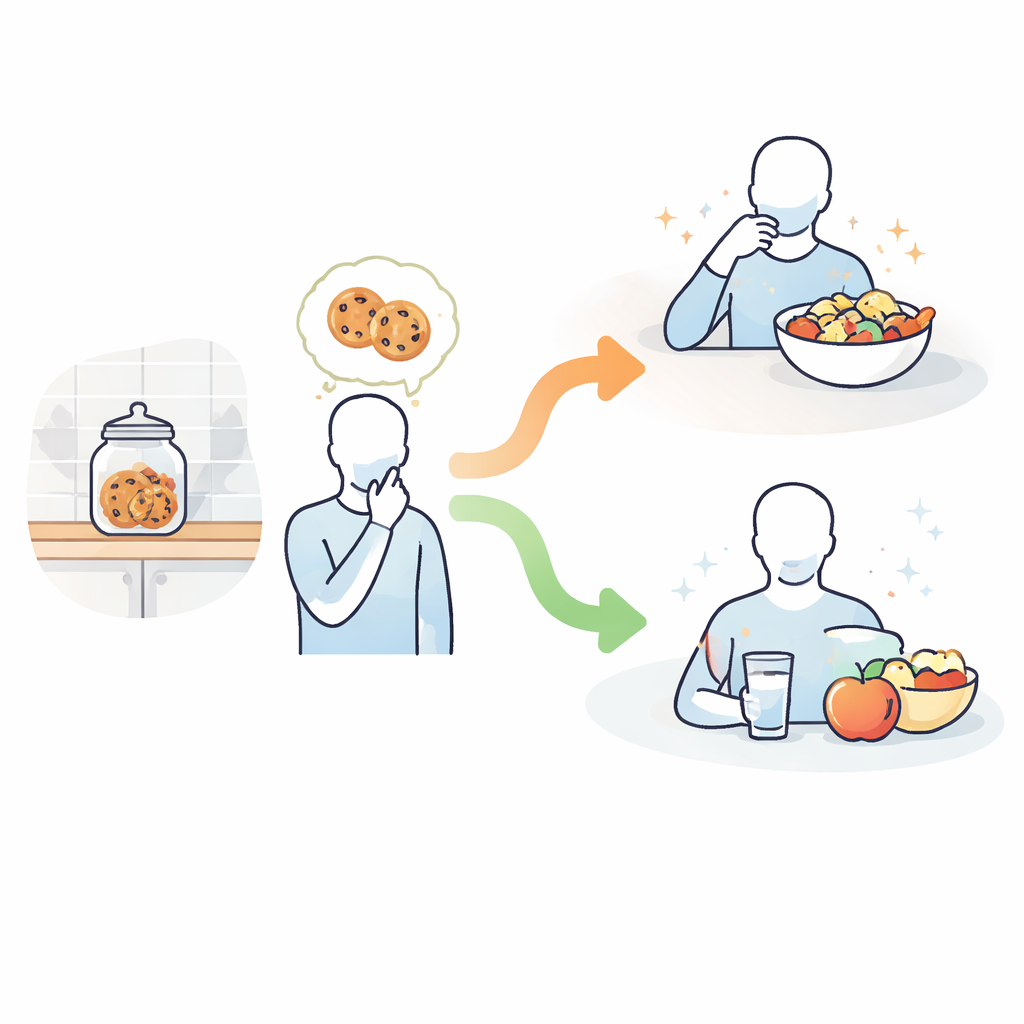
Many of us find our hand in the cookie jar almost before we realize what we are doing. These small, repeated actions—like snacking on sweets at home—can add up to major health consequences over time. This study asks a question that concerns anyone who has tried to cut back on such routines: when a habit feels automatic, what actually helps to weaken it in real life, outside the lab?
How the study followed people at home
Researchers in Switzerland recruited over 300 adults who said they had a strong habit of eating unhealthy snacks at home and wanted to reduce it. For thirteen weeks, participants used a smartphone app to report, every evening, how automatic their snacking felt that day. For most people, this meant describing how strongly a familiar situation—such as an afternoon coffee break or watching TV at night—seemed to trigger snacking without much thought. By collecting these daily ratings, the team could trace how each person’s habit changed from week to week.
Different ways to break the cookie jar routine
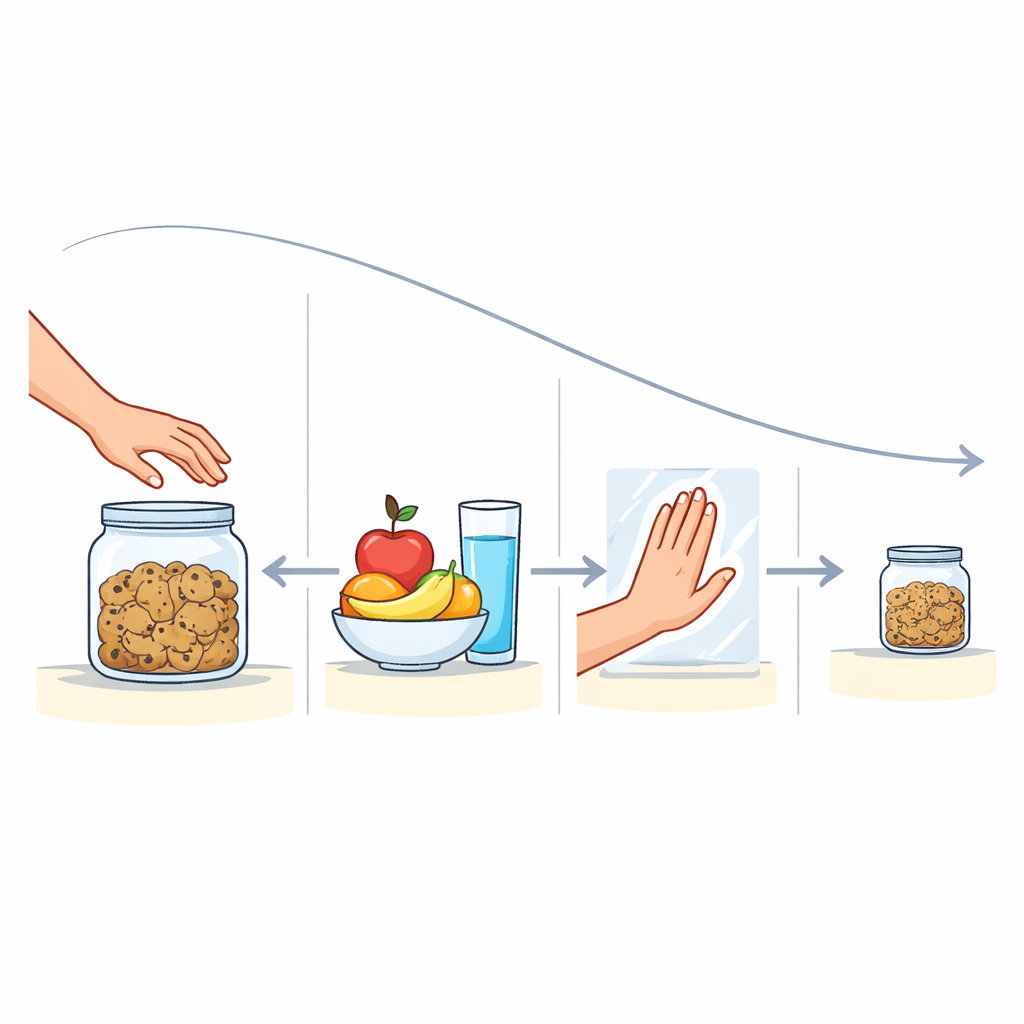
Participants were randomly assigned to one of several groups. Some were given written instructions to use a specific strategy whenever their usual snacking situation occurred. One group practiced substitution, for example swapping biscuits for fruit or a glass of water. Another group focused on inhibition, deliberately telling themselves to stop when they felt the urge to snack. A third group tried reduced accessibility, such as keeping snacks out of the house. Everyone in these strategy groups wrote a simple “if-then” plan, like “If my usual snacking moment happens, then I will follow my chosen strategy.” A separate control group tracked their habits but was explicitly told not to try to change them.
Testing whether rewards add extra help
Half of the strategy users were also placed in a reward condition. Whenever they encountered their snacking situation and reported eating no unhealthy snacks, the app displayed a celebratory animation and awarded them points toward in‑app achievement levels. These digital rewards were designed in advance to feel encouraging and pleasant, but they did not involve real money or prizes. This allowed the researchers to test whether extra positive feedback for resisting the habit would speed up habit weakening beyond the strategies alone.
What happened to people’s snacking habits
Across the entire sample, the sense of automatic snacking declined over the three‑month study. On average, people’s habit ratings dropped by roughly half a point on a five‑point scale, and this decline was steepest during the first week after the strategies were introduced. When the researchers compared groups, they found that those given any habit‑breaking strategy showed a faster early drop in habit strength than the control group. However, over the full study period there were no clear differences between the specific strategies, and the added reward features did not reliably change how much, or how quickly, habits weakened. The team used advanced curve‑fitting methods to look at each person’s trajectory and found that some people’s habits faded within days while others took many weeks, underscoring how individual these processes are.
What this means for changing your own habits
For someone trying to snack less, the findings carry two main messages. First, deliberately using a concrete strategy—whether swapping in a healthier option, blocking the behavior, or making snacks harder to reach—can help your habit feel less automatic, especially in the very first days of change. Second, no single tactic or simple reward system emerged as a clear winner. Real‑world attempts to break habits are messy: people blend strategies, respond to their own motivations, and differ widely in how fast their routines loosen their grip. The study suggests that giving yourself a clear plan and monitoring your behavior may be more important than finding a perfect trick, and that patience is needed as unhealthy habits gradually lose their pull over time.
Citation: Edgren, R., Baretta, D. & Inauen, J. Habit degradation strategies promote faster early reductions in unhealthy snacking habit strength in intensive longitudinal randomised controlled trial. Commun Psychol 4, 67 (2026). https://doi.org/10.1038/s44271-026-00432-9
Keywords: habit change, unhealthy snacking, behavior change strategies, self-monitoring, longitudinal study