Clear Sky Science · en
Mind the governance gap: a one health scoping review of national AMR performance indicators
Why drug resistant germs matter for everyone
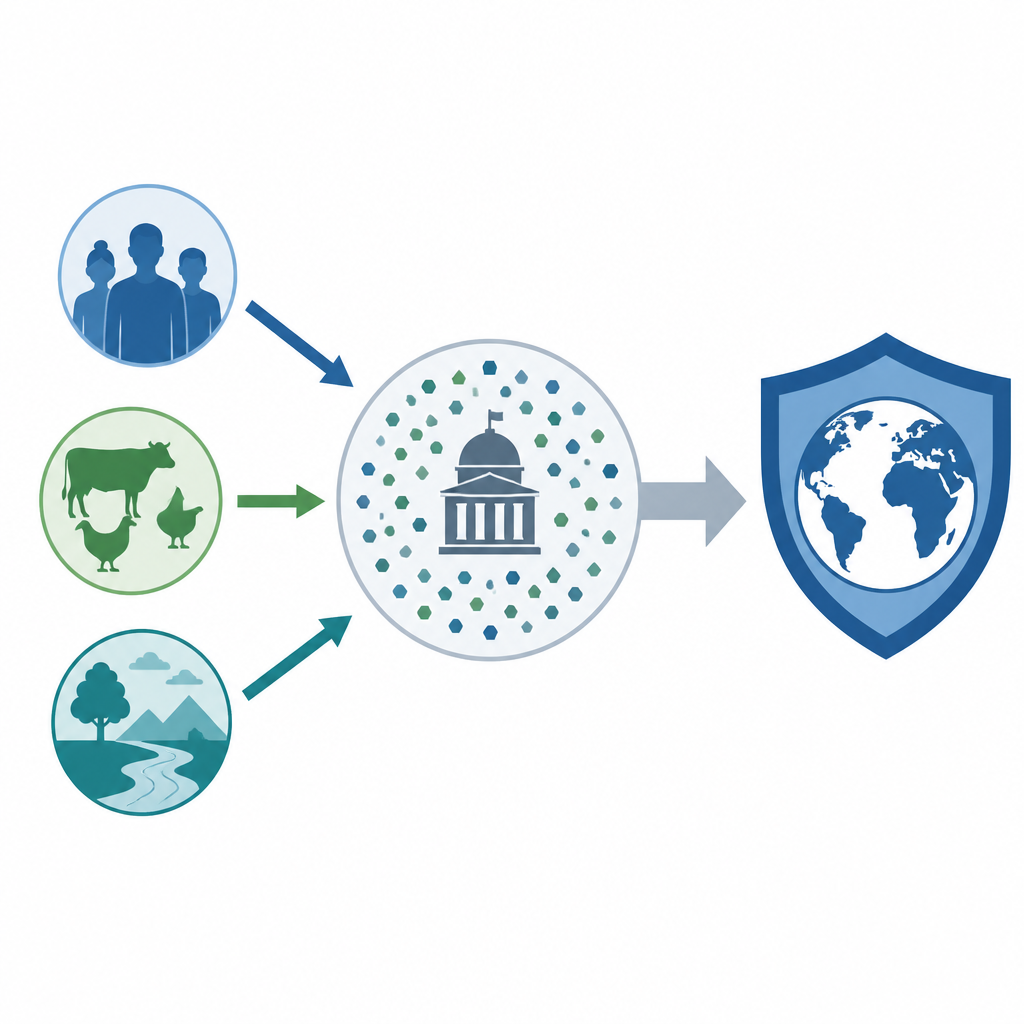
Antimicrobial resistance happens when germs no longer respond to the medicines we rely on to treat infections. It already causes more than a million deaths each year and strains health systems worldwide. Governments have promised to act, but it is hard to know who is truly making progress. This study asks a simple question with big consequences: how can we fairly measure what countries are actually doing to slow resistance in people, animals, and the environment?
Taking stock of how countries are judged
The authors carried out a large scoping review, searching thousands of scientific papers and policy reports published over the past decade. They looked for every indicator used to compare how different nations respond to antimicrobial resistance. An indicator might be something like whether a country has a national action plan, how many labs can test for resistant bacteria, or how often antibiotics are sold without prescription. By pulling together both academic work and reports from organisations such as the World Health Organization and the World Organisation for Animal Health, the team built a broad catalogue of how national performance has been assessed so far.
Building a picture across human, animal, and environmental health
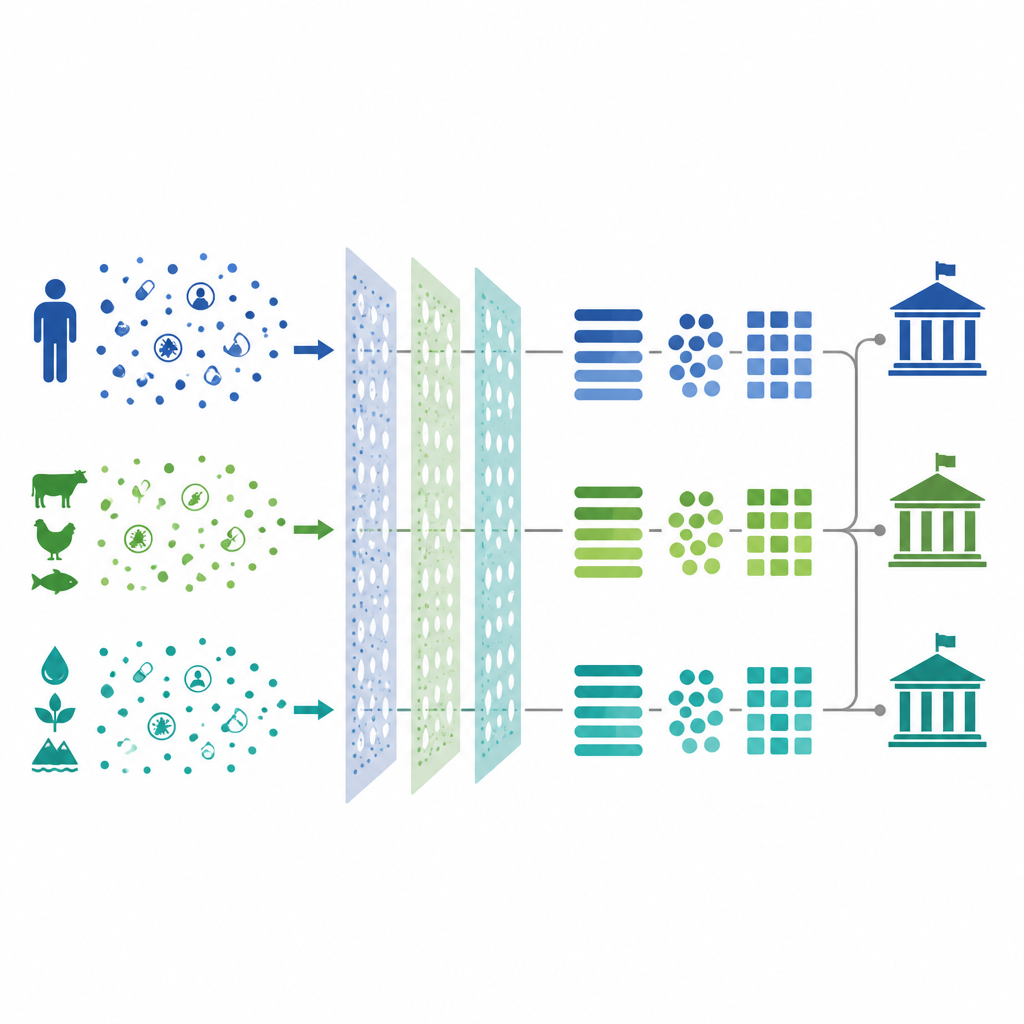
From 184 academic studies and 48 grey literature sources, the review identified 3717 eligible indicators. Most related to human health, with fewer covering animal health and even fewer the environment, despite the fact that resistant germs move between these spheres. To make sense of this crowded landscape, the authors sorted each indicator into a One Health framework with three main areas. “Governance and leadership” covers the rules, strategies, and shared decision making that guide action. “Action areas” include everyday practices such as infection prevention, responsible antibiotic use, and public awareness. “Monitoring and evaluation” tracks surveillance, reporting, and whether policies actually work.
What we measure most and what we neglect
The review reveals clear patterns. The heaviest concentration of indicators concerns surveillance and laboratory capacity, stewardship of antibiotic use, and infection prevention and control. In other words, we are better at counting resistant germs, tracking antibiotic consumption, and monitoring hygiene programmes than at judging how fairly or transparently policies are run. Only a small fraction of indicators relate to accountability, transparency, and equity, even though these features help determine whether action plans move beyond paper and whether vulnerable groups are protected. Similarly, there are many more tools to measure progress in human health than in animal or environmental settings, leaving major blind spots in a truly One Health approach.
How the review will be used
Because the study focused on cross country comparisons, it left out local measures that cannot easily be standardised and did not assess the quality of each indicator. Instead, the aim was to assemble a starting pool. The authors plan to refine this list through expert consensus, removing duplicates and unworkable measures, and then combine the strongest candidates into a new One Health Antimicrobial Resistance Accountability Index. A separate, human health focused index linked to a regional roadmap for Europe is already being piloted to ensure that any final score reflects differences in health systems and income levels.
What this means for the fight against resistance
For non specialists, the key message is that counting resistant infections is not enough. To know whether countries are doing their fair share, the world also needs clear, balanced measures of who is responsible, how decisions are made, and whether policies reach those most at risk. This study maps the tools that already exist to judge national efforts against antimicrobial resistance and exposes the gaps that still need to be filled. By turning this inventory into a practical index, the authors hope to give policymakers, international partners, and the public a clearer way to track progress and to spot where extra support is needed to keep life saving medicines working.
Citation: O’Neill, E.T., Shafaque, U., Karadimitris, V. et al. Mind the governance gap: a one health scoping review of national AMR performance indicators. npj Antimicrob Resist 4, 40 (2026). https://doi.org/10.1038/s44259-026-00213-8
Keywords: antimicrobial resistance, One Health, health indicators, governance, national policy