Clear Sky Science · en
Empirical insights on the adaptation planning-implementation gap from the Global Covenant of Mayors European signatories
Why City Climate Promises Often Stall
Across Europe, thousands of towns and cities have promised to protect people from heatwaves, floods, and other climate threats. Yet many of these promised measures never leave the page. This study digs into a vast dataset of nearly 20,000 local climate adaptation actions to uncover a simple but pressing question: what really makes the difference between a plan that gets built on the ground and one that gathers dust?
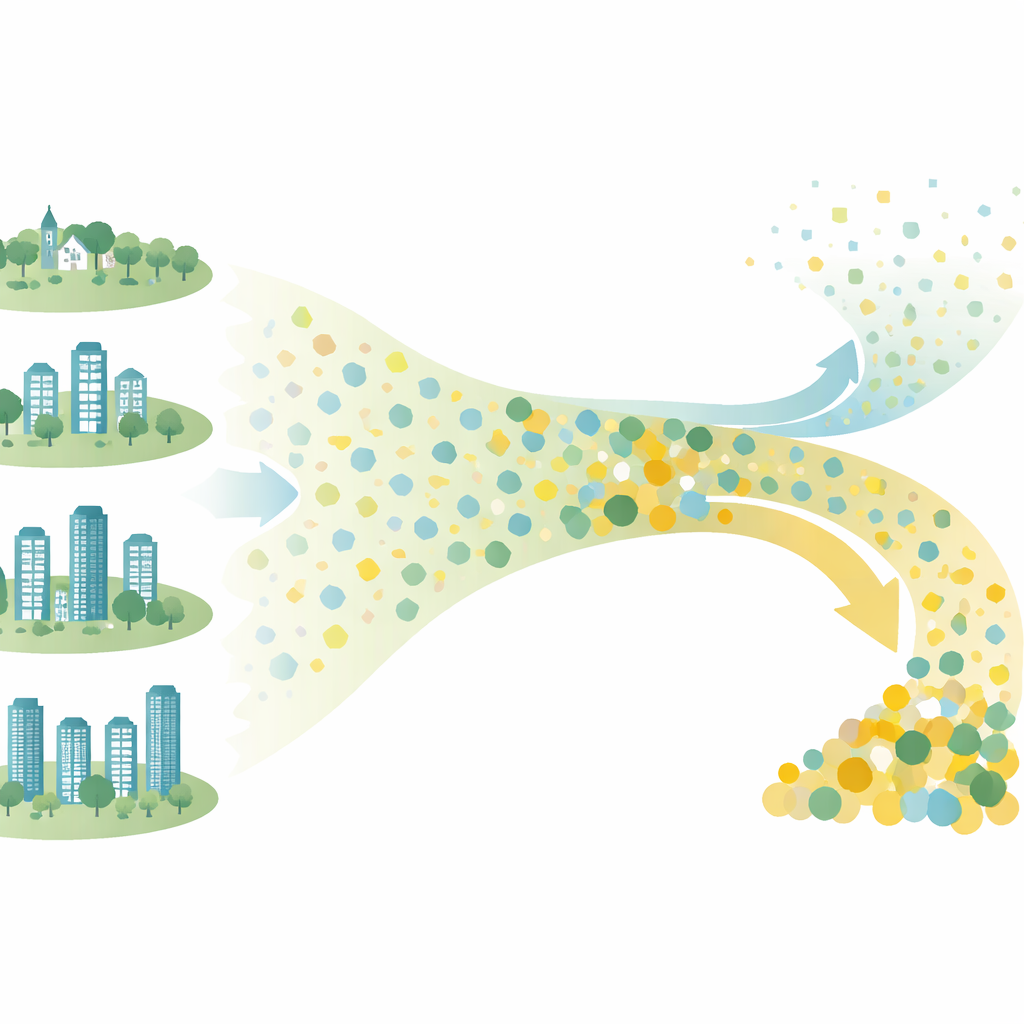
The Big Picture: Plans Outpacing Action
The authors analyse reports from 1,596 European municipalities that are part of the Global Covenant of Mayors, a major international climate initiative. Between 2014 and 2023, local governments logged almost 20,000 adaptation measures, from cooling green spaces to flood defences. The data show that planning has surged, especially after 2017, but implementation lags badly. Since 2020, the share of projects that are actually underway or finished has dropped, while cancelled and never-started actions have grown. This persistent gap between promising and doing is what the study calls the adaptation planning–implementation gap.
Different Places, Different Chances
Not all communities struggle equally. In larger cities, towns, and small towns, more than half of the reported measures are underway or completed. In villages, barely over a third reach that stage. The team also looks at how long it takes to get from an approved plan to real-world work. Most successful projects start within a year of approval, but a noticeable share are delayed by several years. To make sense of these patterns, the researchers group municipalities by size and then test how social conditions, governance, and money shape the odds that an action will be implemented and how quickly it moves.
People and Power: How Society and Institutions Matter
Education emerges as one of the strongest enablers. Places with a higher share of residents in at least secondary education are much more likely to turn plans into real projects, across all settlement types. Citizen involvement in implementation also helps in cities, towns, and small towns, suggesting that when people are invited to participate, projects gain momentum—even if this can introduce some delays due to longer discussions. Social inequality, by contrast, usually undermines implementation: where many people face poverty or exclusion, planned measures are less likely to move ahead. An intriguing exception appears in villages, where higher inequality is actually associated with more follow-through, possibly because tight-knit rural communities mobilise collectively when resources are scarce.
Institutions and trust also play a decisive role. High-quality public institutions in cities are linked to faster and more reliable implementation, reflecting better capacity to manage complex projects. Cooperation across borders and jurisdictions—such as joint efforts between neighbouring municipalities or higher-level administrations—tends to support implementation, especially for smaller places that depend on outside help. Trust in government has mixed effects: in small towns and villages, higher trust can encourage adaptation, yet certain levels of trust also coincide with short delays, hinting that building consensus can take time.
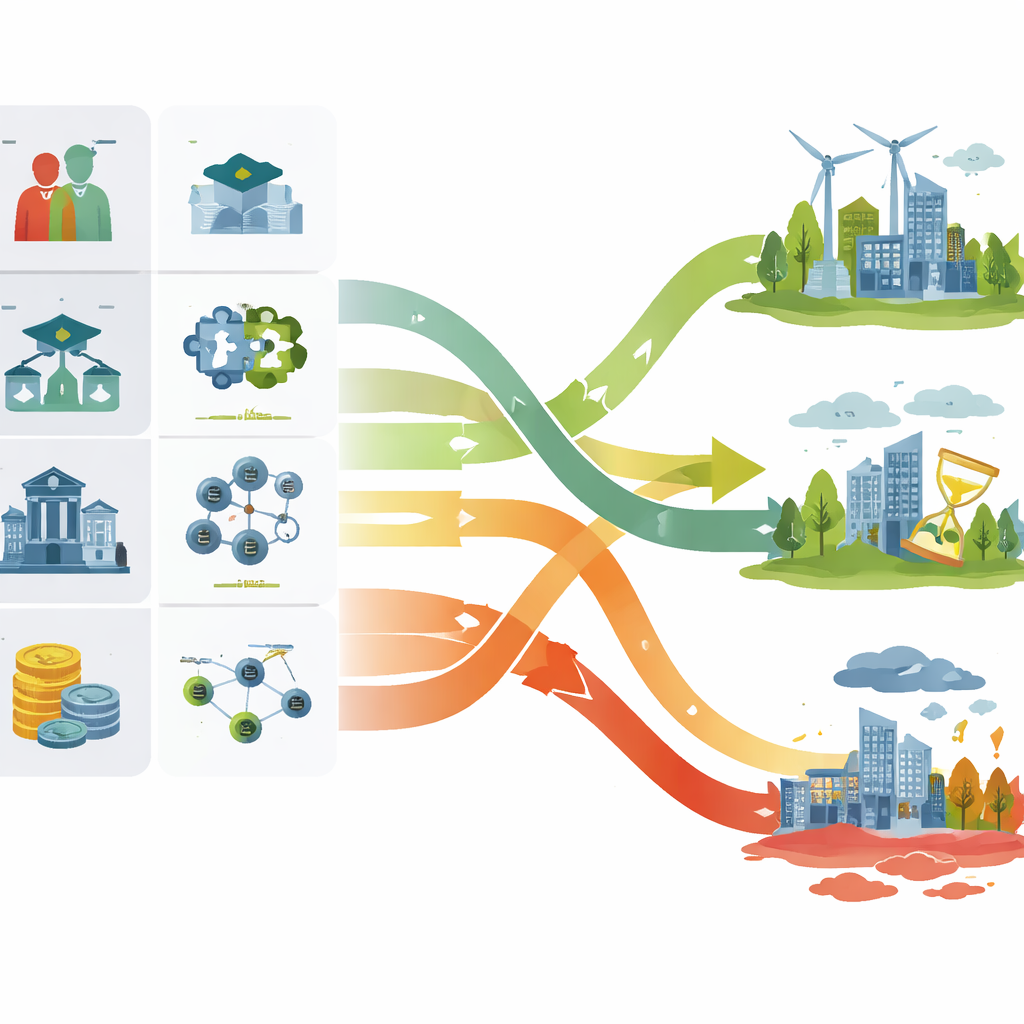
Money and Timelines: Who Pays, and How Fast Things Move
Financial strength clearly matters, but it plays out differently by size. Big cities and larger towns with strong local budgets are better able to fund their own projects and move them forward without long waits. In contrast, small towns and villages are more reliant on regional, national, or private funding. Where such external financing is available—especially private investment—implementation odds improve and delays shrink. The study also finds that some factors influence timing in non-linear ways: for example, high social inequality can coexist with both very fast and very slow implementation, depending on local context, and the involvement of national governments often coincides with longer delays in getting projects off the ground.
What This Means for Everyday Life
For residents, the study’s bottom line is straightforward: whether your city’s climate promises turn into cooler streets, safer homes, and better flood protection depends less on the number of plans and more on the social fabric, the quality of local institutions, and how money and responsibilities are shared. Educated and engaged communities, fairer societies, trustworthy and competent public bodies, and suitable funding sources all tilt the balance toward action. By pinpointing which combinations of these factors help or hinder progress in different types of settlements, the research offers practical guidance to policymakers on how to close the gap between climate words and climate deeds—so that more of what is promised actually gets built.
Citation: Martínez Görbig, G., Flacke, J., Treville, A. et al. Empirical insights on the adaptation planning-implementation gap from the Global Covenant of Mayors European signatories. npj Urban Sustain 6, 66 (2026). https://doi.org/10.1038/s42949-026-00365-6
Keywords: climate adaptation, urban resilience, local governance, European cities, climate policy implementation