Clear Sky Science · en
Effects of multisensory stimulation based on immersive virtual reality in postoperative neuropsychiatric recovery after gynecological laparoscopy
Why this matters for patients and families
Many people think of virtual reality as a tool for games, but it may also help patients hurt less and feel calmer after surgery. This study looked at whether wearing a virtual reality headset, paired with relaxing scents, could ease pain, worry, and poor sleep in women recovering from minimally invasive gynecologic surgery. The findings suggest that simple, drug free tools might make the hours after surgery more comfortable and possibly reduce the need for strong painkillers.
A new way to ease pain after surgery
Women who have gynecologic laparoscopic surgery usually recover faster than with a larger open operation, but they still often experience strong pain, disturbed sleep, and anxiety soon after the procedure. Strong painkillers like opioids help, yet they can cause nausea, constipation, drowsiness, and dependence, and some patients cannot take them safely. Researchers in China tested a different approach that uses the senses of sight, sound, and smell to pull attention away from pain and create a more soothing experience during the first day after surgery.
What the researchers tested
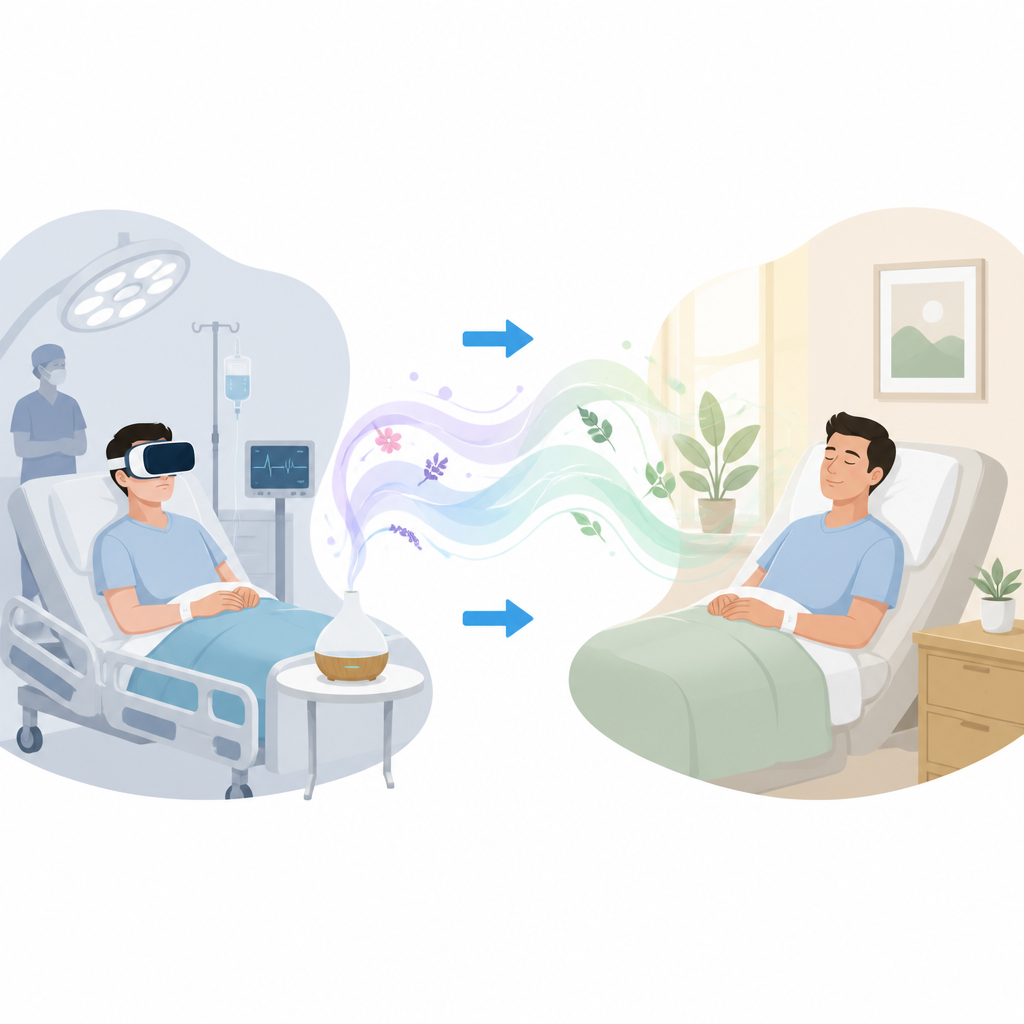
The team ran a randomized controlled trial, which means participants were assigned by chance to different kinds of care. All women had laparoscopic surgery for conditions such as uterine fibroids or hysterectomy, and all received standard anesthesia and routine pain control. One group used immersive virtual reality combined with lavender aromatherapy, called multisensory stimulation. These patients chose from several peaceful digital scenes such as beaches or forests and viewed them through a head mounted display with gentle music and guided relaxation, while breathing diluted lavender scent. A second group used the same virtual reality without scent, and a third group received lavender aromatherapy alone without virtual reality.
How recovery was measured
Researchers followed the women for the first 24 hours after surgery. They recorded pain scores several times, starting half an hour after leaving the operating room and then at 3, 6, 12, and 24 hours. They also tracked how much opioid medicine was delivered through patient controlled pumps, whether extra rescue pain or nausea medicine was needed, and symptoms like abdominal bloating. To understand emotional and overall recovery, they measured anxiety, sleep quality over the first postoperative night, and a comfort scale that captures how restless or at ease patients feel. Safety was checked by monitoring for dizziness, nausea, or other side effects related to virtual reality.
What the study found
A total of 124 women completed the study. All three groups started with similar levels of pain and anxiety, but their recovery patterns differed. Pain scores in the virtual reality plus scent group steadily dropped over time and were lower at many time points compared with the other groups, especially in the first hours. Women who used virtual reality alone also had less pain than the aromatherapy only group, though the benefit was smaller. Patients receiving virtual reality with scent used less opioid medicine overall than the other two groups. Anxiety and comfort scores improved in all groups, yet the largest reductions in anxiety and the greatest gains in comfort were seen in the multisensory group. Sleep quality on the first night after surgery was better in the virtual reality plus scent and aromatherapy groups than in the virtual reality only group. Rates of abdominal bloating were similar across groups. Mild symptoms such as dizziness or nausea occurred in a few patients, but no one stopped the intervention because of side effects.
How this approach might work
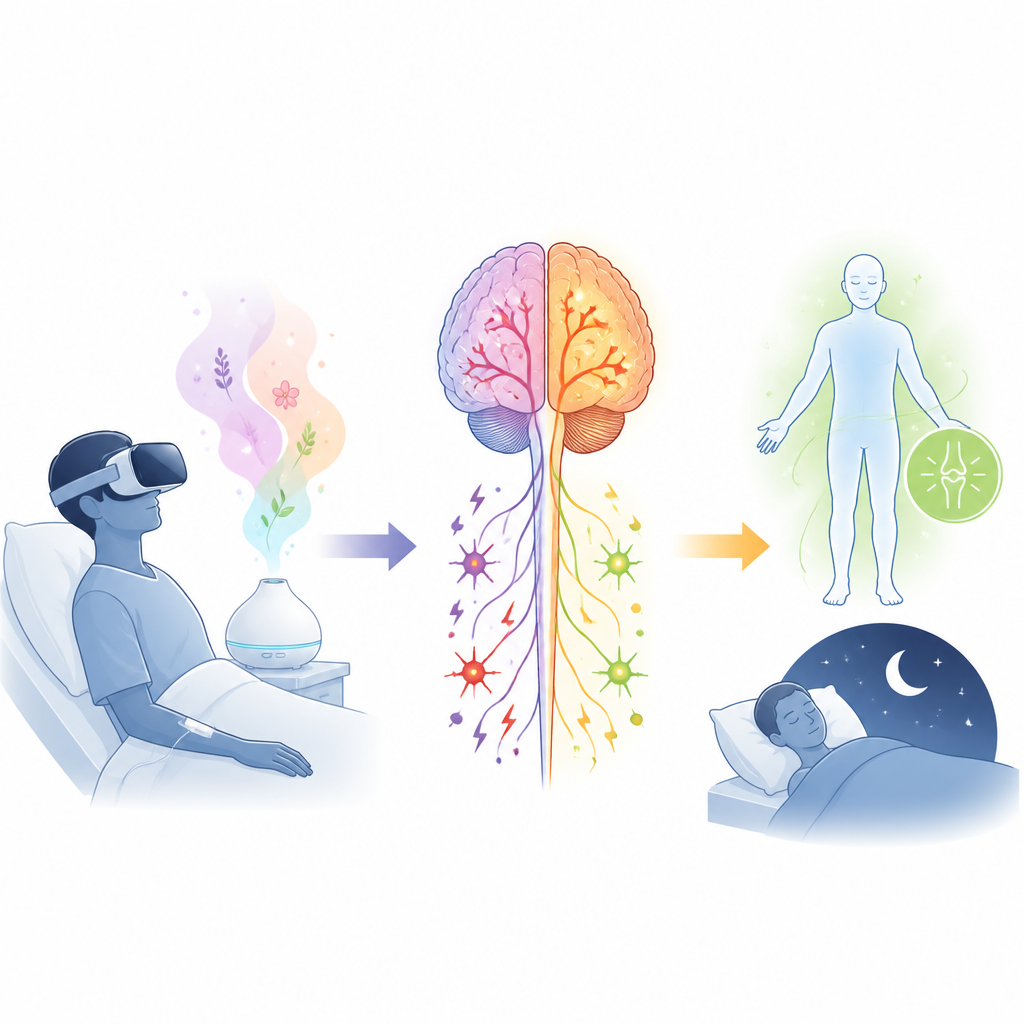
The authors suggest that immersive scenes, sounds, and calming odors draw the brain’s attention away from pain signals and from the stressful hospital setting. This distraction may reduce the activity of brain regions that process pain and heighten emotional distress. At the same time, pleasant experiences may boost natural chemicals linked to reward and relaxation and dampen stress hormones that amplify pain and anxiety. Because negative emotions can make pain feel worse, lowering anxiety could indirectly reduce the sensation of pain and help patients sleep more soundly.
What this means for surgical care
For women recovering from gynecologic laparoscopic surgery, adding immersive virtual reality combined with lavender scent to usual care made pain, anxiety, and discomfort less intense in the first day after surgery, while also lowering the need for opioid medicine. The tools used were relatively simple, well tolerated, and did not add serious side effects. Although the trial was conducted at a single hospital and longer term effects were not tested, the results hint that carefully designed sensory experiences may become a useful partner to medicines in helping surgical patients recover more comfortably.
Citation: Liu, J., Liu, Y., Bi, L. et al. Effects of multisensory stimulation based on immersive virtual reality in postoperative neuropsychiatric recovery after gynecological laparoscopy. npj Digit. Med. 9, 372 (2026). https://doi.org/10.1038/s41746-026-02515-7
Keywords: virtual reality, postoperative pain, gynecologic laparoscopy, aromatherapy, anxiety relief