Clear Sky Science · en
Breathing bad: increased risk for obstructive sleep apnea in current and former smokers
Why this matters for everyday health
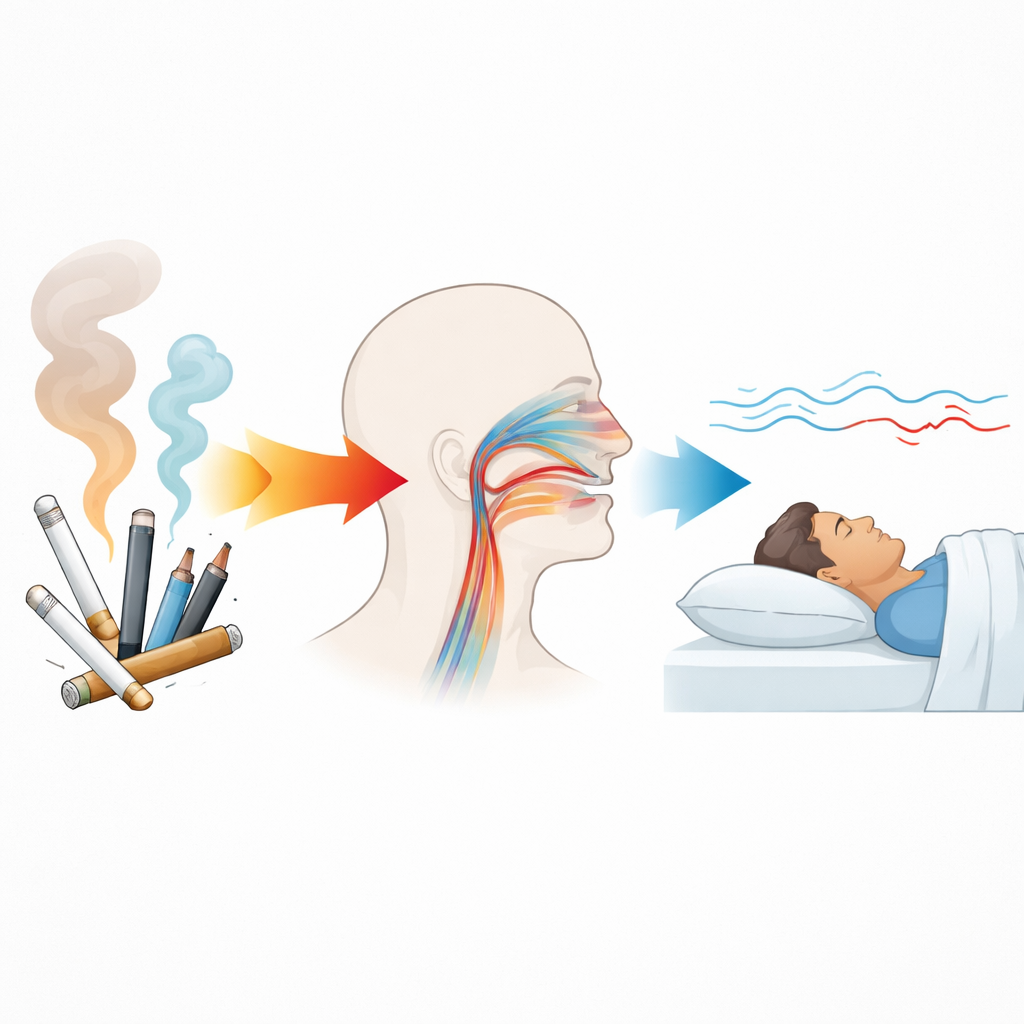
Many people know that smoking is bad for the lungs and heart, but fewer realize it may also affect how safely they breathe while asleep. This study asks a simple, important question: are people who smoke—or used to smoke—more likely to have obstructive sleep apnea, a condition where the throat repeatedly closes during sleep and cuts off airflow? Using careful overnight sleep measurements in a large community sample, the researchers show that both current and former smokers face a noticeably higher risk of more severe sleep apnea.
Two common problems that often go together
Obstructive sleep apnea is surprisingly widespread. During the night, the upper airway can repeatedly narrow or collapse, causing breathing pauses and drops in blood oxygen. These events fragment sleep and strain the heart and blood vessels, raising the risk of high blood pressure, stroke, diabetes, and even early death. Smoking, of course, is also linked to many of these problems. Because both smoking and sleep apnea harm the same organs and are common in the general population, understanding how strongly they are connected helps doctors target prevention and treatment more effectively.
Taking the question to the general population
Most earlier research on smoking and sleep apnea came from patients who had already gone to sleep clinics, which can bias results toward sicker people. In this study, the authors turned instead to a large health survey in northeastern Germany called the Study of Health in Pomerania. From over four thousand adults invited, 1,206 agreed to spend a night in a sleep laboratory, where their brain waves, breathing, oxygen levels, and body position were tracked minute by minute. Each person also completed a detailed interview about their smoking history, including whether they currently smoked regularly, had quit after years of regular smoking, or had never been a regular smoker.
Who smoked, who snored, and how badly
Participants were grouped in two main ways. First, current regular smokers were compared with everyone else (non‑smokers and occasional smokers). Second, among people who were not currently smoking, long‑term former smokers were compared with true never‑smokers. The key sleep measure was the apnea–hypopnea index, which counts how many breathing interruptions occur per hour of sleep and sorts people into normal, mild, moderate, or severe sleep apnea. Because age and body weight both strongly influence sleep apnea, the researchers adjusted their analyses for age and body mass index so they could isolate the extra risk linked to smoking itself.
Smoking leaves a lasting mark on sleep breathing
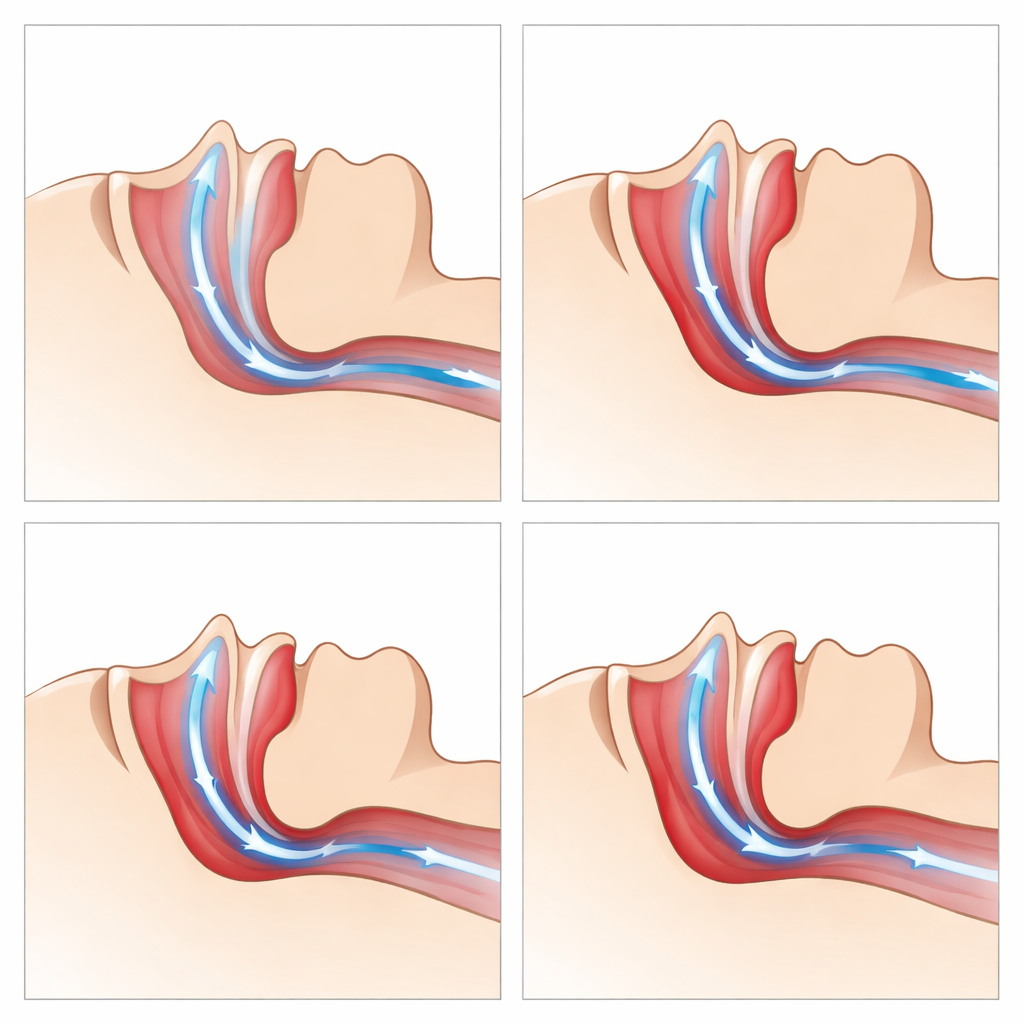
After accounting for age and body weight, current smokers were clearly more likely to fall into higher severity grades of sleep apnea than non‑smokers. For younger adults, being a regular smoker raised the odds of landing in a worse sleep apnea category by more than half; for older adults, the increase in odds was even larger. Strikingly, long‑term former smokers also had a higher chance of more severe sleep apnea than people who had never smoked regularly, especially among older participants. These findings fit with biological ideas that cigarette smoke irritates and thickens the tissues lining the throat, increases inflammation and oxidative stress, and makes the upper airway more likely to collapse when the muscles relax during sleep.
What this means for choices about smoking and care
The study does not prove that smoking directly causes sleep apnea, because it looked at a single point in time rather than following people over many years. Still, in a large, community‑based sample with objective overnight testing, both current and past long‑term smoking were tied to more severe breathing disturbances during sleep. For individuals, this means that smoking may leave a lasting footprint on nighttime breathing, even after quitting. For clinicians, it underscores the value of asking about snoring and possible sleep apnea in smokers and ex‑smokers, and of weaving sleep evaluation into smoking‑cessation programs. Despite the lingering risks, quitting smoking remains essential for overall health—and the clearest way to avoid these combined harms is never to start in the first place.
Citation: Krüger, M., Pink, C., Jiang, H. et al. Breathing bad: increased risk for obstructive sleep apnea in current and former smokers. Sci Rep 16, 13382 (2026). https://doi.org/10.1038/s41598-026-48908-2
Keywords: smoking and sleep apnea, obstructive sleep apnea, sleep and breathing, tobacco and respiratory health, population health study