Clear Sky Science · en
Driven by motivation, fueled by rage, and struggling to disengage: a serial mediation model of internet gaming disorder in adolescents
Why this matters for teens and parents
For many teenagers, video games are a favorite way to relax, connect with friends, and feel accomplished. But for a small group, gaming can start to crowd out sleep, schoolwork, and relationships, leaving families worried and unsure what went wrong. This study looks beyond simple "too much screen time" explanations and asks a deeper question: how do a teen’s reasons for playing, the anger they feel while gaming, and their difficulty mentally switching back to real life combine to fuel internet gaming disorder?
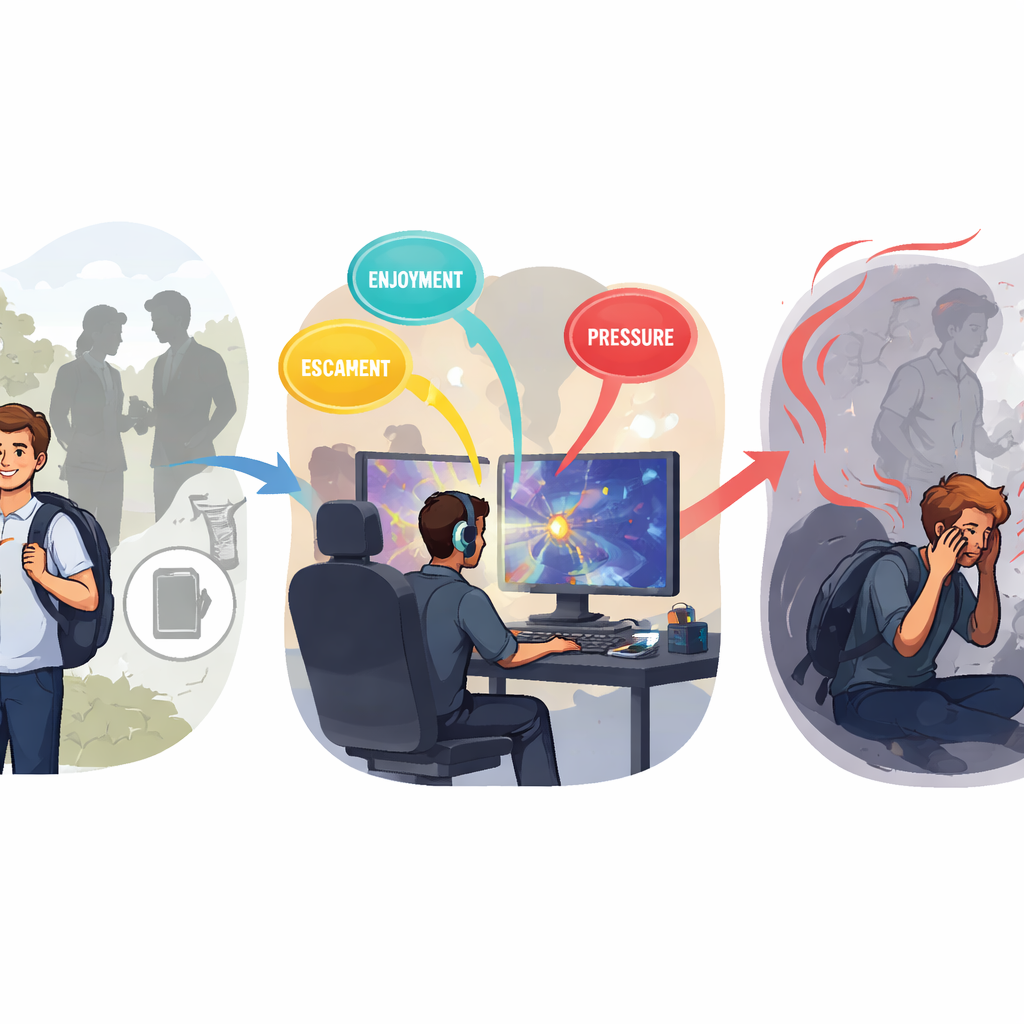
From fun pastime to growing problem
Video games are carefully designed to feel rewarding, offering achievements, social recognition, and constant feedback. Most young people can enjoy these experiences without serious trouble. Yet about one in twenty children and adolescents worldwide show signs of disordered gaming, a pattern marked by losing control, putting games above other activities, and playing despite harmful consequences. Adolescence is a sensitive period: the brain’s reward systems are highly active, while self-control and emotion regulation are still maturing. This mix can make it harder for some teens to step away from games, especially when gaming becomes their main way to manage difficult feelings.
When games spark intense anger
Competitive and fast-paced games frequently expose players to stressors such as repeated losses, technical glitches, or toxic behavior from others. Many teens describe the resulting emotional storm as “rage” or “tilt.” In this study, rage is seen as a short-lived but intense burst of anger, frustration, and physical arousal that narrows attention and disrupts clear thinking. Rather than just being a sign that it is time to quit, this high-energy state can lock a player’s focus onto the game, pushing them to keep playing in an effort to undo failures or prove themselves, even when their mood is getting worse.
Motivation, guilt, and the struggle to switch off
The researchers surveyed 259 high school students in Poland who played games at least one hour per week. They measured symptoms of internet gaming disorder, different kinds of gaming motivation, how often teens experienced rage while playing, and how easily they could mentally return to everyday tasks after a session. Two motivational patterns stood out. Some teens reported “amotivation,” a sense of playing without clear purpose or benefit. Others played under strong inner pressure—driven by feelings like guilt, shame, or fear of not living up to expectations. Both patterns were linked to more rage during gaming and to greater difficulty mentally letting go of the game afterward.
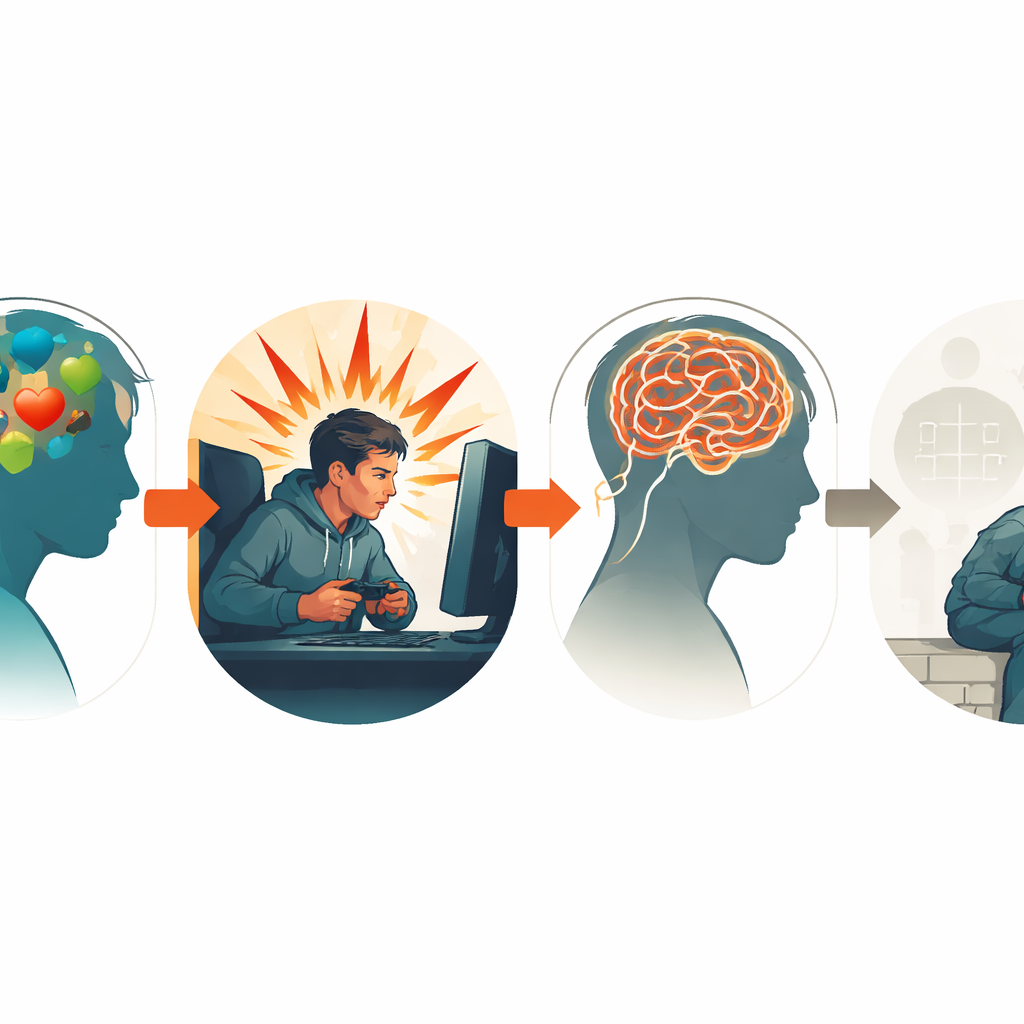
A loop that keeps minds stuck in the game
Using statistical models, the authors showed that these pressured and purposeless motives did not act alone. Teens with these motives were more likely to experience intense rage while playing. That rage, in turn, was tied to trouble disengaging mentally from the gaming world once the console or computer was turned off. Thoughts and emotions about the game lingered, making it harder to switch attention to homework, family time, or sleep. Together, this chain—motivation, rage, and poor disengagement—was strongly linked to more severe symptoms of internet gaming disorder, suggesting a self-reinforcing cycle where emotional storms during play make it tougher to close each gaming episode.
What this means in everyday life
The study suggests that problematic gaming in teens is not simply about how many hours they play, but about why they play, how they react emotionally, and whether they can truly “come back” after a session. Rage quitting may stop the behavior for the moment, but the mind can remain trapped in unfinished goals and heated emotions. For prevention and support, this points to new targets: helping adolescents recognize pressured or joyless reasons for gaming, teaching healthier ways to cope with frustration and anger, and practicing skills for mentally switching from game mode back to school, family, and sleep. By focusing on emotion regulation and smooth transitions out of play—not only on time limits—parents, educators, and clinicians may better protect vulnerable teens from gaming taking over their lives.
Citation: Michałkiewicz, N., Strojny, P. & Strojny, A. Driven by motivation, fueled by rage, and struggling to disengage: a serial mediation model of internet gaming disorder in adolescents. Sci Rep 16, 10646 (2026). https://doi.org/10.1038/s41598-026-46538-2
Keywords: internet gaming disorder, adolescent gaming, gaming rage, screen time and mental health, emotion regulation