Clear Sky Science · en
Interferon-induced protein 35 (IFI35) is associated with COVID-19 severity and clinical outcomes
Why this matters for everyday health
The COVID-19 pandemic has shown that some people deteriorate very quickly, while others recover with milder illness. Doctors urgently need simple blood tests that can flag which patients are most at risk before they crash. This study looks at a molecule in the blood called IFI35 and asks a practical question: can measuring it help doctors predict who with COVID-19 is likely to become critically ill or die?
A danger signal inside the immune system
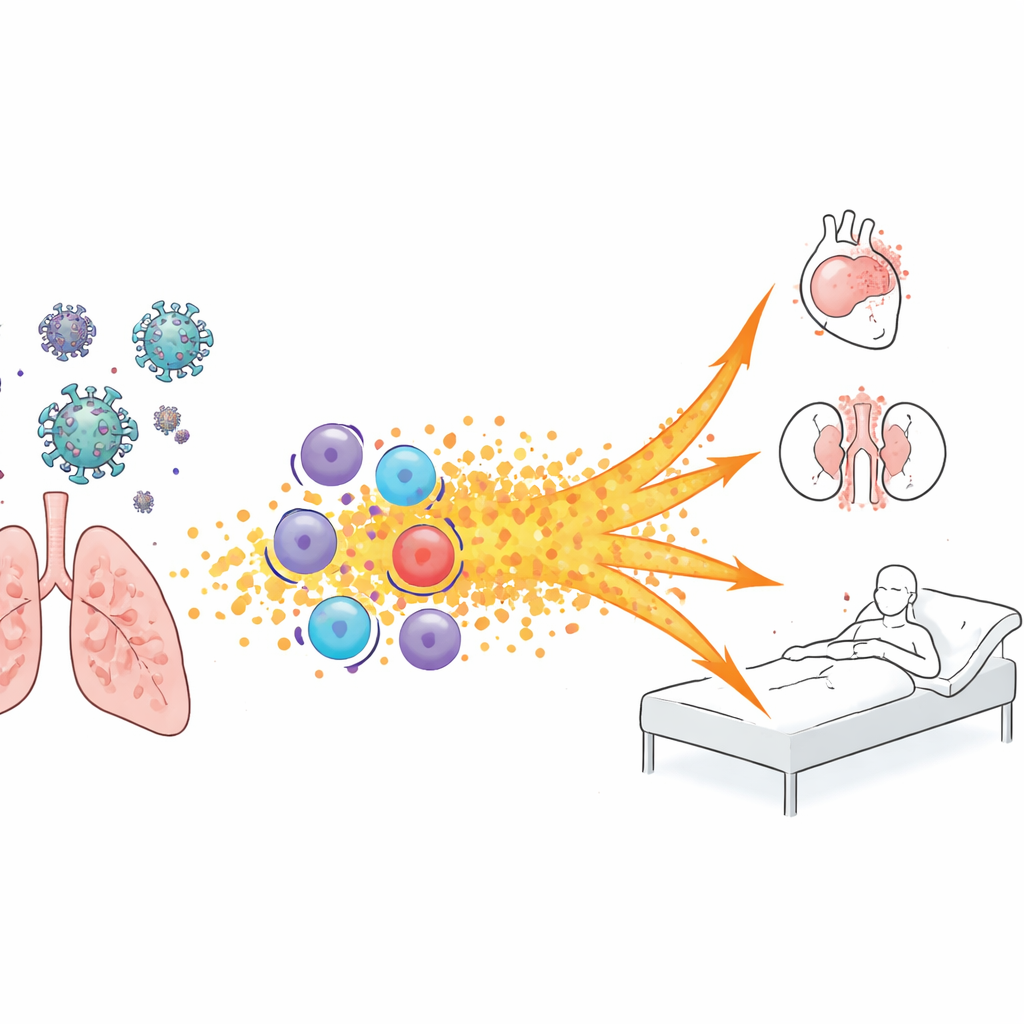
Our bodies rely on the immune system to fight viruses, but when the response is too strong it can backfire, damaging our own organs. Certain molecules released from stressed or injured cells act as internal “danger signals,” revving up inflammation. IFI35 is one such signal, produced when cells sense interferons—alarm substances triggered by viral infection. Earlier work suggested IFI35 is involved in so‑called cytokine storms, the runaway inflammatory surges seen in severe infections. The researchers wanted to know whether IFI35 levels in the blood mirror how sick a person with COVID-19 becomes.
Who was studied and what was measured
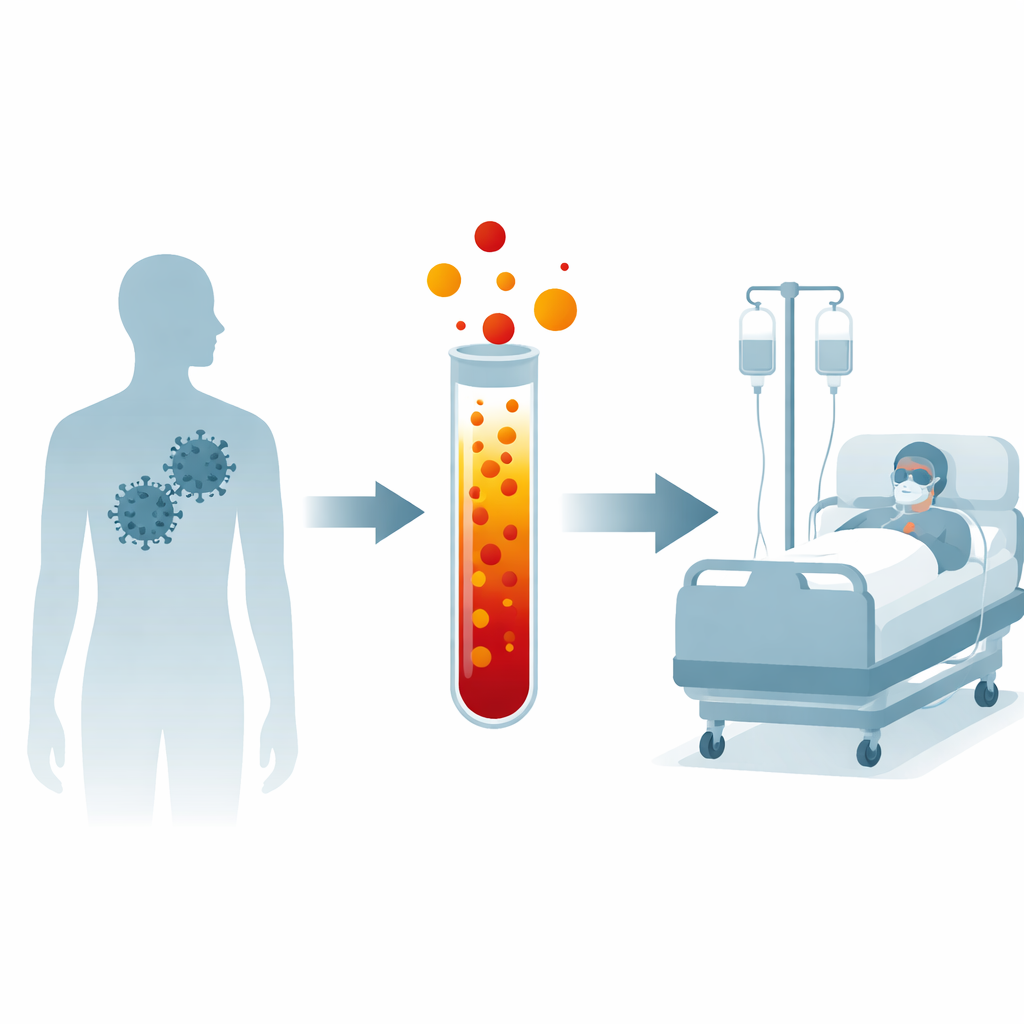
The team analyzed blood samples from 430 adults hospitalized with COVID-19 in northeast Brazil and compared them with 112 people who had recovered from mild illness at home. Hospitalized patients were split into two groups: those with “severe” disease, needing oxygen but not intensive care, and those with “critical” disease, who required high‑flow oxygen, intensive care, or life support such as mechanical ventilation. Within 24 hours of admission, the scientists measured IFI35 protein levels in blood serum using a standard laboratory test. In a smaller subset of 40 people, they also looked at activity of the IFI35 gene in immune cells, asking whether the body was actively producing more of this molecule.
Higher IFI35 tracks with sicker patients
IFI35 levels rose steadily with worsening illness. People who had recovered from mild COVID-19 had the lowest levels, patients with severe disease had higher levels, and those in critical condition had the highest levels of all. The same pattern appeared at the genetic level: immune cells from critically ill patients showed more active IFI35 gene expression than those from less sick patients or healthy donors. Even after accounting for age, sex, and common health problems like diabetes, obesity, and high blood pressure, higher IFI35 remained strongly linked to being in the critical group rather than the severe or control groups. In short, the more IFI35 in the blood, the more likely a patient was to be among the sickest.
Linking IFI35 to life‑and‑death outcomes
The story did not end with how sick patients appeared on admission. People who died, needed invasive mechanical ventilation, developed acute kidney injury, or suffered a cardiac arrest all had higher IFI35 levels at hospital arrival than those who avoided these complications. When the researchers combined IFI35 with two familiar blood markers—C‑reactive protein, which signals inflammation, and D‑dimer, which reflects clotting problems—the ability to distinguish survivors from non‑survivors improved. They also identified a specific IFI35 threshold in their group: patients whose levels were above this cutoff had about twice the risk of death and tended to die sooner during their hospital stay than those below it.
What this could mean for future care
Because this work was done in a single region and during a particular phase of the pandemic, the exact cutoff value for IFI35 will need to be tested in other hospitals and in people infected with newer variants. The study also cannot prove whether IFI35 itself is causing harm or is simply a marker of an overactive immune response. Still, the findings support a simple message: a high level of this danger signal in the blood appears to be a warning flag for severe COVID-19. If confirmed elsewhere, measuring IFI35 alongside existing lab tests could help doctors spot high‑risk patients earlier and tailor monitoring and treatment more precisely.
Citation: Freitas, M.R., de França, C.A., Nunes, S.L.P. et al. Interferon-induced protein 35 (IFI35) is associated with COVID-19 severity and clinical outcomes. Sci Rep 16, 10967 (2026). https://doi.org/10.1038/s41598-026-46121-9
Keywords: COVID-19 severity, immune biomarkers, inflammation, cytokine storm, prognosis