Clear Sky Science · en
Testing the Food Insecurity Experience Scale across urban and regional contexts in Italy
Why this research matters to everyday life
Most people in high income countries assume that food problems only happen far away or to the very poor. This study shows that even in a country famous for its cuisine, like Italy, many people quietly struggle to afford enough good food. By listening directly to people’s experiences, rather than only looking at income or shopping bills, the researchers reveal hidden pockets of hardship in different regions and within the city of Rome. Their work suggests new ways to spot and respond to food troubles before they turn into full blown crises. 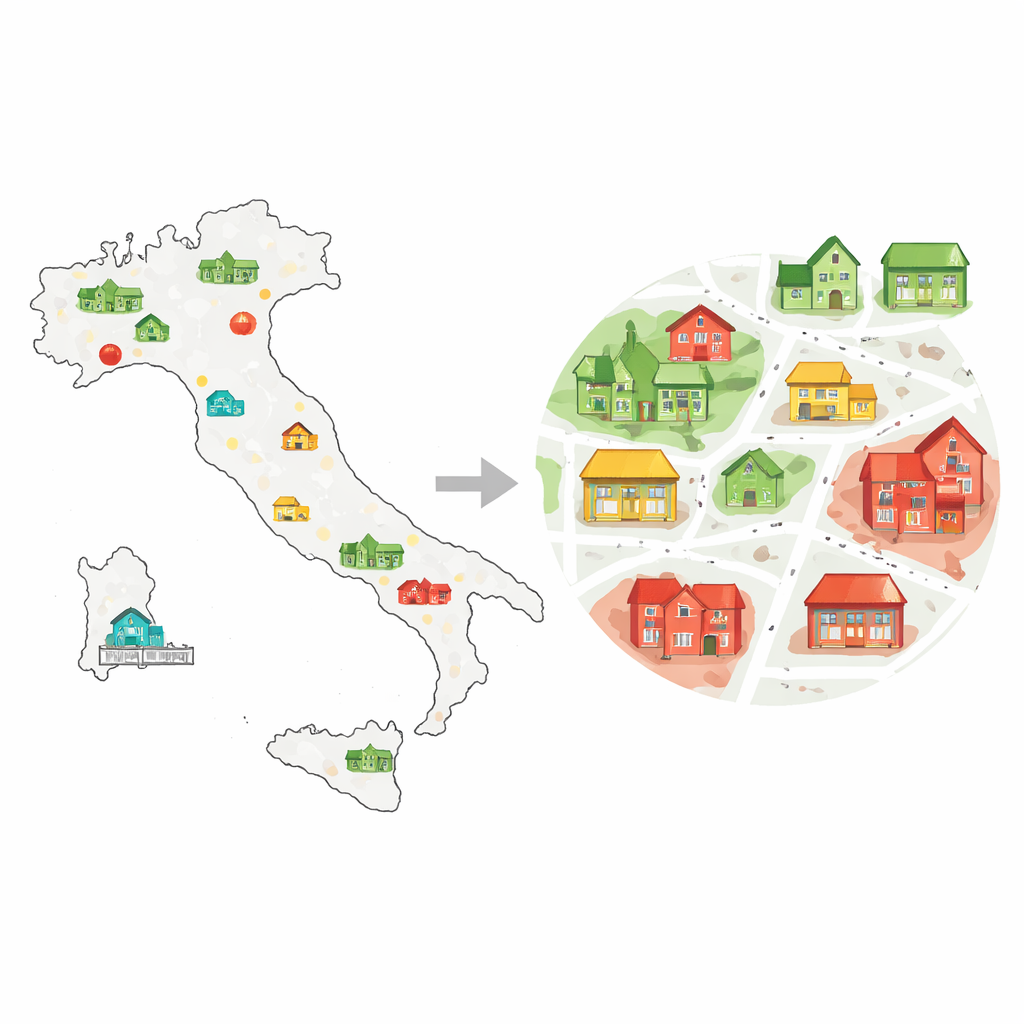
Looking beyond the usual poverty numbers
Official statistics in Italy say that only a small share of the population faces severe food problems, based on one strict test: whether a household can afford a protein rich meal every two days. But everyday food hardship is more complex. Families may earn just enough to sit above the poverty line yet still struggle because of high rents, rising energy bills, debt, or sudden job loss. Prices for healthy food can also differ sharply between neighborhoods and store types, creating a “food premium” that hits low income shoppers hardest. On top of money issues, stress, shame, and limited choice all shape how people actually eat, and these experiences do not show up clearly in standard economic data.
Listening to people’s food experiences
To capture these less visible aspects, the study uses the Food Insecurity Experience Scale, a short set of eight yes or no questions developed by the United Nations Food and Agriculture Organization. The questions move from mild worry about running out of food to very serious events, such as going a whole day without eating because of lack of money or other resources. Instead of simply counting “yes” answers, the researchers use a statistical model that places both questions and people along a shared scale of food hardship. This approach helps keep the tool stable even when the survey is carried out in small or unusual samples, such as particular regions or a single city, and allows fair comparisons with global data collected in other countries.
What the surveys reveal across Italy
The team ran one survey across 15 groups of Italian regions using an online questionnaire and another through in person interviews in supermarkets and markets across all 15 municipalities of Rome. In the regional study, about 13.5 percent of respondents showed signs of moderate or severe food insecurity, with much higher rates in parts of the South and the islands than in many northern areas. Rome, a generally well off city, still showed about 7.1 percent of respondents facing moderate or severe food problems. In both settings, most people reported no difficulties, but a small group endorsed the most serious items, pointing to real episodes of hunger or having no food at home. Education level, joblessness, and household type were strongly linked to higher risk, while gender and citizenship were not clearly associated in this sample. 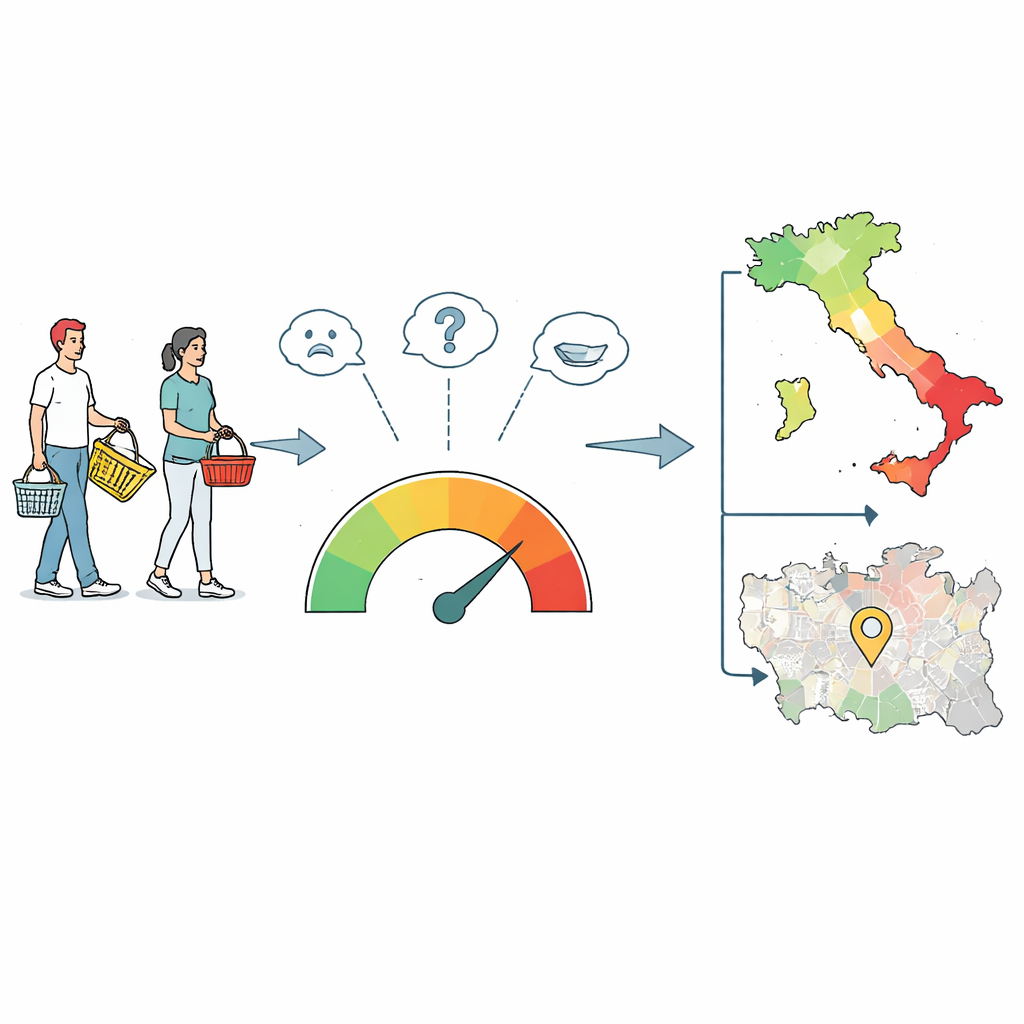
Checking the tool against national and global patterns
Because experience based surveys can be sensitive to how and where they are run, the researchers carefully checked whether the Italian results lined up with the global reference scale for food insecurity. They found that the Rome data matched the international pattern very closely, while the regional online survey showed some differences for the mildest and the very worst items, likely due to the web based format and who chose to participate. When they compared their findings with official United Nations data for Italy, the overall order made sense: lowest estimates from the national phone survey, higher in Rome, and higher still in the regional online study. This suggests that part of the gap comes from method and sampling rather than from real jumps in hunger, but it also confirms that food hardship is not limited to a tiny fringe.
What this means for people and policy
For a lay reader, the main message is that food insecurity in a rich country looks less like mass famine and more like quiet, localized struggle. Some neighborhoods and social groups carry a much heavier burden than national averages suggest. The study shows that simple, well tested questions about people’s food experiences can be used at city or regional level to uncover these hidden patterns. While the exact percentages should not be read as precise national figures, the work makes a strong case for adding local, experience based monitoring to traditional statistics. Doing so would help charities, cities, and governments aim support where it is most needed, so that fewer households have to skip meals, compromise on diet quality, or give up social activities that revolve around food.
Citation: Giacardi, A., Viviani, S., Bernaschi, D. et al. Testing the Food Insecurity Experience Scale across urban and regional contexts in Italy. Sci Rep 16, 14639 (2026). https://doi.org/10.1038/s41598-026-45827-0
Keywords: food insecurity, Italy, Rome, survey methods, urban poverty