Clear Sky Science · en
Incidence and prognostic factors of postoperative C5 palsy after cervical OPLL surgery: a nationwide prospective multicenter study
Why shoulder weakness after neck surgery matters
When people undergo neck surgery to relieve pressure on the spinal cord, they hope to walk, move, and use their hands more easily. Yet a small number wake up with new weakness in the shoulder area, especially when lifting the arm. This problem, called C5 palsy, can be frightening for patients and challenging for surgeons to predict. This large Japanese study followed hundreds of people with a specific neck condition to learn how often C5 palsy happens, who is most at risk, and how well strength returns over time.
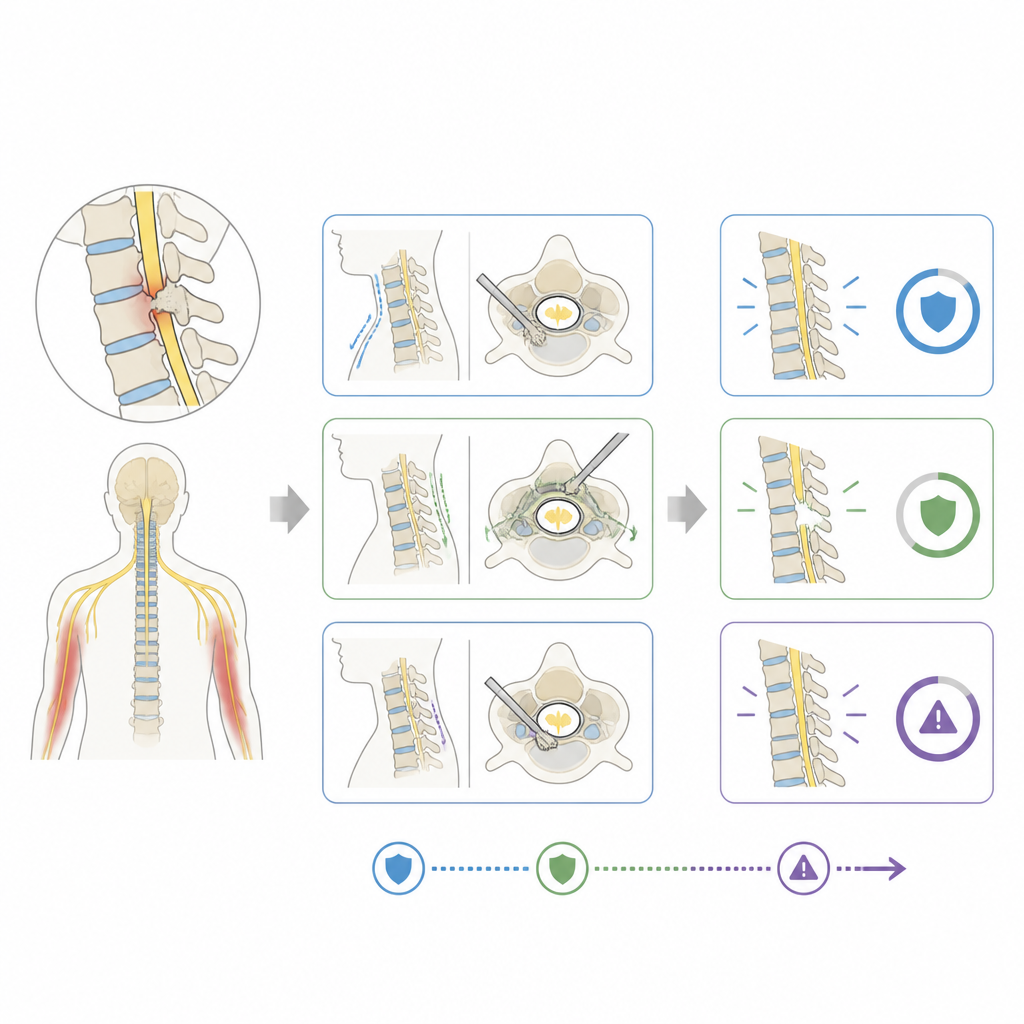
A closer look at a stiffened neck ligament
The research focused on a disorder called cervical ossification of the posterior longitudinal ligament, or OPLL. In this condition, a soft band that runs along the back of the spine slowly turns into bone and presses on the spinal cord. This can cause trouble with walking, hand use, and other nerve-related symptoms. Because the extra bone compresses the spinal cord, many people with OPLL eventually need surgery to create more space. Surgeons can reach the problem area from the front of the neck, from the back, or by combining both routes, and each approach has its own balance of benefits and risks.
How the nationwide study was carried out
To understand C5 palsy in real-world care, spine surgeons at 28 hospitals across Japan enrolled 482 people with OPLL who underwent neck surgery between 2015 and 2017. The team excluded those with other major neck problems, such as trauma or infection, to keep the group as uniform as possible. Patients were followed for at least two years whenever possible. The researchers recorded basic health details, imaging findings, the type and extent of surgery, and muscle strength in the shoulder and arm at several checkpoints from before the operation to two years afterward.
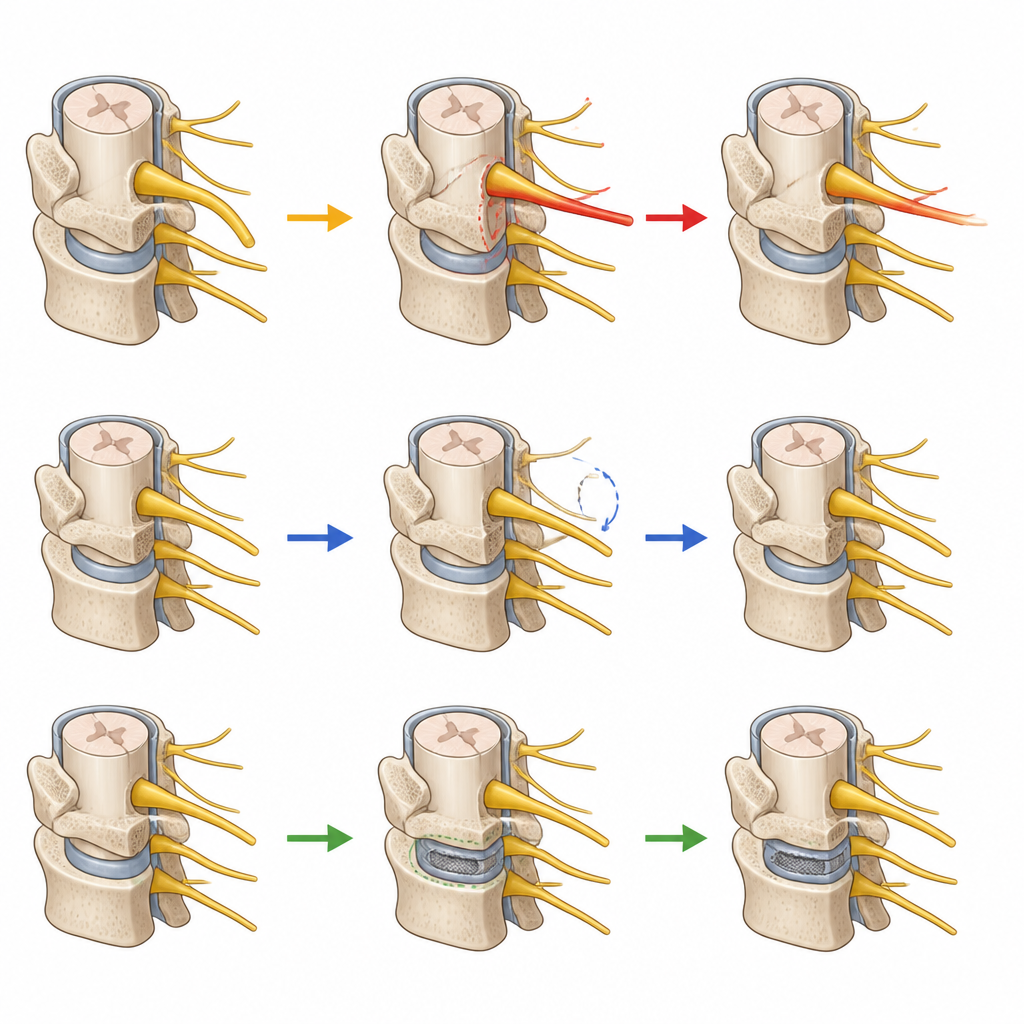
How often the problem appeared and who was most at risk
Overall, 6.0% of patients developed C5 palsy, meaning their shoulder muscle strength dropped by at least one grade on standard testing after surgery. The chances differed by operation type: about 4% after surgery from the front, 4.6% after a motion-preserving procedure called laminoplasty, and 11.8% after a back-of-the-neck operation that included both decompression and spinal fusion. Nearly half of the affected patients noticed weakness on the day of surgery, and most of the rest developed it within the first week. When the team accounted for several other anatomical and surgical features, only the back-of-the-neck decompression with fusion clearly stood out as a risk factor. Having the tightest narrowing at a level around the middle of the neck also showed some link to C5 palsy.
What recovery looked like over two years
At the moment C5 palsy appeared, average shoulder strength fell from near normal to clearly weak, and many patients also had weakness in the front of the upper arm. Treatment was usually conservative, involving rest and observation, with a few patients receiving steroids, hyperbaric oxygen, or additional surgery. Over the next months and years, strength gradually returned. After two years, 81% of patients had regained their pre-surgery shoulder power. Recovery tended to be better in younger people and in those whose weakness was limited to the main shoulder muscle. In contrast, older patients and those who also had weakness in the biceps muscle, which hints at a broader nerve injury, were more likely to have lasting deficits.
What this means for patients and surgeons
For people facing surgery for OPLL, this study provides practical numbers to guide expectations. C5 palsy remains an uncommon but real risk, particularly with certain back-of-the-neck fusion procedures, and it usually appears very soon after the operation. The encouraging news is that most patients slowly regain strength, sometimes continuing to improve even up to two years later. However, age and additional muscle involvement can limit recovery. These insights can help surgeons choose techniques more carefully, counsel patients about risks and likely recovery, and highlight the importance of long-term follow-up to track and support nerve healing.
Citation: Egawa, S., Hirai, T., Sakai, K. et al. Incidence and prognostic factors of postoperative C5 palsy after cervical OPLL surgery: a nationwide prospective multicenter study. Sci Rep 16, 15578 (2026). https://doi.org/10.1038/s41598-026-45807-4
Keywords: cervical OPLL, C5 palsy, cervical spine surgery, nerve root weakness, postoperative complications