Clear Sky Science · en
Epidemiology and cardiometabolic care in adults with ASCVD and high 10-year ASCVD risk: 2021 WHO STEPS study in Iran
Why this matters for everyday life
Heart attacks and strokes are often seen as sudden, unpredictable disasters, but in reality they usually grow out of everyday habits and long‑standing medical conditions. This study uses a nationwide health survey in Iran to show how common serious heart and blood vessel disease already is in adults, how many more people are on track to develop it within the next decade, and how well—or poorly—key risk factors like blood pressure, blood sugar, and cholesterol are being controlled. The results offer a window into the hidden heart health of a modern middle‑income country, with lessons that apply far beyond Iran.
Taking the pulse of a nation
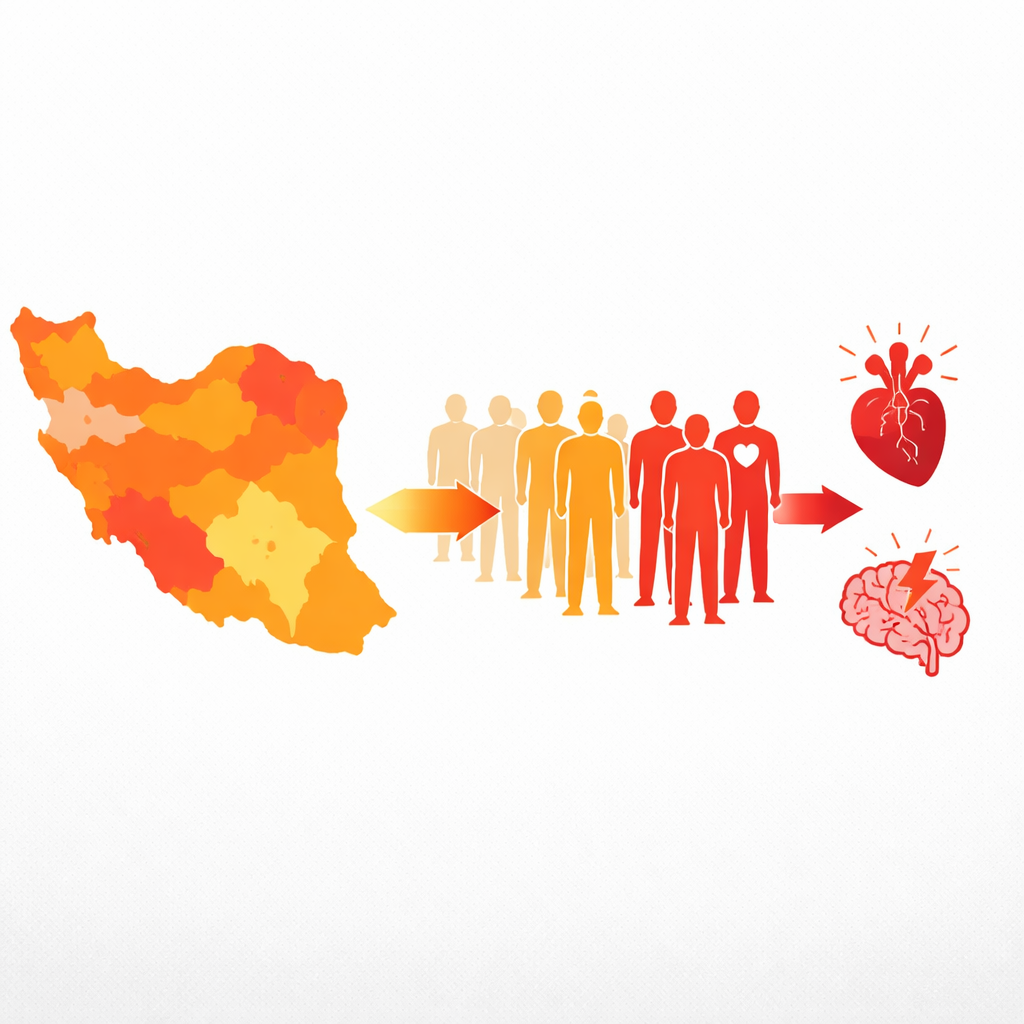
Researchers analyzed data from more than 27,000 adults who took part in Iran’s 2021 WHO STEPS survey, a standardized program used around the world to track non‑communicable diseases. Participants answered detailed questions, had their height, weight, and blood pressure measured, and provided blood samples for cholesterol and sugar tests. The team focused on atherosclerotic cardiovascular disease—problems caused by clogged or narrowed arteries, including heart attack, chest pain from poor blood flow, artery‑opening procedures, and stroke. They also used an American Heart Association risk calculator to estimate the chance that people aged 40 to 75 without existing disease would suffer one of these events over the next 10 years.
How many people are already affected
The survey suggests that about 7.4% of Iranian adults—roughly 4.3 million people—are already living with heart or artery‑related disease. Most are men and city dwellers, and nearly all are over 35 years old. In people with established disease, related conditions were extremely common: more than three‑quarters had high blood pressure, about one‑third had diabetes, and almost half had high cholesterol. Yet control of these problems was strikingly poor. Only about one in eight patients with high blood pressure and one in seven with diabetes had their numbers in a healthy range, and less than one‑third achieved safe cholesterol levels. These gaps in basic care leave many survivors at high risk of another, potentially fatal, event.
The next wave of risk
Among adults aged 40 to 75 who had not yet developed heart or artery disease, future danger loomed large. About two‑thirds had a low 10‑year risk according to the calculator, but nearly one in five fell into an intermediate‑risk group and about one in twenty were in the high‑risk range, meaning at least a one‑in‑five chance of a major event within a decade. Across these higher‑risk groups, high blood pressure, diabetes, and high cholesterol were widespread, yet only a small minority had them well controlled: roughly 3–5% met strict blood pressure targets, 3–17% had acceptable long‑term blood sugar, and 8–17% had cholesterol in the safe zone. Use of protective drugs was also limited: just over half of people with known disease were on cholesterol‑lowering statins, and among high‑risk but as‑yet‑healthy adults, fewer than one in five were taking them.
Where you live and how you live
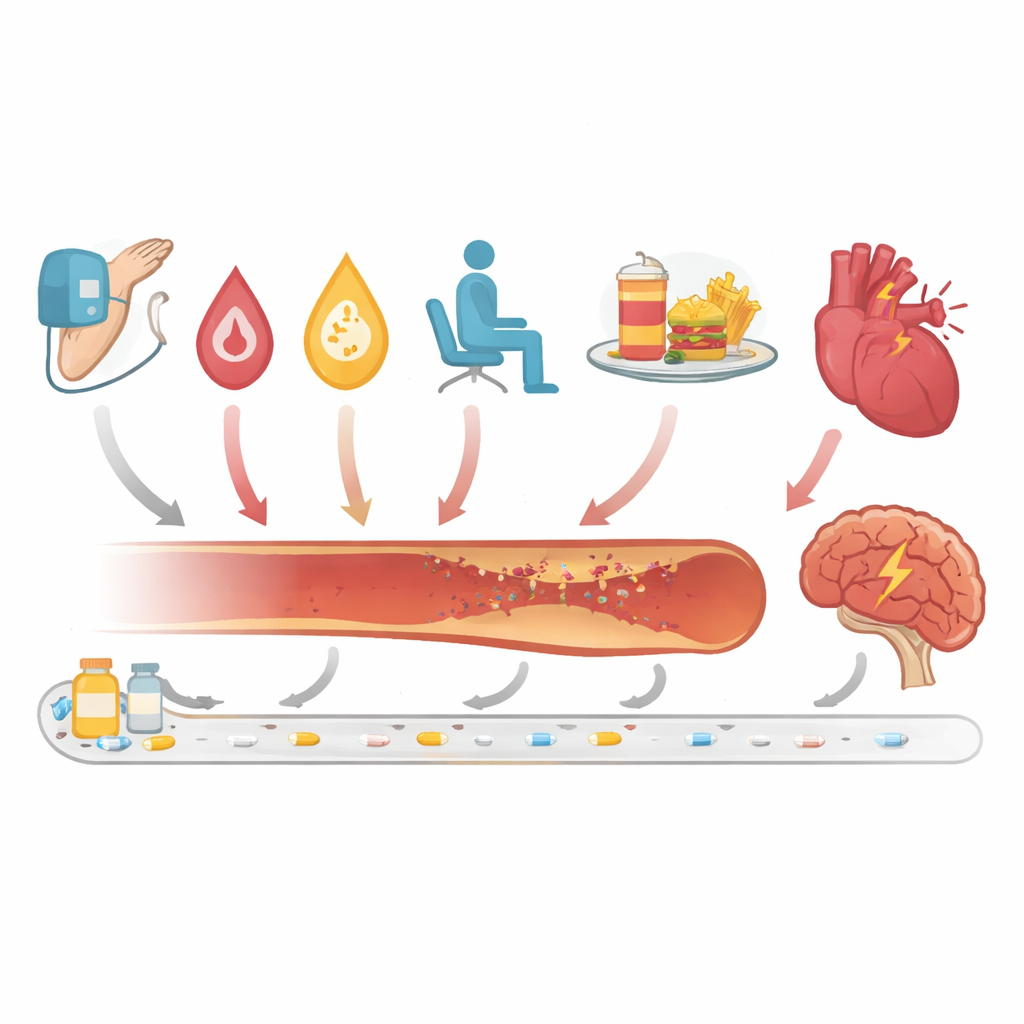
The burden of disease and risk was not spread evenly across the map. Some northeastern and southwestern provinces showed the highest levels of existing heart and artery disease, while several southern and western regions had particularly high recent event rates. Other provinces, especially in the northwest, still had relatively low current disease but worrisomely high predicted risk, signaling that trouble may be coming if prevention does not improve. Lifestyle measures painted an equally sobering picture: excess body weight and physical inactivity were common, more than 60% of people in every risk group had poor‑quality diets, and smoking remained frequent in high‑risk men.
What this means for the future
Put simply, the study shows that Iran already faces a heavy load of heart and artery disease, with millions more adults on course to join them within the next 10 years unless care and prevention improve. Many of the key drivers—high blood pressure, high blood sugar, high cholesterol, smoking, inactivity, and salty, low‑quality diets—are well known and, in principle, fixable. The authors argue that closing the gap between diagnosis, treatment, and true control of these conditions, while promoting healthier habits through community‑wide policies, could prevent a large share of future heart attacks and strokes. For lay readers, the message is clear: everyday choices and routine checkups are central to protecting heart and brain health, both for individuals and for entire countries.
Citation: Farrokhpour, H., Nasserinejad, M., Ahmadi, N. et al. Epidemiology and cardiometabolic care in adults with ASCVD and high 10-year ASCVD risk: 2021 WHO STEPS study in Iran. Sci Rep 16, 10825 (2026). https://doi.org/10.1038/s41598-026-45344-0
Keywords: heart disease, stroke risk, blood pressure, cholesterol, public health