Clear Sky Science · en
Resilience and coping styles mediate the associations of autistic and ADHD traits with internet addiction in general adolescents
Why this topic matters to families
For many families, arguments about screen time have become part of daily life. This study looks at why some teenagers slide into unhealthy internet use while others can log off, even when they face similar pressures. By focusing on everyday traits linked to autism and attention difficulties, and on the ways teens handle stress, the research offers a more nuanced picture than simply blaming phones or games.
The problem of online overuse in teens
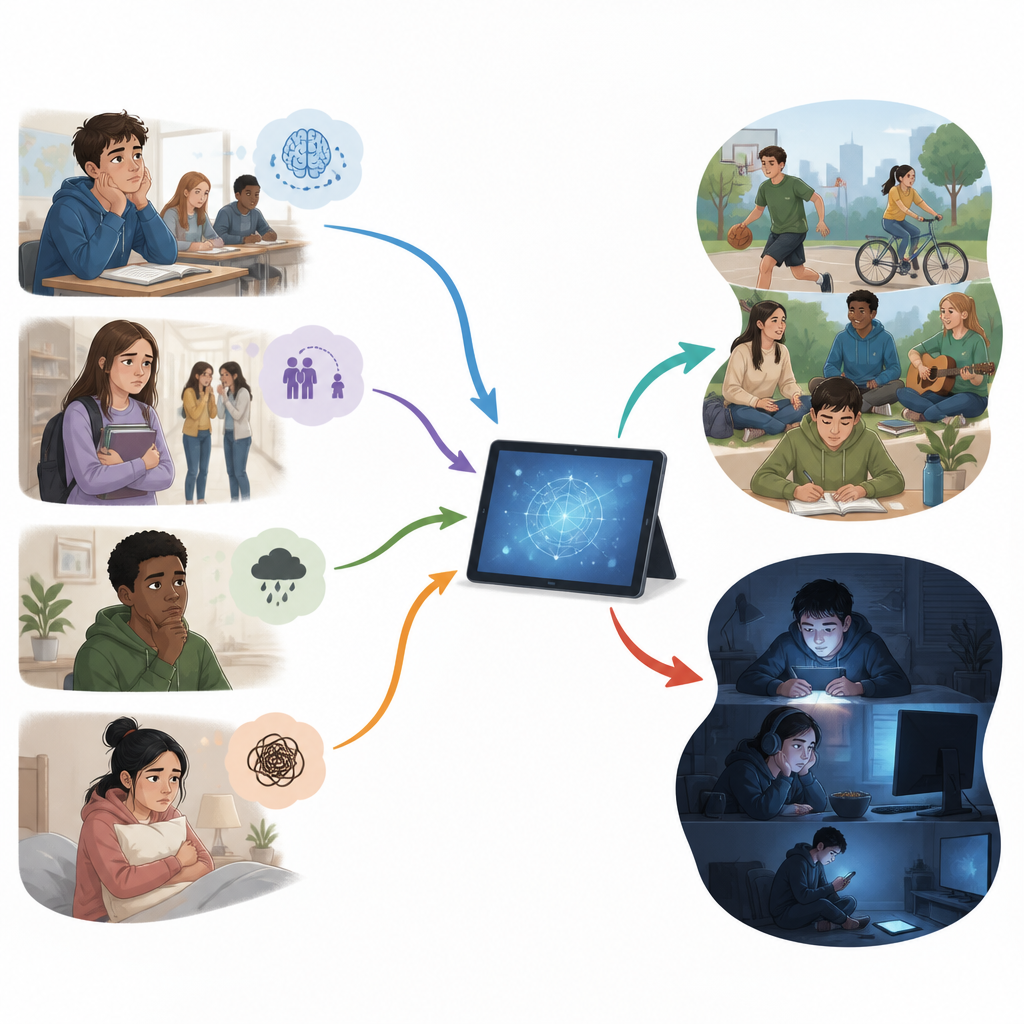
The internet is woven into school, friendships, and entertainment, but a minority of teenagers develop patterns of use that interfere with sleep, grades, and relationships. This pattern, often called internet addiction, is not an official diagnosis but is widely used in research to describe compulsive, hard to control online behavior. Large surveys suggest that around one in fourteen people worldwide may be affected, with teens especially at risk. The COVID-19 pandemic, which pushed learning and social life online, seems to have intensified this problem.
Traits that may raise the risk
The researchers focused on two clusters of lifelong traits that vary across the population. Autistic traits include social and communication difficulties and a preference for routines. ADHD traits include problems with attention and impulse control. These traits exist on a spectrum from mild to severe, and many students who show them never receive a diagnosis. Earlier work hinted that both types of traits might be tied to heavier or more problematic internet use, but findings were mixed and usually looked at only one trait at a time.
How inner strengths and habits come into play
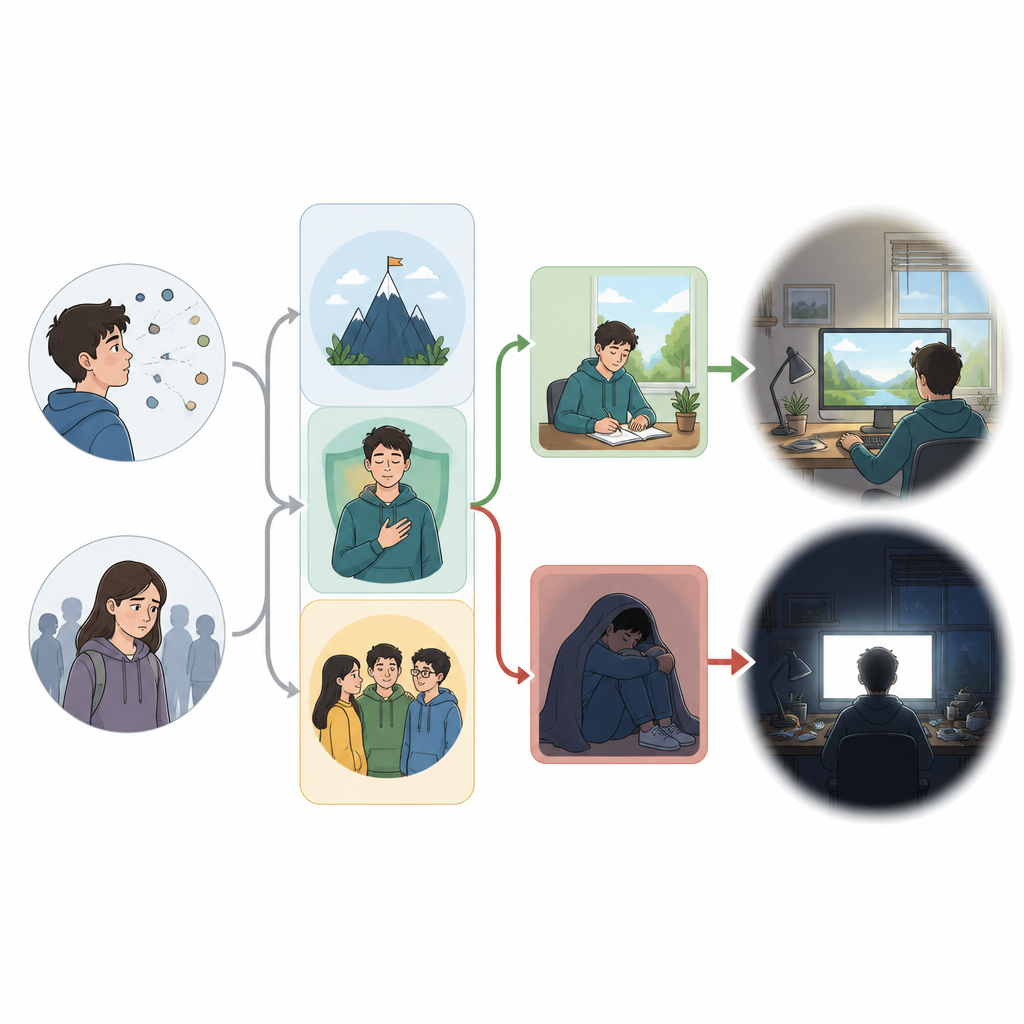
This study introduced two psychological pieces that might sit between traits and internet addiction. The first is resilience, the inner and outer resources that help a person cope with stress. Internal resilience covers things like positive thinking, emotional balance, and clear goals. External resilience reflects support from family and friends. The second piece is coping style: how teens respond when they feel stressed. Positive coping includes seeking solutions and support, while negative coping involves withdrawal, denial, or trying to escape feelings rather than facing them.
What the study found in Chinese high school students
Researchers surveyed more than 3000 students in six high schools in Beijing, along with their caregivers. They divided teens into an internet addiction group and a non-addicted group based on a standard questionnaire. Those in the addiction group scored higher on both autistic and ADHD traits. They also reported using more negative coping strategies and showed lower levels of both internal and external resilience. Statistical models suggested that autistic and ADHD traits had only modest direct links to internet addiction. Much of the connection ran through resilience and coping: teens with higher trait scores tended to have fewer psychological resources, used more avoidant coping, and in turn were more likely to show addictive patterns of use.
Different paths for different traits
The detailed analysis revealed that some pathways were shared and others were distinct. For both autistic and ADHD traits, internal resilience and negative coping were important mediators. In other words, lower inner strengths and greater reliance on escape-based coping helped explain why these traits were associated with heavier problematic use. External resilience showed a special role for ADHD traits: social and family support helped shape how attention and impulse difficulties translated into online behavior, but this pathway was not clear for autistic traits. The authors suggest that autistic teens may struggle more to notice or use outside help, so their risk is shaped more by internal factors and coping habits.
What this means in everyday terms
Rather than treating internet addiction as a simple matter of willpower, this study frames it as the outcome of a chain that starts with certain traits, passes through inner strengths and supports, and ends in everyday choices about how to handle stress. The findings imply that helping teens build resilience, strengthen family and peer support, and replace avoidant coping with more active strategies may reduce harmful patterns of internet use, especially for those who show autistic or ADHD traits. While the research cannot prove cause and effect, it offers a practical map for parents, teachers, and clinicians who want to focus less on taking devices away and more on building the skills and supports that make logging off easier.
Citation: Zeng, L., Ji, Z., Gong, X. et al. Resilience and coping styles mediate the associations of autistic and ADHD traits with internet addiction in general adolescents. Sci Rep 16, 15133 (2026). https://doi.org/10.1038/s41598-026-45317-3
Keywords: internet addiction, adolescents, autistic traits, ADHD traits, resilience