Clear Sky Science · en
A comparative SWOT analysis of urban green infrastructure in the Global South
Why Greener Cities Matter
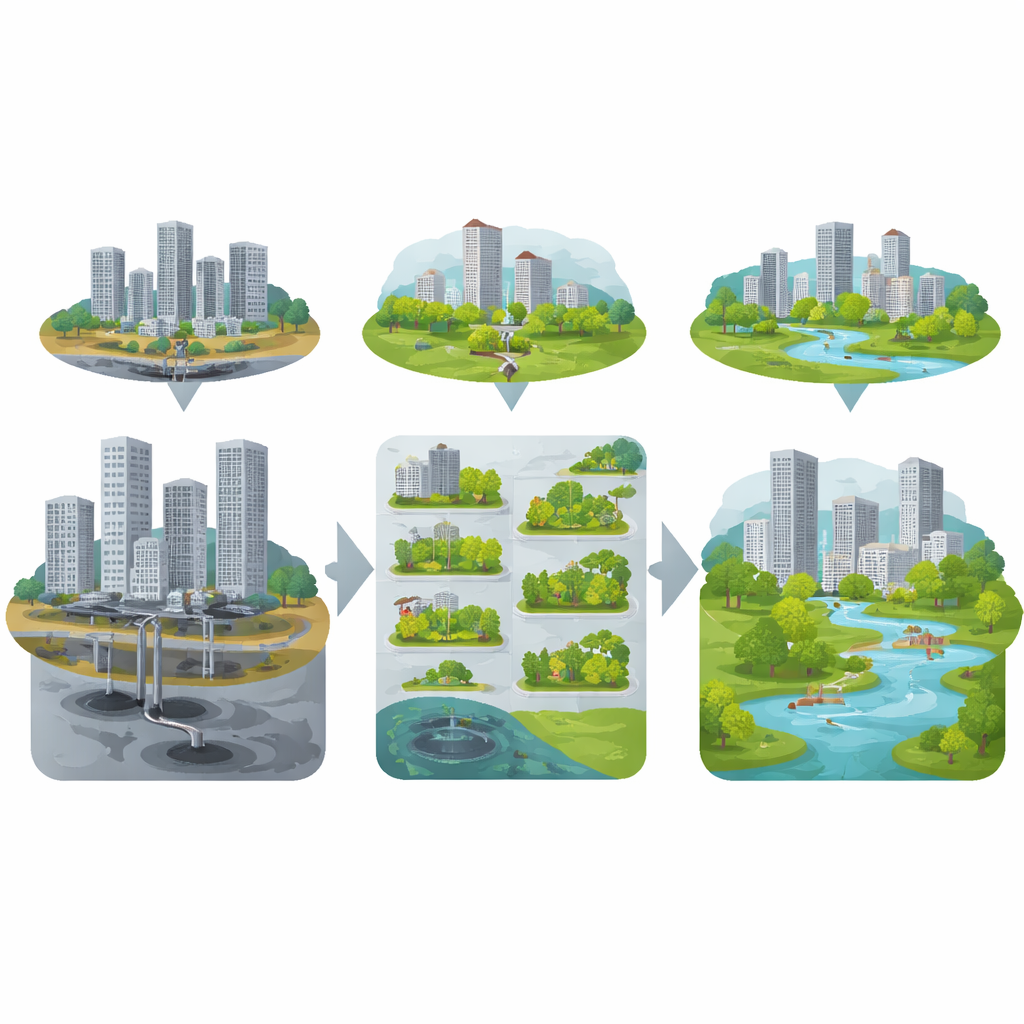
In many fast-growing cities across Africa and Asia, heavy rains now turn streets into rivers, drains clog with trash, and summer heat feels ever more intense. This study explores whether nature-based solutions—like parks, green roofs, and rain gardens, often called urban green infrastructure—can help three very different cities in the Global South cope with flooding, pollution, and heat. By comparing conditions in Dhaka (Bangladesh), Addis Ababa (Ethiopia), and Johannesburg (South Africa), the authors show that the value and practicality of greener cities depend strongly on local climate, politics, money, and space.
Three Cities, One Set of Problems
Dhaka, Addis Ababa, and Johannesburg are growing quickly but in contrasting ways. Dhaka is a low-lying megacity packed with buildings and pavement, with wetlands and green spaces rapidly disappearing. It faces frequent flooding, waterlogging, and one of the highest climate and flood risks in the world, while its drainage system and institutions struggle to keep up. Addis Ababa has a mix of cropland and urban areas in Ethiopia’s highlands, but more than half the city is prone to flooding because of intense seasonal rains, aging pipes, and roadside ditches that leak polluted runoff into rivers. Johannesburg, wealthier and more spacious, has significant grassland and green areas yet still suffers from river pollution, solid waste problems, and vulnerable settlements along waterways. In all three places, today’s stormwater management is dominated by concrete pipes and channels designed to move water away quickly rather than work with nature.
Looking at Strengths and Weaknesses
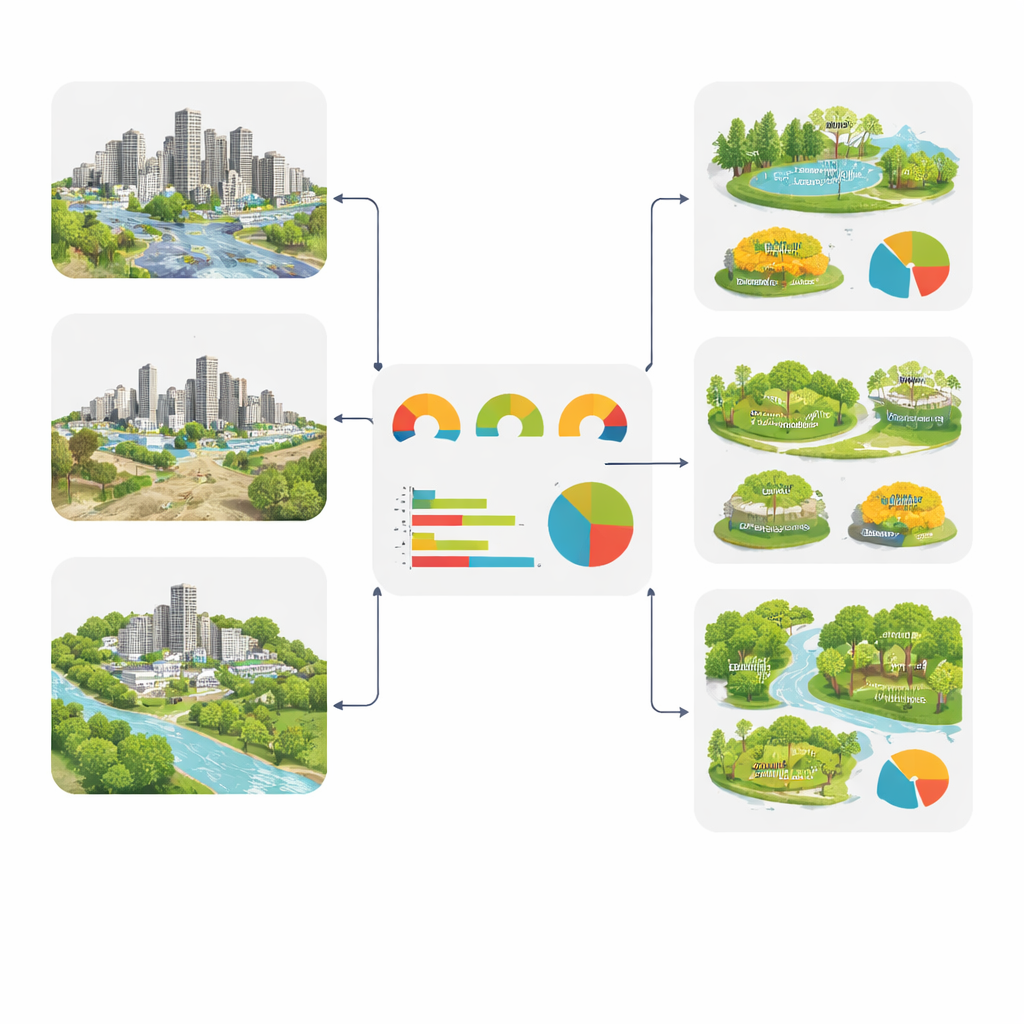
To understand where green infrastructure could help most, the authors used a strategic planning tool called SWOT, which stands for strengths, weaknesses, opportunities, and threats. They turned a wide range of global and national data—for example, on air quality, water access, environmental performance, income inequality, and infrastructure investment—into scores that can be compared across the three cities. High “strength” scores do not mean things are already good; instead, they signal areas where green infrastructure could meet a strong need, such as flood reduction or cleaner air. Across all three cities, the greatest needs line up with climate-related issues: managing stormwater and floods, securing water supplies, and improving air quality. The study also highlights social benefits—better health, fairer access to green space, and support for local economies—that green infrastructure can provide if designed and placed wisely.
Chances to Improve, and Risks If We Fail
On the downside, the analysis finds that money, institutions, and rules are often bigger barriers than engineering. For Dhaka, Addis Ababa, and Johannesburg alike, the heaviest weaknesses involve the cost of building and maintaining new systems, gaps in technical knowledge, and limited or poorly enforced policies. Even in Johannesburg, where national income is relatively high, investment in green infrastructure lags because it is not yet a priority within existing frameworks. At the same time, the study identifies promising openings. Green projects can be woven into existing gray systems to upgrade drainage, support urban farming, and create jobs for people with limited formal training. However, the same political and economic systems that could support these changes also pose threats: if maintenance is neglected, if public and political enthusiasm fades, or if green projects trigger gentrification that pushes out poorer residents, the long-term benefits may not last.
Limits of Big-Picture Numbers
The authors are careful about what their numbers can and cannot say. Because high-quality data at neighborhood scale are scarce, most of the indicators they use are national averages rather than city-specific measurements. Different factors also had to be treated as equally important, even though some clearly matter more in practice. As a result, the SWOT scores offer a broad snapshot rather than a detailed map. They may overlook local hot spots—such as neighborhoods in Johannesburg that flood repeatedly—or differences between districts within the same city. The study also leaves out some potential pros and cons of green infrastructure simply because there was no reliable way to measure them consistently across all three locations.
What This Means for Everyday Life
For non-specialists, the key message is that greening a city is not a one-size-fits-all fix, but it is a powerful tool when tailored to local realities. Rain gardens, green roofs, permeable pavements, and restored wetlands can cool neighborhoods, soak up stormwater, clean the air, and make public spaces more livable, especially in rapidly growing cities at high risk from climate change. Yet these nature-based solutions work only if they are backed by strong institutions, clear rules, stable funding, and meaningful community involvement. The study concludes that cities like Dhaka, Addis Ababa, and Johannesburg urgently need location-specific green infrastructure plans that blend technical insight with local knowledge. Done well, such plans can turn everyday rain, heat, and waste from chronic hazards into opportunities to build healthier, fairer, and more resilient urban environments.
Citation: Bereded, B., Taylor, M., Rhaman, M. et al. A comparative SWOT analysis of urban green infrastructure in the Global South. Sci Rep 16, 10748 (2026). https://doi.org/10.1038/s41598-026-44395-7
Keywords: urban green infrastructure, stormwater management, climate-resilient cities, Global South urbanization, nature-based solutions