Clear Sky Science · en
Genetic predisposition to coffee consumption and the association with the early risk of atherosclerosis
Why Your Morning Coffee and Your Heart May Be Linked
Many people rely on coffee to start the day, but how this habit affects heart health is still under debate. This study asked a nuanced question: not just whether drinking more coffee is tied to early artery disease, but whether our genes that nudge us to drink more coffee might quietly shape the health of our heart and neck arteries over a lifetime.
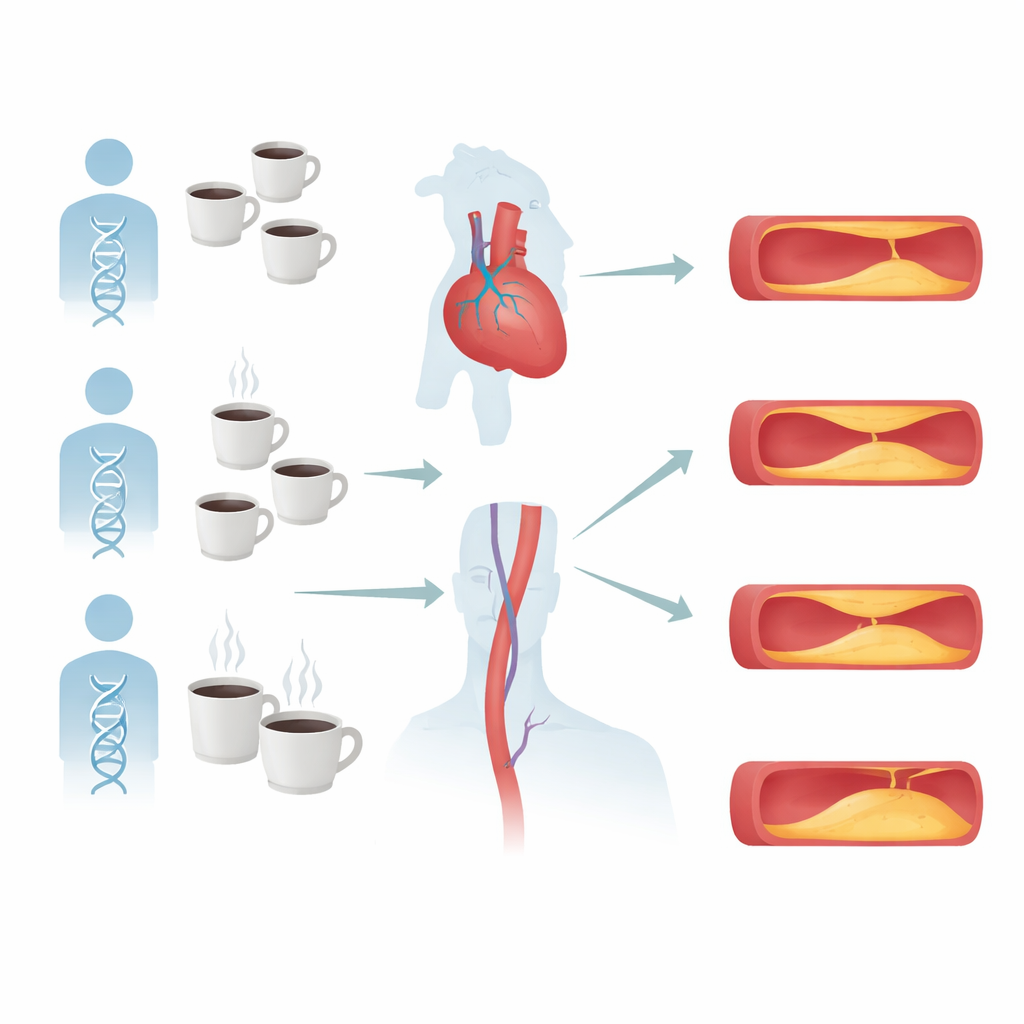
Looking Inside the Arteries Before Disease Strikes
The researchers focused on "silent" artery changes that appear long before heart attacks or strokes. Using advanced scans in more than 24,000 middle-aged adults in Sweden, they measured calcium deposits in the heart’s arteries, overall plaque burden along the coronary tree, and visible plaques in the neck (carotid) arteries. These people were from the large Swedish CArdioPulmonary bioImage Study, which invites generally healthy volunteers for detailed imaging and blood tests. At the same time, participants filled out food questionnaires that captured how often they drank coffee, from almost never to more than five times per day.
What Coffee Habits Alone Seemed to Show
When the team looked in a straightforward way at how much coffee people said they drank and how much early artery disease they had, the picture was surprisingly bland. After accounting for age, sex, body weight, smoking, exercise, education, and alcohol use, there was no clear link between coffee intake and any of the three artery measures. Heavy coffee drinkers were not obviously worse off than light drinkers in these simple comparisons, even though coffee was tied to several blood markers, such as fats and hormones, that are themselves related to heart health.
Letting Genes Stand In for a Lifetime of Coffee
To dig deeper, the scientists turned to genetics as a kind of natural experiment. Earlier research has identified common DNA variants near two genes, AHR and CYP1A2, that influence how quickly the body breaks down caffeine and how much coffee people tend to drink. People with certain versions of these variants are, on average, habitual higher coffee drinkers across their lives. The team used these variants as a "genetic score" that stands in for long-term coffee tendency and applied a method called Mendelian randomization to test whether this inherited tendency was related to artery changes, in a way less muddied by lifestyle factors.
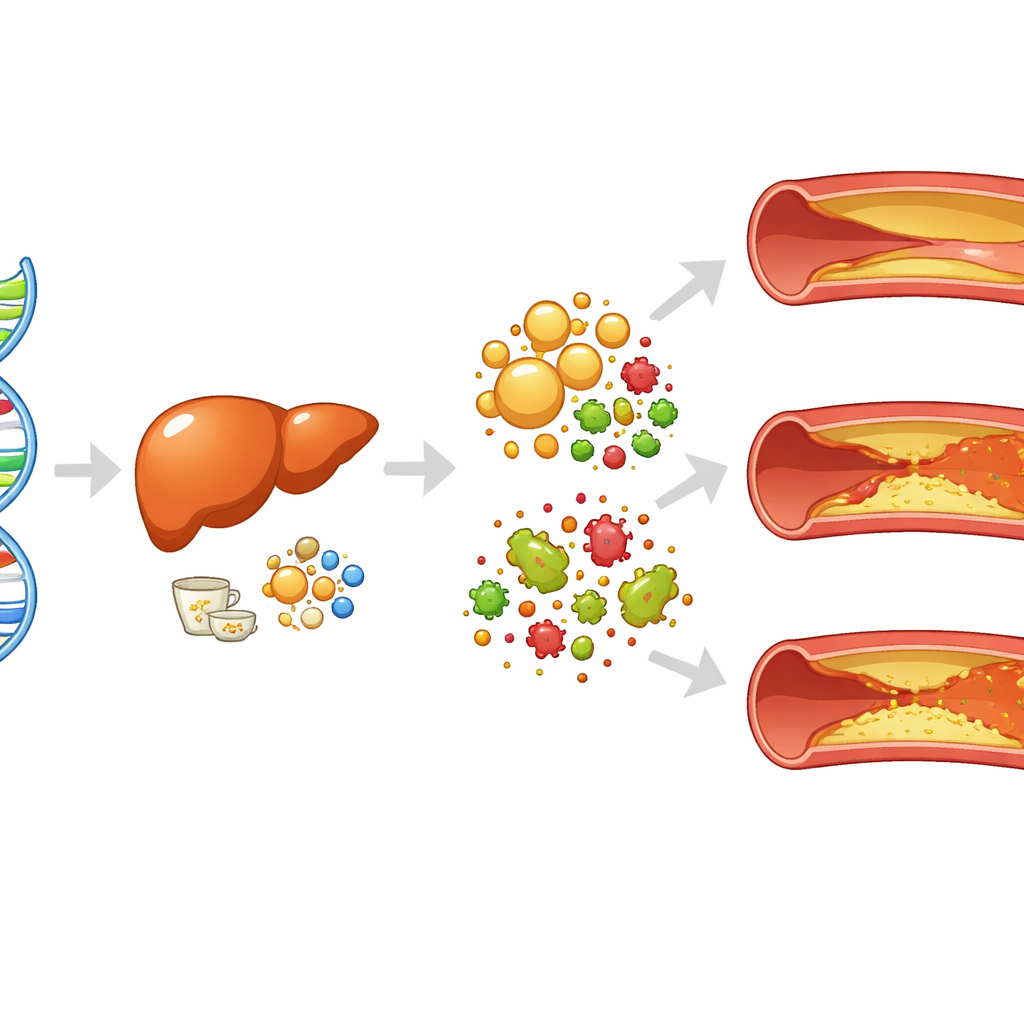
Genes, Heavy Coffee Drinking, and Hidden Plaque
Across several genetic analyses, including checks against an independent UK dataset, people whose DNA predisposed them to higher coffee intake showed more widespread plaque in the heart’s arteries, as captured by a measure called segment involvement score. The signal was most apparent for this subtle, early-stage plaque index and less consistent for artery calcium or neck artery plaque. When the researchers split people by how much coffee they actually drank, the genetic score was linked to higher plaque burden only among those who drank coffee more than twice a day. In lighter or non-drinkers, the same genetic score did not show a meaningful relationship with early artery disease.
Clues from Blood Fats and Inflammation
To explore what might connect coffee-related genes and artery plaque, the team examined hundreds of fats and proteins circulating in the blood of frequent coffee drinkers. They found that a stronger genetic push toward coffee was accompanied by higher levels of triglycerides and fat-rich particles in the blood, as well as changes in proteins involved in immune responses. Some of these fats and proteins were, in turn, also linked to greater plaque in heart arteries. This pattern hints that altered fat handling and low-grade inflammation could be important pieces of the puzzle.
What This Means for Coffee Lovers
Overall, the study suggests that simply counting cups of coffee is not enough to understand heart risk. In this large Swedish group, reported coffee intake by itself did not track with early artery disease. But inherited tendencies that push some people toward higher coffee use were tied to more hidden plaque in the heart, especially among those who already drink coffee several times a day, and were accompanied by shifts in blood fats and inflammatory signals. The work does not prove that coffee directly causes artery damage, and the authors stress that more research is needed. It does, however, raise the possibility that genes, metabolism, and coffee habits interact in subtle ways to shape cardiovascular risk over many years.
Citation: Qiao, X., Toma, V.W., Wang, J. et al. Genetic predisposition to coffee consumption and the association with the early risk of atherosclerosis. Sci Rep 16, 9652 (2026). https://doi.org/10.1038/s41598-026-44122-2
Keywords: coffee and heart health, genetic predisposition, early atherosclerosis, blood lipids and inflammation, Mendelian randomization