Clear Sky Science · en
Perfluoroalkyl compound levels in breast milk of mothers in Riyadh, Kingdom of Saudi Arabia
Why This Matters for New Parents
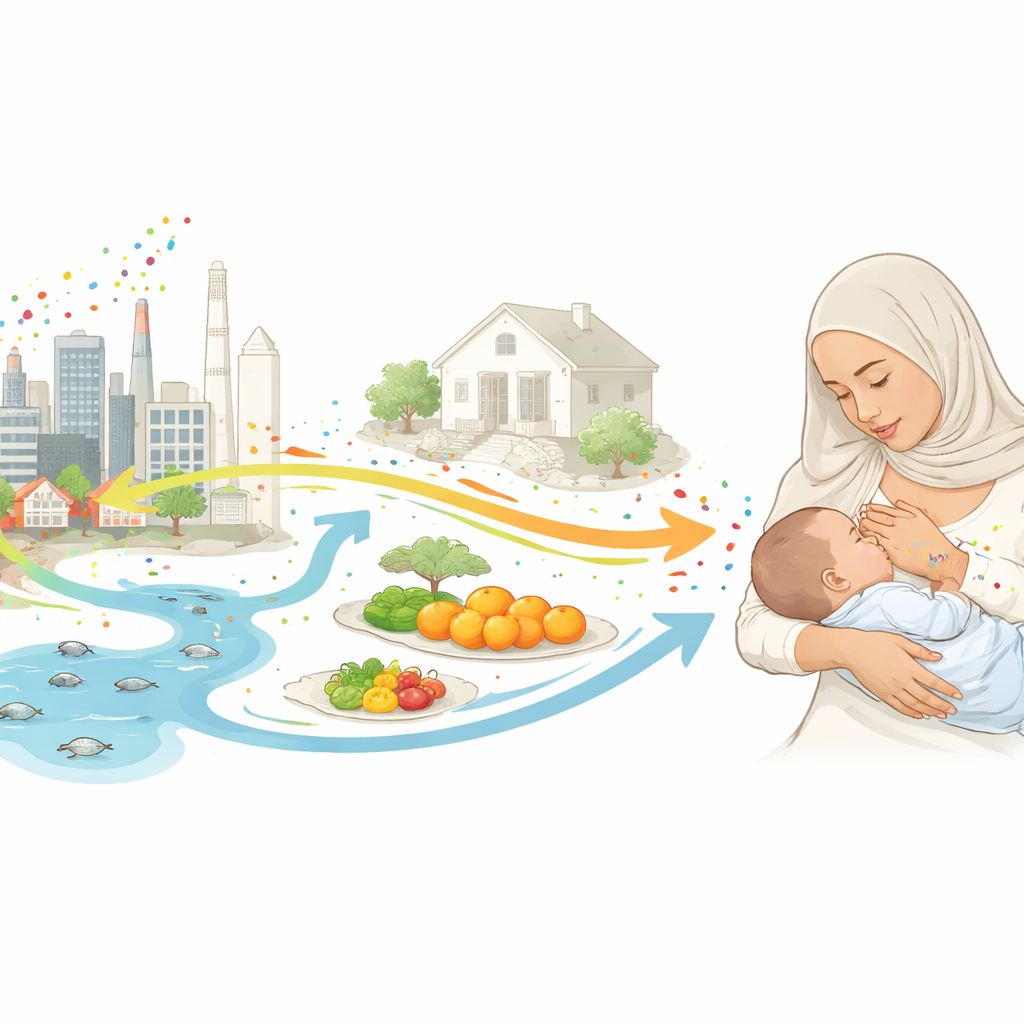
Everyday products like nonstick pans, water‑repellent clothes, and food packaging can shed long‑lasting chemicals into our environment. Some of these substances, known as PFAS, can build up in the human body and even reach babies during the most delicate stages of life. This study asks a simple but important question for families in Riyadh, Saudi Arabia: do these chemicals show up in mothers’ breast milk, and if so, how much might infants be taking in while nursing?
Hidden Chemicals in Modern Life
Per‑ and polyfluoroalkyl substances (PFAS) are a large family of man‑made chemicals prized for being slippery, oil‑ and water‑repellent, and very stable. Those same traits mean they break down extremely slowly in the environment and can linger in people’s bodies for years. Two of the best‑known members, PFOA and PFOS, have been linked in other studies to effects on the immune system, hormone balance, growth, and possibly cancer. Because babies and fetuses are especially sensitive to chemical exposures, scientists around the world have begun tracking how much PFAS reaches them through the womb and through breast milk. Until now, however, there were no measurements of these compounds in breast milk from Saudi Arabia, a country experiencing rapid development and growing concern about environmental pollution.
How the Study Was Done
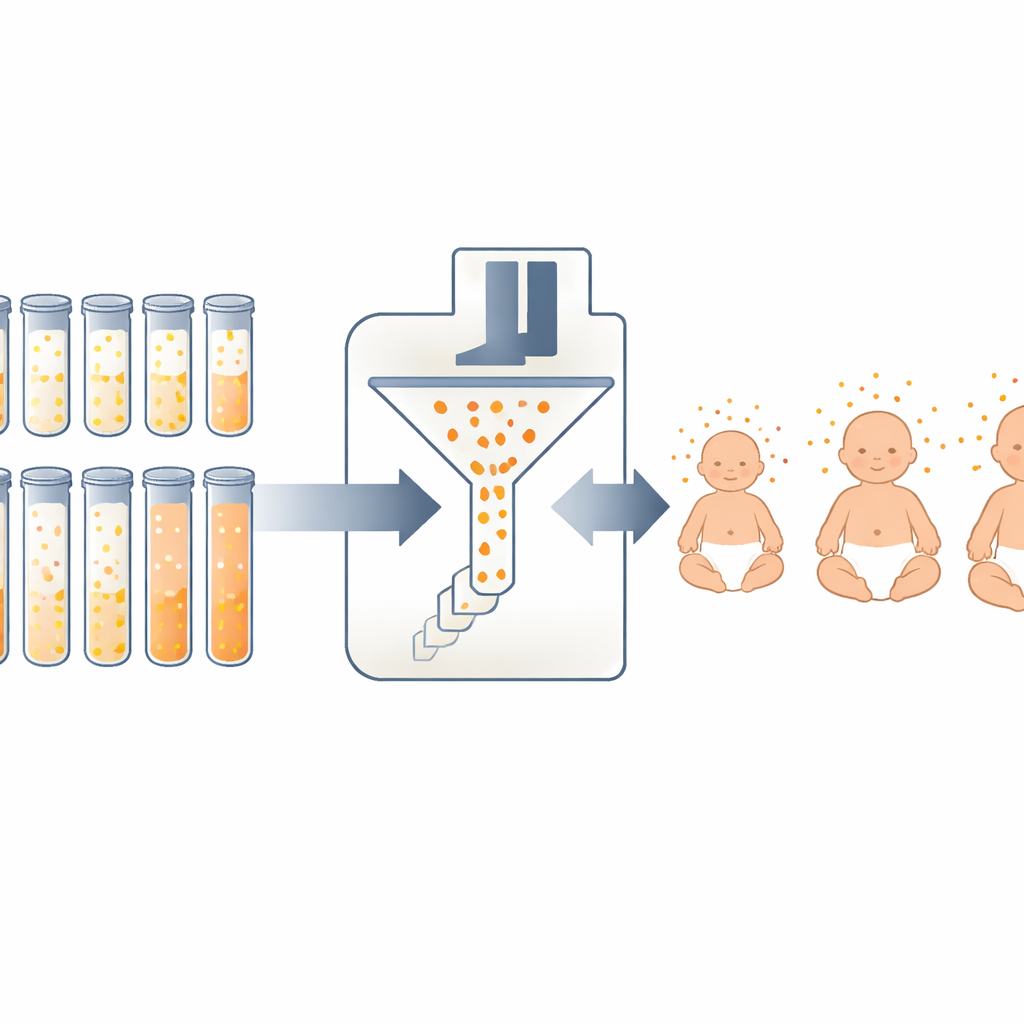
Researchers in Riyadh carried out an exploratory monitoring project rather than a large epidemiological trial. They recruited 25 breastfeeding mothers who had given birth within the previous month at a major children’s hospital. Using sterile, single‑use pumps and containers, they collected small samples of breast milk, quickly chilled them, and stored them frozen until analysis. In the laboratory, the team used a step‑by‑step process to separate the PFAS from the complex milk mixture and then measured PFOA and PFOS with a highly sensitive technique called LC–MS/MS, which can detect trace amounts down to a few parts per trillion in water‑like liquids. The method was carefully checked to avoid contamination and to ensure reliability across multiple runs.
What the Researchers Found
The majority of breast milk samples contained PFOA and PFOS below the level that the lab considered reliably measurable. Only four of the 25 mothers (16 percent) had concentrations above this limit. In those few cases, PFOA reached about 73 nanograms per liter and PFOS about 85 nanograms per liter, while the median values for the group as a whole remained below the reporting threshold. This pattern suggests that PFAS exposure exists in Riyadh but is generally low, with a small subset of mothers showing higher levels than the rest. When the authors compared their results with recent studies from other countries, they found that typical levels in Saudi milk were similar to those reported in some African cohorts and notably lower than those seen in parts of East Asia, Europe, and North America.
Estimating What Babies Receive
To translate these measurements into something more meaningful for health discussions, the team estimated each infant’s daily intake. They combined the concentration found in milk with a typical early‑life milk volume and a reference infant body weight, yielding an estimated dose per kilogram of body weight per day. These doses were then compared with two sets of expert guidelines. All estimated intakes were below the U.S. Environmental Protection Agency’s reference value for safe lifelong daily exposure. However, a small fraction of samples—about one in eight for PFOA and one in six for PFOS—exceeded the more cautious limits suggested by the European Food Safety Authority, which were set based on subtle effects such as reduced vaccine responses.
What This Means for Families and Policymakers
The study shows that, in Riyadh, PFAS are present in some mothers’ breast milk but generally at low levels by international standards. For individual families, the findings do not suggest that breastfeeding should be discouraged; rather, they highlight that even in early infancy, babies can encounter industrial chemicals that society has released into air, water, and food. For health officials, the work fills an important data gap for Saudi Arabia and underscores the value of continued monitoring, larger follow‑up studies, and investigations into where PFAS are coming from—such as drinking water, food, or household products. In simple terms, the takeaway is that exposure exists but is modest; now the challenge is to keep it low and, where possible, reduce it further.
Citation: Alharbi, E., Ghanem, E., Alhussaini, W. et al. Perfluoroalkyl compound levels in breast milk of mothers in Riyadh, Kingdom of Saudi Arabia. Sci Rep 16, 13351 (2026). https://doi.org/10.1038/s41598-026-43202-7
Keywords: PFAS, breast milk, infant exposure, Saudi Arabia, environmental pollution