Clear Sky Science · en
Research on the formation mechanism of social media burnout among college students based on the ISM-MICMAC model
Why constant scrolling can leave students drained
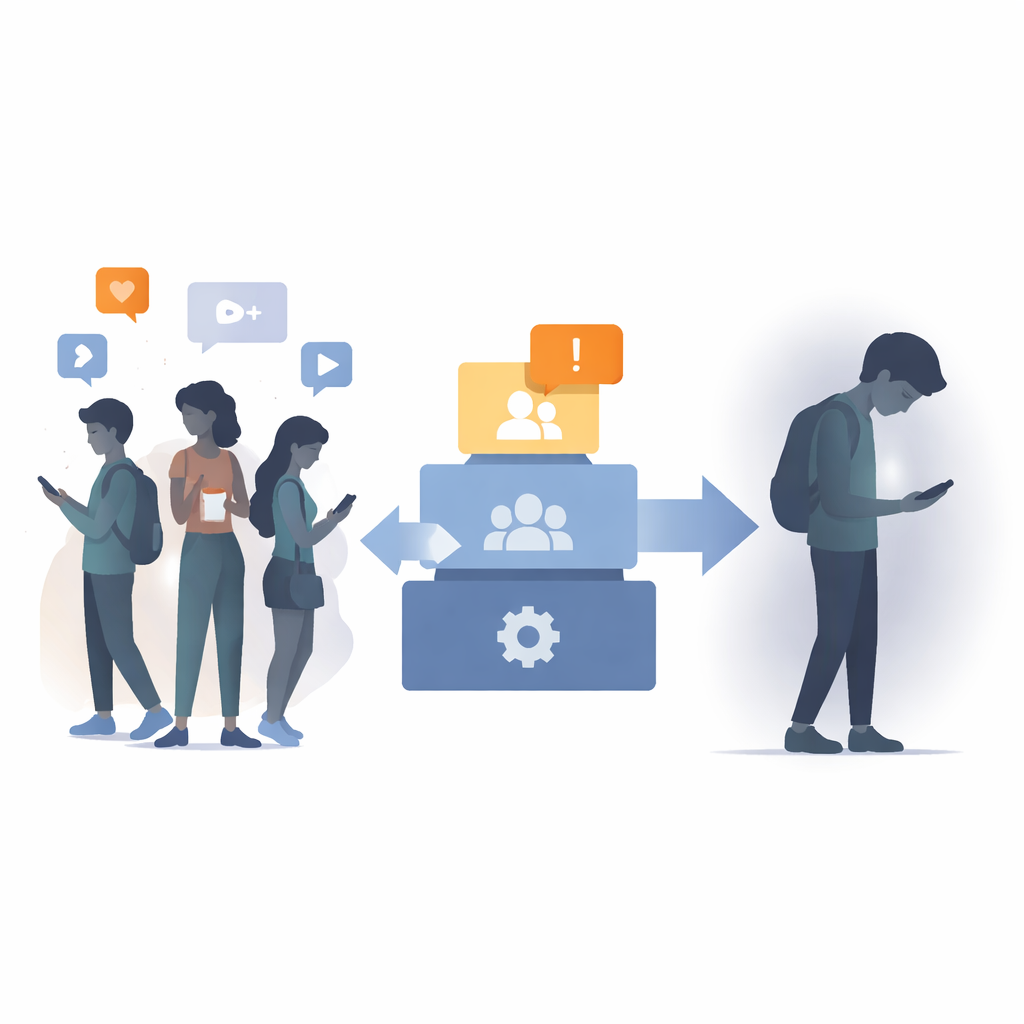
For many college students, social media is woven into everyday life: it is where they chat with friends, follow news, and show who they are. Yet the more time they spend scrolling, the more some of them feel mentally exhausted, irritated, or tempted to disappear from these platforms altogether. This study takes a systems-level look at how that exhaustion, known as social media burnout, gradually forms and builds up beneath the surface, revealing that what feels like a personal problem is deeply shaped by how platforms are designed and how online social life works.
Many small pressures behind one tired mind
The researchers focus on social media burnout among college students and argue that it does not come from a single cause. Instead, it arises from a web of influences that include how much information pours in, how students think and feel about themselves, and how the platforms are built. Prior work had picked out pieces of this puzzle, such as fear of missing out or endless notifications, but rarely showed how these pieces fit together. This study aims to map that structure: which factors sit at the root, which ones sit in the middle, and which ones show up as the visible signs of burnout.
How experts helped build the burnout map
To untangle this complex system, the authors used a two-part method known as ISM–MICMAC. Instead of starting with one fixed theory, they gathered insight from eight specialists in journalism, psychology, and social media operations. Through several rounds of expert discussion (the Delphi method) and a review of earlier studies, they narrowed a long list of ideas down to 15 key factors. These range from information overload and privacy worries to social comparison, group identity, and the way recommendation algorithms serve content. Using these expert ratings, the ISM method placed the 15 factors into layers, like floors in a building, while MICMAC analysis evaluated how strongly each factor pushes others or is pushed in return.
A ladder from hidden drivers to visible overload
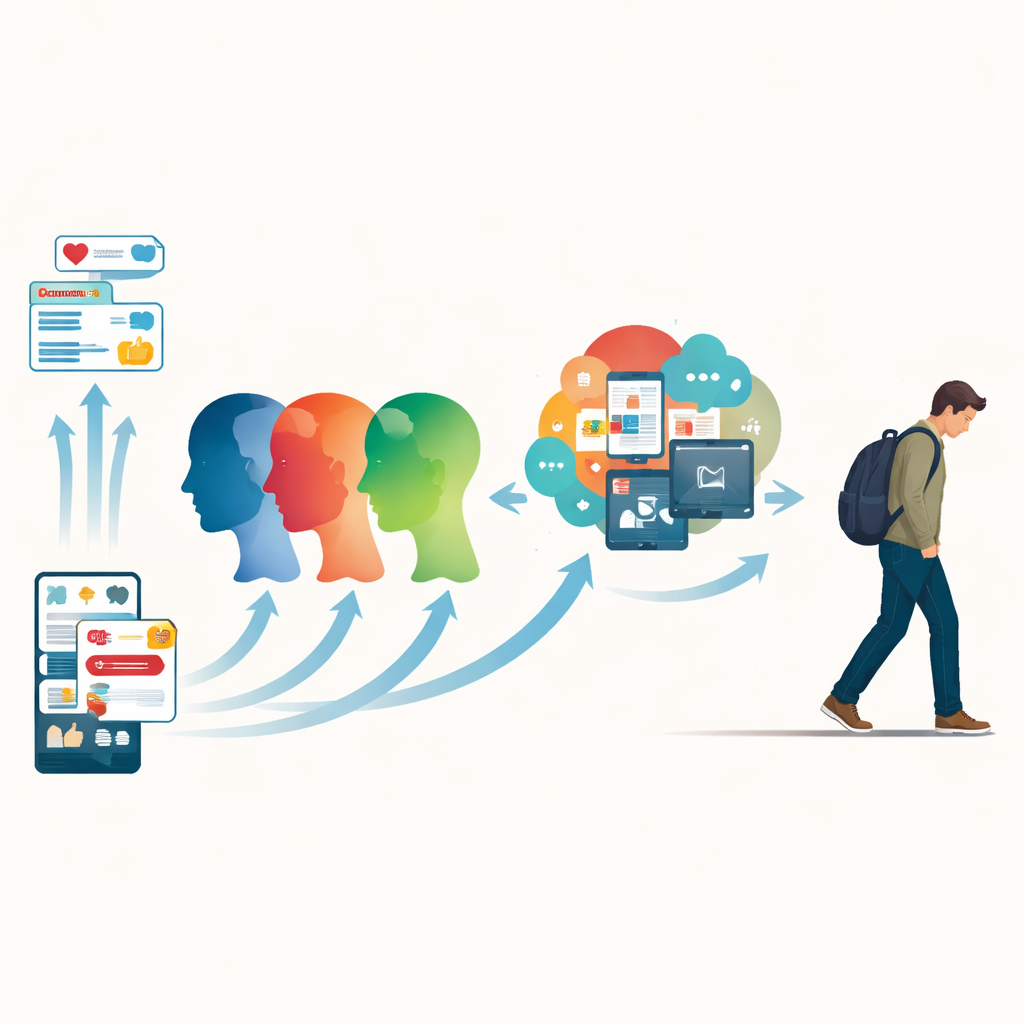
The final model shows four layers. At the bottom sit the deep drivers: how platforms recommend content, how they reward engagement with likes and other feedback, and how group pressure is built into online spaces. These underlying forces are powerful and mostly unaffected by other factors. Above them lies a psychological layer that includes social comparison, fear of missing out, beliefs about self-control, and pressure to keep up with group norms. Together, these inner feelings translate the platform’s design into personal stress. The next layer holds the “overload” experiences: too much information, too many functions and services in one app, constant social demands, shallow interactions, and privacy concerns. At the very top are the direct signs of burnout, such as feeling overwhelmed and pulling back from social media, including deactivating accounts or ghosting others.
Which levers matter most for change
MICMAC analysis further sorts these factors into clusters based on how much they drive the system or depend on it. The most influential group includes algorithmic recommendations, engagement feedback, group pressure, social comparison, fear of missing out, and social norm pressure. These elements sit near the start of the chain, quietly powering everything else. In contrast, the various overloads and feelings of fatigue are heavily dependent results: they are what students notice, but not where the real leverage lies. Some elements, like privacy worries or a student’s sense of belonging, are more isolated in this model: important to individual experience but less central to the main causal flow.
What this means for students and platforms
Overall, the study concludes that social media burnout in college students is a step-by-step progression: platform features and social expectations set things in motion, internal thoughts and emotions amplify the pressure, and overload plus withdrawal appear at the end of the line. For everyday users, this means that feeling drained is not simply a matter of weak self-control, but a reasonable reaction to stacked technical and social pressures. For designers, educators, and policymakers, the findings point toward deeper fixes—such as rethinking recommendation systems and feedback loops and helping young people manage social comparison and fear of missing out—rather than only treating the visible symptoms of “too much screen time.”
Citation: Wen, J., Wang, H. & Chen, H. Research on the formation mechanism of social media burnout among college students based on the ISM-MICMAC model. Sci Rep 16, 12554 (2026). https://doi.org/10.1038/s41598-026-42958-2
Keywords: social media burnout, college students, algorithmic feeds, fear of missing out, information overload