Clear Sky Science · en
Assessing the prevalence of non-use of cervical cancer screening in Khouribga, Morocco
Why this matters for everyday women
Cervical cancer is one of the few cancers that can often be caught early and stopped before it turns deadly. Yet in many parts of the world, most women never get screened. This study looks closely at one Moroccan province, Khouribga, to understand why so many women skip a simple, potentially life‑saving test that is available in local health centers. Its findings highlight how gaps in basic information—not high‑tech medicine—are driving preventable illness and death.
The promise of early detection
Cervical cancer usually develops slowly, starting with small changes in cells that can be seen and treated long before they become dangerous. Morocco has built a national program that brings screening into ordinary primary care clinics. Trained midwives use a low‑cost method called visual inspection with acetic acid, in which diluted vinegar is applied to the cervix; suspicious spots briefly turn white, allowing same‑day decisions about further care. The test and any follow‑up treatment offered through the program are free, and special referral centers and cancer clinics were created to confirm diagnoses and provide treatment.
Who was studied and how
To see whether women were actually using these services, researchers conducted a survey of 499 women aged 30 to 49 who visited eight public healthcare centers in Khouribga between March and December 2024. This age group is the main target for Morocco’s screening program. Midwives interviewed women in private rooms using a structured questionnaire. The questions asked about age, income, schooling, health insurance, knowledge of cervical cancer, awareness of the screening program, experiences with the health system, and feelings about the test itself, such as fear of pain or embarrassment.
A striking picture of missed chances
The results were sobering: more than nine out of ten women (91.8%) had never been screened for cervical cancer in their lives. Many faced economic and social disadvantages—about half could not read or write and nearly two‑thirds lived in households earning less than the equivalent of 300 US dollars per month. Knowledge about cervical cancer was extremely low: most women could not identify common warning signs, long‑term complications, or ways to prevent the disease. Crucially, nearly nine in ten did not know that a screening program even existed in their local health centers, and a similar share did not realize that the test was free of charge. Many also believed, incorrectly, that screening is only done when symptoms appear or only for sexually active women.
Barriers inside and outside the clinic
The study also uncovered gaps in how the health system engages women. Almost all participants said that no health professional had ever informed them about cervical cancer screening or invited them to take the test. A sizable minority reported a poor relationship with the health system. On the personal side, nearly half expected the test to be painful, more than two‑thirds worried about privacy, and over 90% felt ashamed at the idea of undressing for the procedure. Despite these worries, when screening was offered as part of the study visit, virtually all women agreed to be tested, and a meaningful fraction had abnormal results that required further evaluation—clear evidence that many silent problems were going undetected.

The two key missing messages
When the researchers used statistical models to sort through all the possible influences, two stood out as the strongest predictors of never having been screened. Women who did not know that the screening program targets those aged 30 to 49 were far more likely to have missed out. Likewise, women who were unaware that the test is free at public health centers were much less likely to participate. Factors such as income, education, and fear of pain mattered in simpler comparisons, but after accounting for everything together, these two pieces of information—who should be screened, and that it costs nothing—remained the most powerful barriers.
What this means going forward
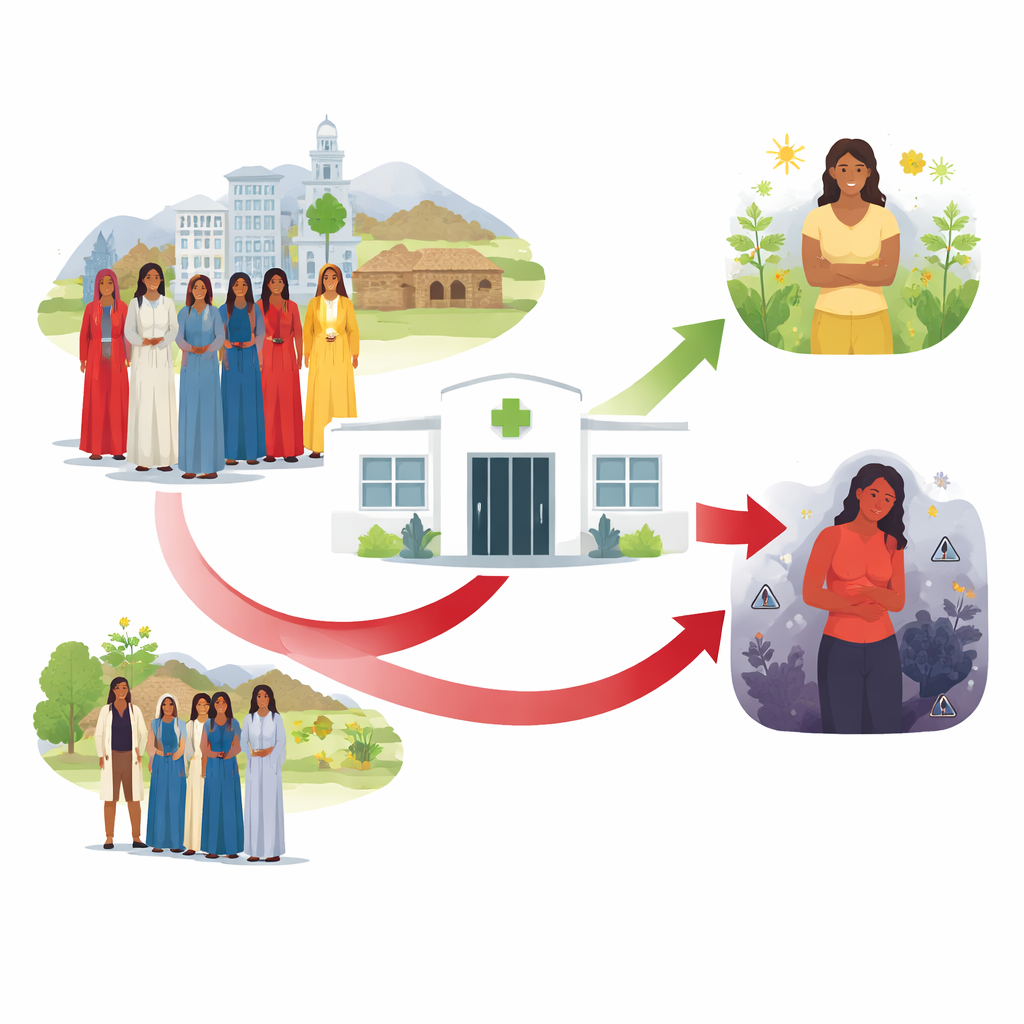
To a layperson, the message is straightforward: in Khouribga, the biggest obstacles to cervical cancer prevention are not the price of sophisticated equipment but the absence of clear, trusted communication. Most eligible women do not realize that they are supposed to be screened regularly or that the test and treatment are free in public clinics. The authors argue that targeted, culturally sensitive information campaigns, led by health workers and adapted to women with low literacy and limited resources, could dramatically increase screening. By simply making eligibility and free access unmistakably visible, Morocco could move many more women from silent risk into timely prevention and care.
Citation: Hachimi, S.E., Essayagh, F., Essayagh, M. et al. Assessing the prevalence of non-use of cervical cancer screening in Khouribga, Morocco. Sci Rep 16, 10858 (2026). https://doi.org/10.1038/s41598-026-42469-0
Keywords: cervical cancer screening, women's health, Morocco, health awareness, preventive care