Clear Sky Science · en
Predictors of exercise participation among Saudi adults attending primary healthcare centers in Riyadh
Why this matters for everyday life
Many of us know we should move more, but who actually ends up exercising—and why—can be surprisingly complicated. This study looks at adults visiting primary healthcare centers in Riyadh, Saudi Arabia, to uncover which personal and health factors are linked with being active. The findings shed light on how jobs, insurance, and even heart problems or fast food habits are tied to exercise, offering clues for better health programs in rapidly changing societies.
Who was studied and how
Researchers surveyed more than 14,000 adults, both Saudi and non-Saudi, who attended government primary healthcare centers in one large health cluster in Riyadh between March and July 2023. Everyone was at least 18 years old and gave informed consent. People working at the clinics, minors, and those unable to complete the survey were excluded so that results reflected typical patients rather than health professionals or children. Trained staff interviewed participants using tablet-based questionnaires, asking about age, sex, education, work status, smoking, fast food, self-rated health, medical conditions like diabetes or heart disease, insurance coverage, and whether they did any form of exercise.
What the survey revealed
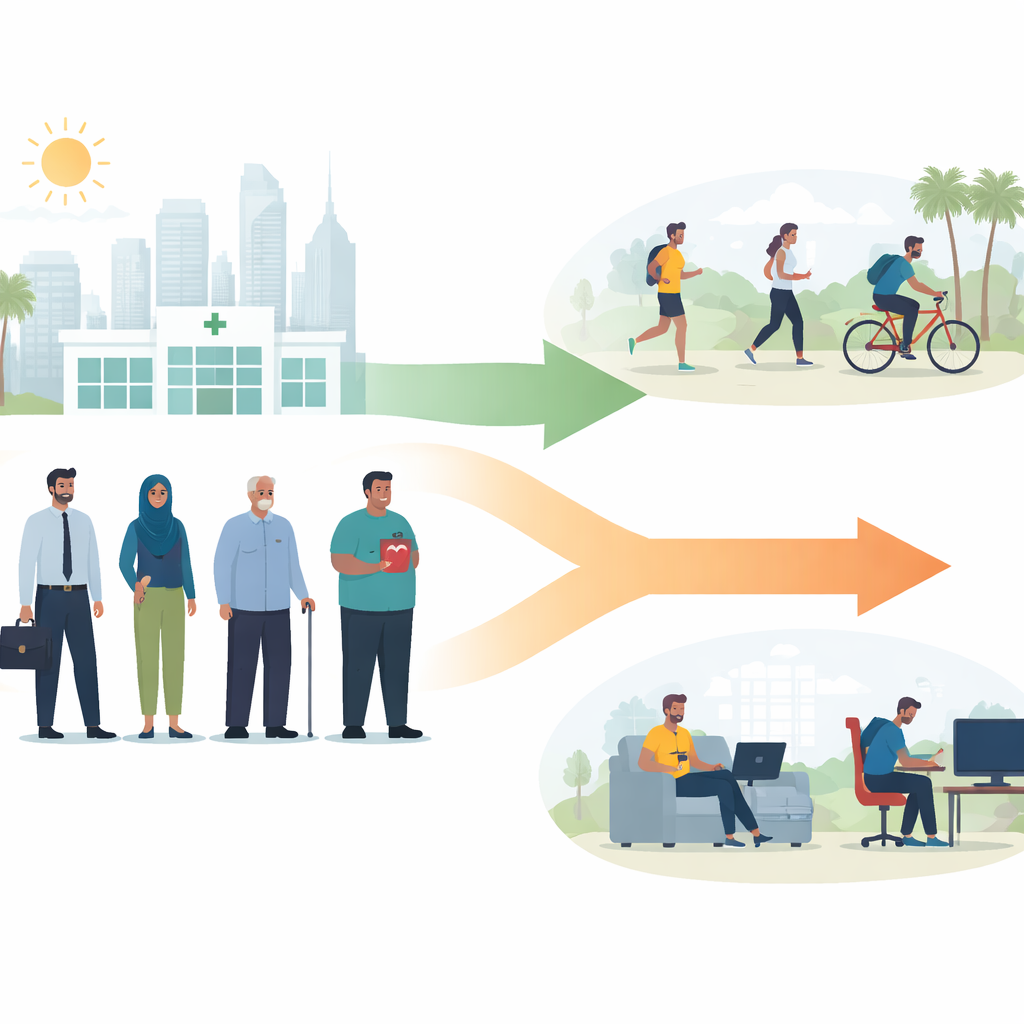
Overall, 60.7% of these clinic visitors said they exercised, a higher share than earlier national estimates. Most respondents were middle-aged or older, more than half were women, and just over half had a college education and a job. When the team ran statistical models to account for overlapping influences, several patterns stood out. Men were modestly more likely to exercise than women. People with jobs were clearly more active than those without work. Having health insurance showed the strongest link: insured adults had much higher odds of exercising than those without coverage. These results suggest that economic stability, structured daily routines, and access to healthcare all make it easier for people to be active.
Surprising links with habits and illnesses
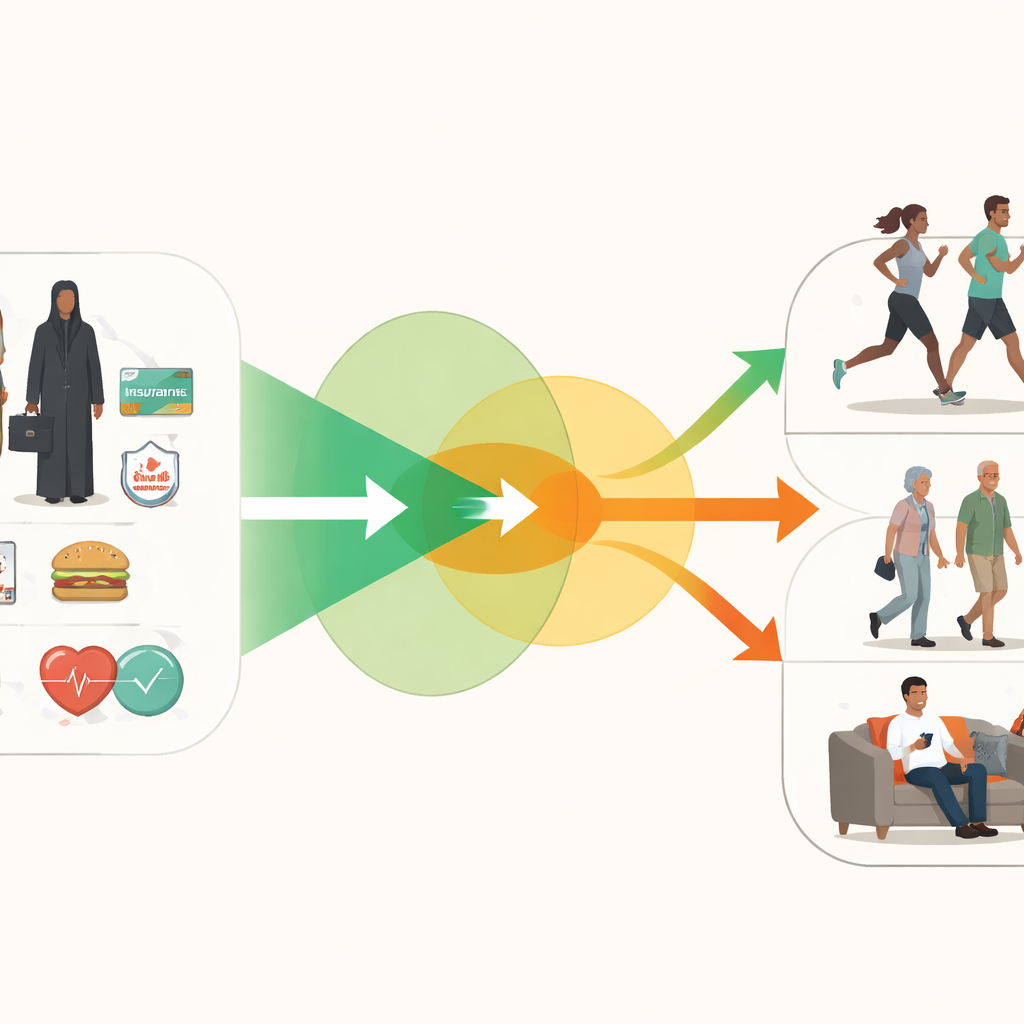
Some findings went against common expectations. Smokers and frequent fast food eaters were far more likely to report exercising than non-smokers and those who rarely ate fast food. One possible explanation is “compensating” behavior: people who know they have risky habits may try to offset them by being more active. Another is that certain social groups—such as younger employed adults—may both go out to eat often and enjoy sports or gym workouts. The study also found that people with heart disease were more likely to exercise, possibly because doctors strongly encourage activity as part of treatment and rehabilitation, and some patients join structured programs that emphasize movement.
Health challenges and data limits
The picture was more mixed for weight and cholesterol. Obesity, which was self-reported and probably undercounted, showed only a borderline link with lower exercise after adjusting for other factors. High cholesterol first appeared to be tied to more exercise, but after accounting for age, sex, and other health issues, it was instead linked to lower odds of being active. Because this research captured only a single moment in time, it cannot show whether exercise led to better or worse health, or whether a diagnosis pushed people to change their habits. The authors also note that clinic visitors may be older and sicker than the general population, and that self-reported exercise, smoking, and fast food habits can be colored by memory and a desire to give socially acceptable answers.
What it means for a healthier future
For people and policymakers alike, the takeaway is that getting adults moving is about more than personal willpower. In this Riyadh sample, being male, having a job, and holding health insurance were all linked to higher chances of exercising, while some unhealthy habits and heart disease also clustered with activity in complex ways. The authors argue that tailor-made programs—especially those reaching women, the unemployed, and uninsured adults—are needed to raise activity levels and support the country’s Vision 2030 health goals. Future research that follows people over time and includes more regions could help untangle cause and effect and guide smarter investments in parks, clinics, and community programs that make exercise a practical part of everyday life.
Citation: Al-Khateeb, B.F., Shubair, M.M., Elmetwally, M.A.A. et al. Predictors of exercise participation among Saudi adults attending primary healthcare centers in Riyadh. Sci Rep 16, 11990 (2026). https://doi.org/10.1038/s41598-026-42374-6
Keywords: physical activity, Saudi Arabia, primary healthcare, exercise predictors, chronic disease prevention