Clear Sky Science · en
A comprehensive nationwide registry study of noncommunicable disease comorbidities and death in cancer patients in Norway—the NCDNOR project
Why this matters for people living with cancer
Cancer is no longer always a quick death sentence. Many people now live years after a diagnosis, which is good news—but it also means they often face other long‑lasting illnesses at the same time. This study from Norway asks a simple but crucial question: when someone has cancer, how common is it that they also live with heart disease, diabetes, lung disease, or serious anxiety and depression, and how does this change over time? The answers help patients, families, and health services plan for the realities of life with and after cancer.
A nationwide look at cancer and other long‑term illnesses
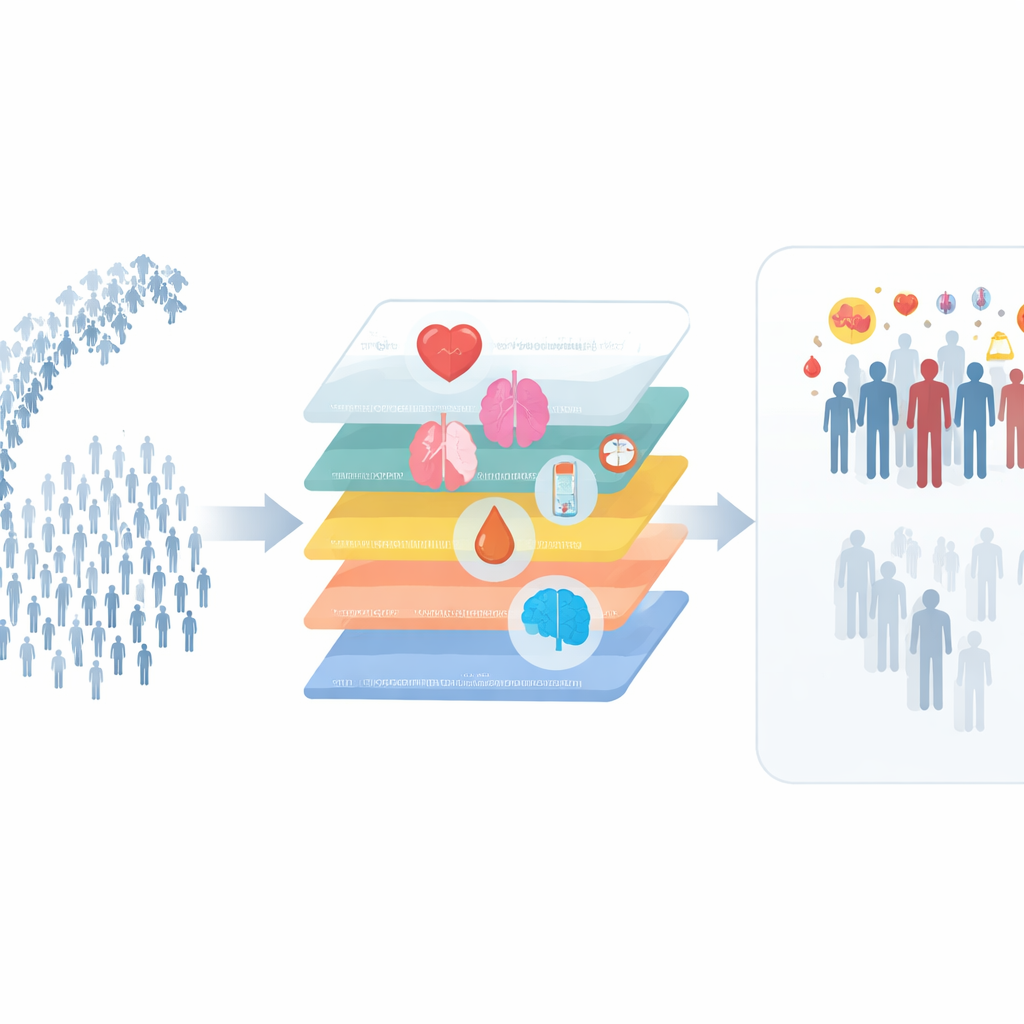
The researchers took advantage of Norway’s detailed national health registries, which record every cancer diagnosis, many chronic diseases, prescriptions, hospital visits, and deaths for the entire population. They focused on 221,264 adults who received their first cancer diagnosis between 2009 and 2019, across 19 types of cancer, including common ones such as colorectal, lung, skin, breast, and prostate cancers. For each person, they looked for major noncommunicable diseases: second cancers, cardiovascular diseases (like heart disease and stroke), chronic lung disease, diabetes, and diagnosed depression or anxiety. By linking multiple data sources, they aimed to capture a more complete picture than studies that rely on only hospital or only primary care records.
How they followed patients over time
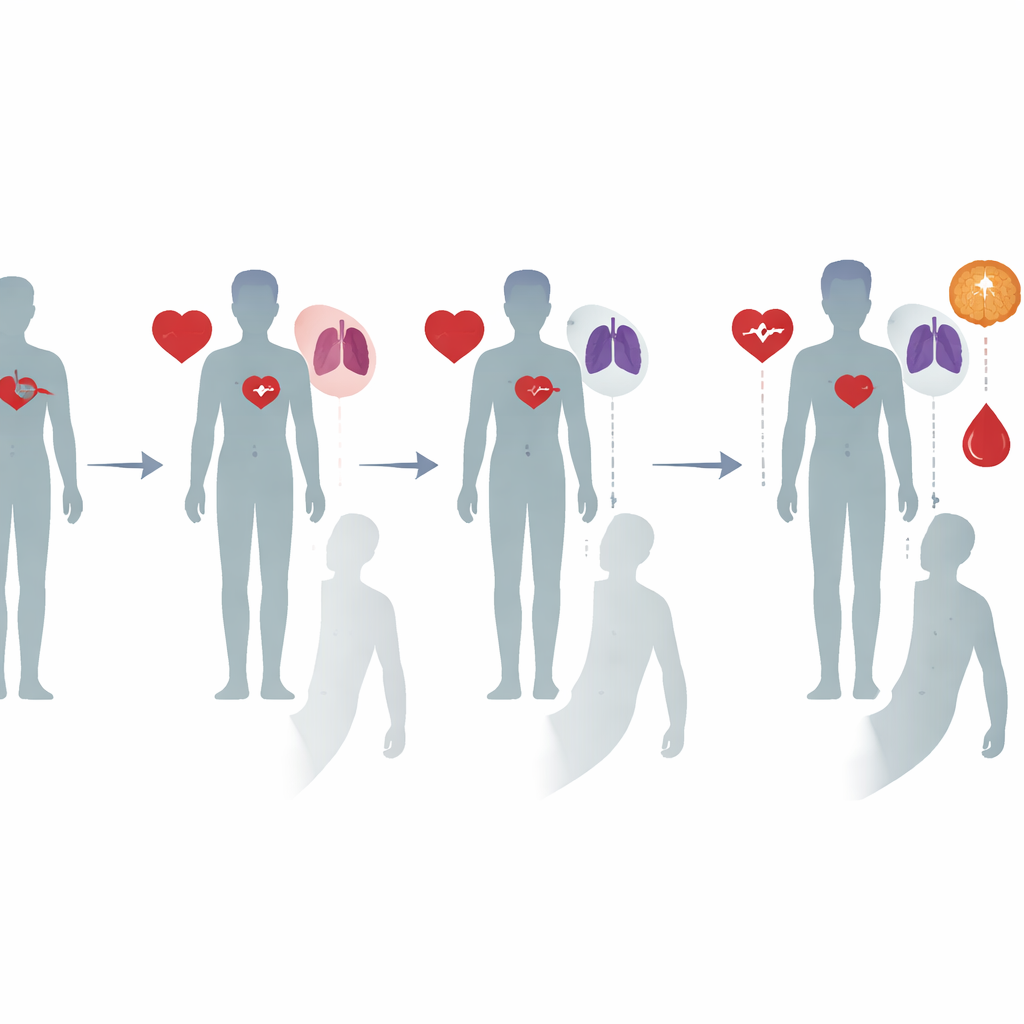
Instead of just asking whether a person ever had another illness, the team traced how people moved between different “states” over as long as ten years after their cancer diagnosis. Someone might start with no additional diseases, then develop heart disease, and later also diabetes, or die at any point along the way. Using a statistical approach called multi‑state modelling, they estimated the chance that a person with a given cancer, age, and sex would be alive with zero, one, two, or three or more of these conditions—or would have died—at one, five, and ten years after diagnosis. They also calculated the probability of each specific condition, such as heart disease or a second cancer, among those still alive.
What they found at the time of diagnosis
Already at the moment of their first cancer diagnosis, many patients were not facing just one disease. Depending on the cancer type, age, and sex, between about one‑third and more than four‑fifths of patients already had at least one other long‑term condition. The lowest share was among younger women with skin cancer, and the highest among older men with lung cancer. Heart and blood vessel disease was the most common companion illness in almost every group, often appearing alongside diabetes or mental health disorders. Women were more likely than men to have diagnosed depression or anxiety, while men more often had diabetes. Older patients of both sexes carried more combined illnesses than younger adults.
Life five years after a cancer diagnosis
Looking five years out, the study paints a sobering but realistic picture. For the common cancers, the chance of being alive and completely free of these major long‑term conditions ranged from less than 1% for older men with lung cancer to just under half for younger women with skin cancer. Put differently, for every cancer type, at least half of those who were alive five years after diagnosis were living with one or more of these additional illnesses. Heart and blood vessel disease remained the single most likely problem, except among younger women with skin cancer, where mental health disorders were slightly more common. Lung cancer patients frequently had chronic lung disease as well, while people with liver, pancreatic, uterus, or kidney cancers who survived five years were especially likely to have diabetes.
What this means for patients and health services
For health systems, these results underline that treating the tumor alone is not enough. Most cancer patients either arrive with, or soon develop, other serious long‑lasting conditions that can affect their quality of life, the treatment options available, and their chances of survival. The authors have created a public online tool that lets clinicians and researchers explore detailed risk patterns for different cancers, ages, and sexes in Norway. For patients and families, the main takeaway is that care needs to be coordinated: cancer treatment, heart health, lung function, blood sugar control, and mental wellbeing are deeply connected. Planning for this combined burden—through prevention, early detection, and joined‑up follow‑up care—may help more people not just live longer with cancer, but live better.
Citation: Lergenmuller, S., Robsahm, T.E., Nilssen, Y. et al. A comprehensive nationwide registry study of noncommunicable disease comorbidities and death in cancer patients in Norway—the NCDNOR project. Sci Rep 16, 11342 (2026). https://doi.org/10.1038/s41598-026-41831-6
Keywords: cancer comorbidities, chronic disease, cardiovascular disease, cancer survivorship, mental health and cancer