Clear Sky Science · en
COVID-19 pandemic perceived impacts on the Australian general population, a national survey exploring the role of socio-demographic and psychological factors
Why This Study Matters to Everyday Life
The COVID-19 pandemic disrupted nearly every part of daily life, but not everyone felt the impact in the same way. This Australian study asked almost 1,900 adults how the first year of the pandemic affected their work, home life, health, and mood. By looking carefully at age, gender, health, personality, and coping habits, the researchers show which groups were hit hardest and which ways of dealing with stress were linked to better or worse outcomes. Their findings offer a roadmap for protecting people’s wellbeing in future health crises.
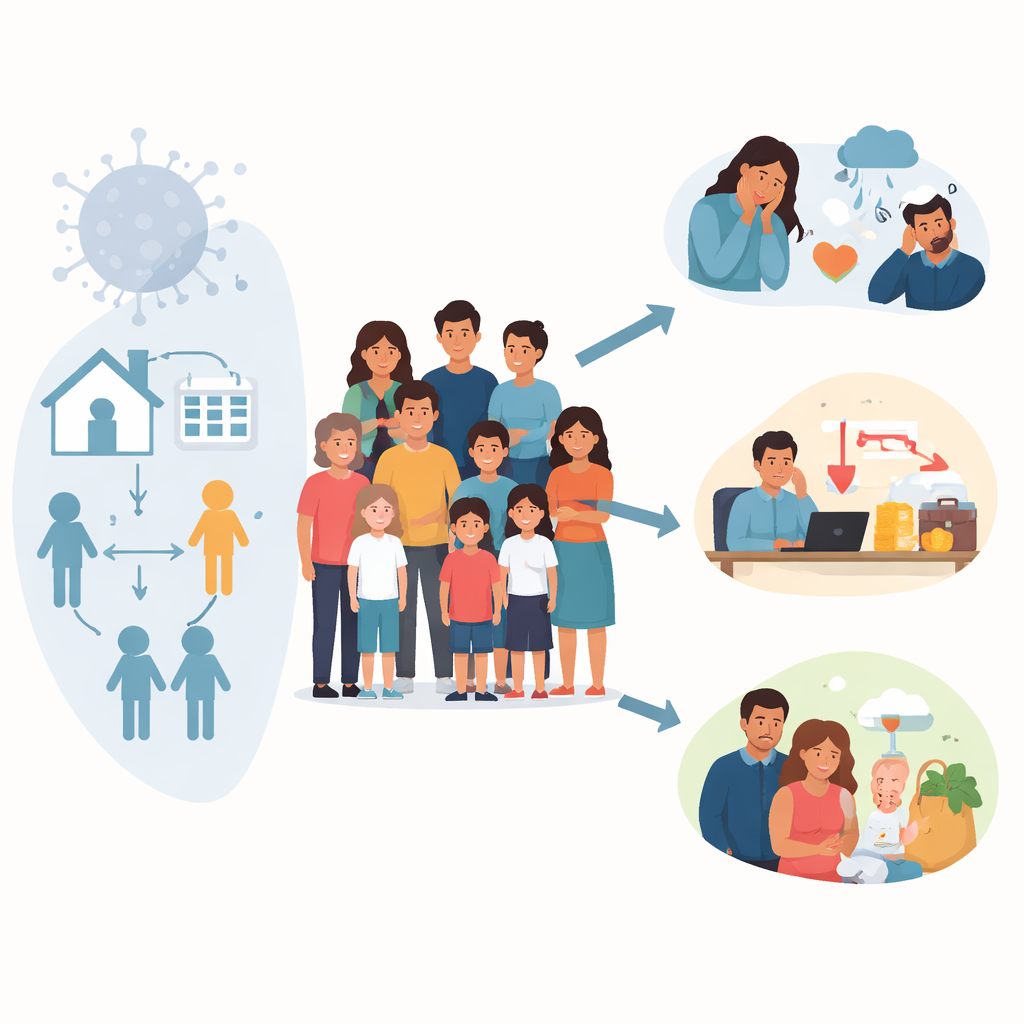
Different People, Different Everyday Struggles
The survey was conducted online in late 2020, after Australia’s first intense lockdowns and during an aggressive “suppression” strategy that kept case numbers relatively low but relied on strict public health rules. Participants were selected to broadly match the national population in age, sex, and location, including regions with very different levels of restrictions. They reported how 19 aspects of their life—from mental health and sleep to job security, family responsibilities, and time for hobbies—had changed compared with before the pandemic. Responses were grouped into negative, unchanged, or positive impact to capture a clear picture of how everyday life shifted.
How Age and Gender Shaped the Experience
Clear patterns emerged across age and gender. Women more often reported that their mental health, feelings of loneliness, and sleep had worsened than men did. Men, in contrast, were more likely to say their alcohol and substance use and their sense of having enough time had worsened. Job security showed a mixed picture for men, who were more likely than women to report both negative and positive changes. Young adults aged 18 to 29 stood out as the group most affected: they reported more negative impacts across nearly every area of life, including finances, routine, and wellbeing. The one exception was social connections, where people aged 60 and older were more likely to feel their connections had suffered, possibly reflecting greater reliance on in‑person contact and less use of digital communication.
Work, Money, Health, and Trust in Government
Beyond age and gender, life circumstances also mattered. People with more chronic health problems or COVID‑related risk factors tended to report more loneliness and heavier family duties. Those who had their work hours cut reported worse mental health, more financial strain and job insecurity, and disruptions to productivity and daily routine. Healthcare workers were somewhat protected financially, with many reporting stable or even improved job security despite the stressful nature of their work. How clearly people felt their government communicated safety rules was another key factor: lower satisfaction with government communication was tied to worse ratings for mental health, sleep, physical activity, diet, family relationships, finances, and productivity.
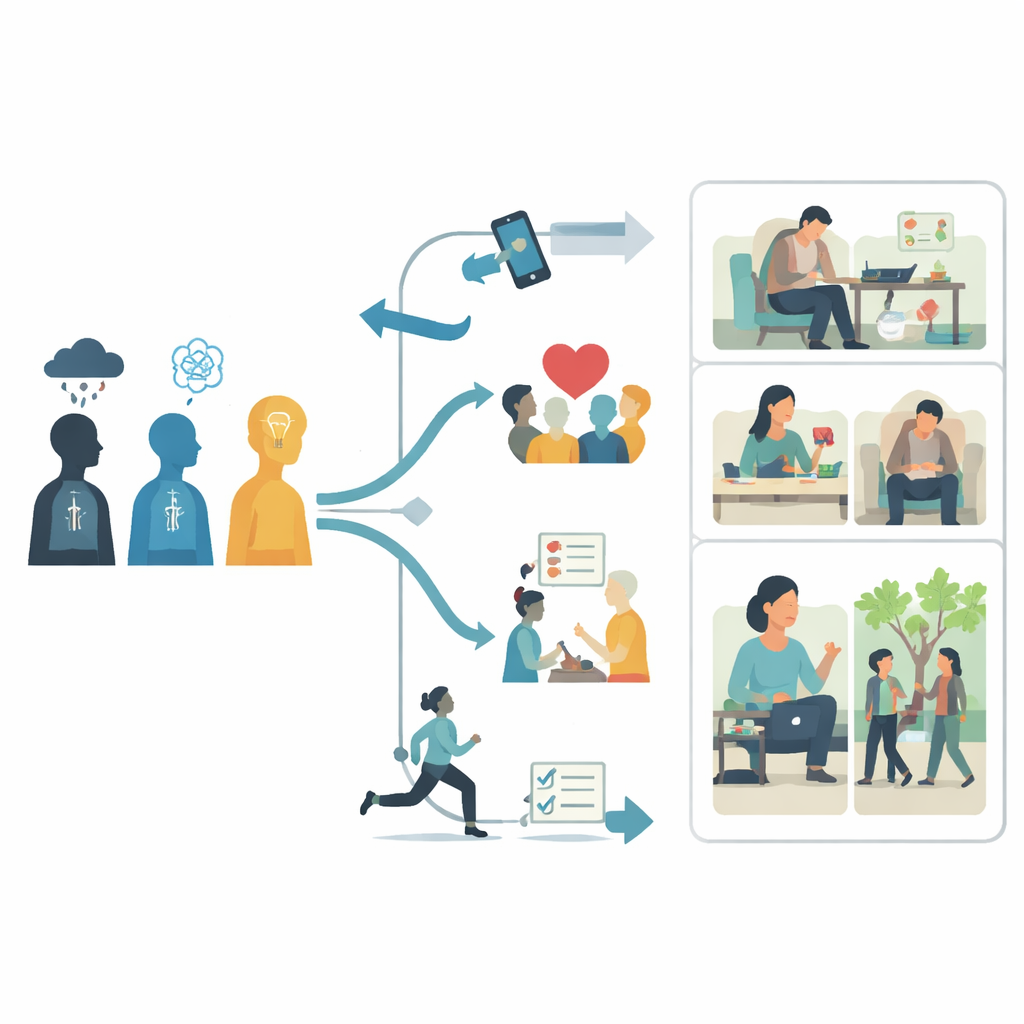
How Coping Styles Steered Outcomes
The study also explored two psychological ingredients: discomfort with uncertainty and the ways people coped with stress. People who found uncertainty especially hard to bear tended to report worse mental health, but this trait did not clearly spill over into other life areas. Coping habits, however, were linked to a broad range of outcomes. Tactics such as distracting oneself, withdrawing, venting emotions, and harsh self‑blame were associated with more negative impacts on mental health, sleep, hobbies, and relationships. In contrast, “positive reframing”—trying to find some upside or meaning in the situation—was tied to better mental health, sleep, family life, social connections, and daily routine. Seeking emotional or practical support, and drawing on religious faith, were also linked with more positive impacts in relationships and, for religion, lower alcohol and substance use. Some strategies, such as denial and humor, had mixed effects: they were linked to better mental health or family duties in some cases, but also to heavier responsibilities or higher substance use in others.
What This Means for Future Crises
Overall, the study shows that pandemic policies are felt very differently depending on who you are and how you cope. Young adults, women, people with poorer health, those who lost work hours, and those dissatisfied with government communication tended to experience more harm to their day‑to‑day lives. At the same time, certain coping approaches—especially finding a more hopeful perspective and reaching out for support—were linked with better outcomes even under the same restrictions. For future pandemics and public health emergencies, these insights can guide targeted support and clearer messaging, helping decision‑makers protect the groups most at risk and encourage coping strategies that cushion the psychological and social blows of large‑scale crises.
Citation: Campbell, R., Candelaria, D., Fullerton, D.J. et al. COVID-19 pandemic perceived impacts on the Australian general population, a national survey exploring the role of socio-demographic and psychological factors. Sci Rep 16, 12262 (2026). https://doi.org/10.1038/s41598-026-41428-z
Keywords: COVID-19, mental health, coping strategies, public health impacts, Australia