Clear Sky Science · en
Associations of physical activity and sedentary behavior with happiness in Japanese worker types of occupational activity requirements
Why how we move at work matters for our mood
Many people sense that a long day at a desk or on their feet can shape how they feel about life. This study asked a simple but important question: for working adults in Japan, how are everyday movement and screen habits linked with feeling happy, and does the answer differ for desk workers versus those whose jobs keep them on their feet?
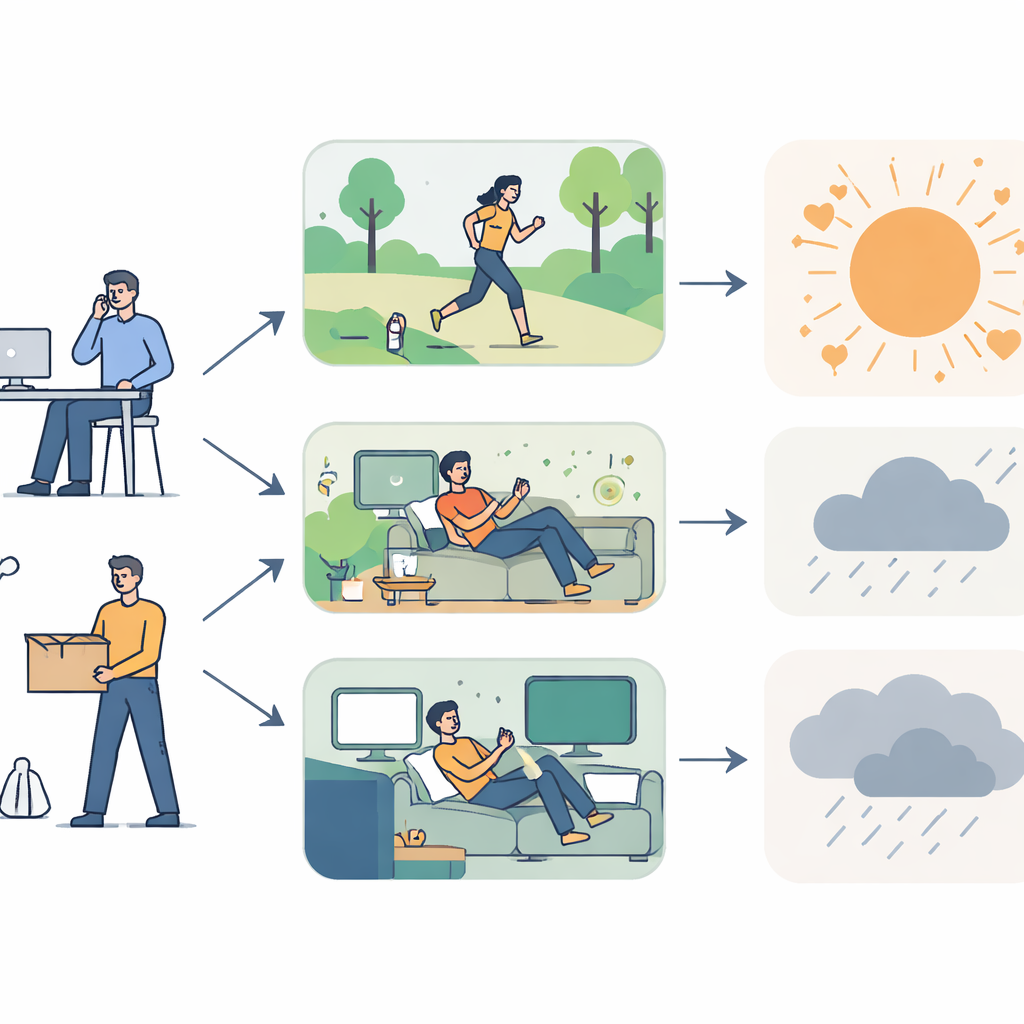
Two kinds of jobs, many ways of spending time
Researchers surveyed 2,241 Japanese workers aged 20 to 59 using an online questionnaire. Instead of grouping people by job title, they focused on how their work actually felt to the body. Workers whose main duty involved sitting were labeled “sitting workers,” while those who mostly stood, walked, or did physical labor were grouped as “non-sitting workers.” Participants reported how happy they felt overall, along with how much time they spent sitting in six daily situations—such as at work, in cars or on public transport, watching television, using computers or smartphones in their free time, and doing other quiet leisure activities like reading. They also reported how much moderate-to-vigorous physical activity they did at work, while traveling, and during leisure time.
Unpacking sitting time and active time
The team did more than just total the hours of sitting or exercise. They examined links between happiness and each specific slice of behavior, such as free-time screen use on non-work days, and they analyzed sitting and active time separately for a typical day, a workday, and a non-workday. Statistical models took into account age, gender, education, income, body weight, smoking and drinking habits, and health conditions. This allowed the researchers to ask: among people with similar backgrounds, were certain ways of being active—or certain types of sitting—more common in those who reported feeling happy?
What helped desk workers feel happier
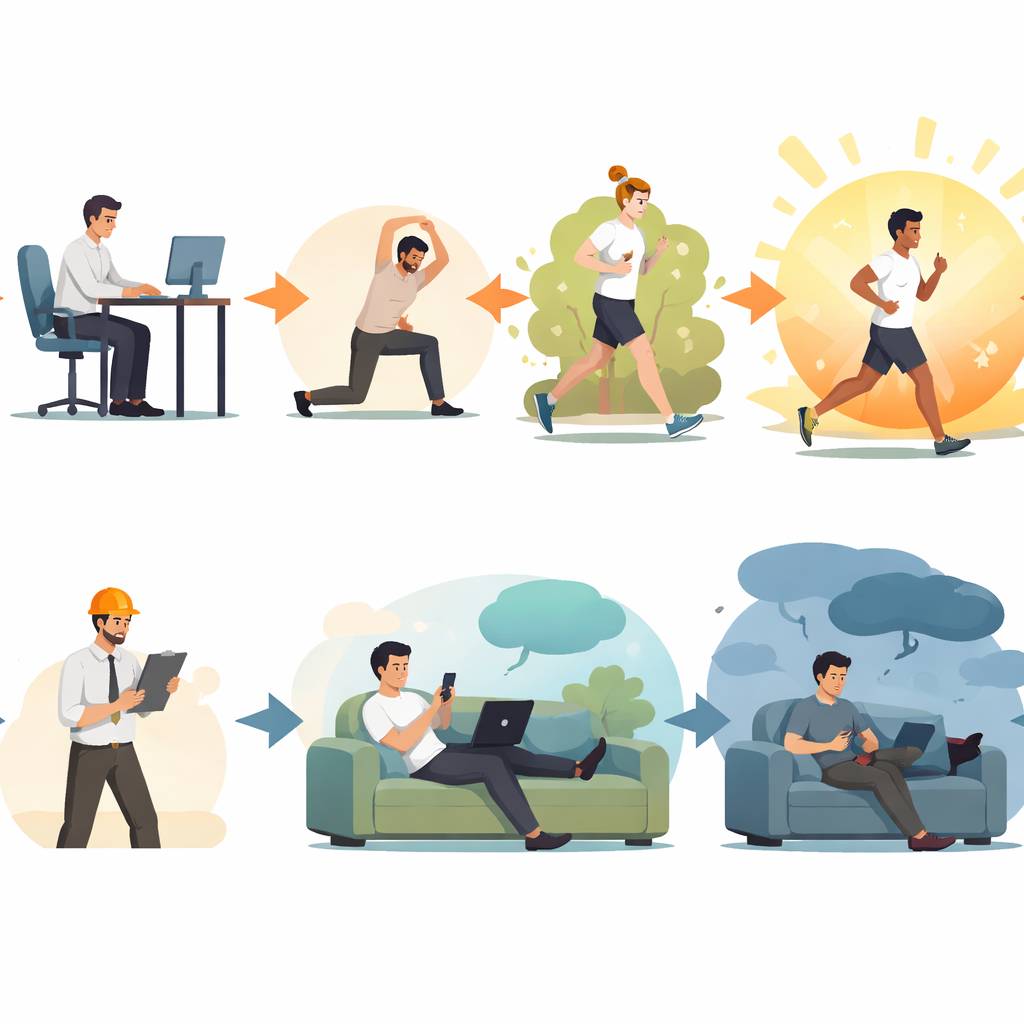
For workers who spent much of their day seated, one pattern stood out. Those who devoted more of their leisure time during a typical week to moderate or vigorous activity—such as brisk walking, sports, or other heart-rate-raising movement—were more likely to describe themselves as happy. In contrast, most kinds of sitting time, including sitting at work, were not clearly tied to happiness for this group. One notable exception was on non-work days: spending more time sitting and using computers, tablets, or smartphones during days off was linked with a lower chance of being happy. This suggests that for desk workers, reclaiming off-hours with active pursuits rather than extra screen time may help balance out long stretches of sitting on the job.
What mattered most for workers on their feet
The picture was different for workers whose jobs already required standing, walking, or physical effort. For them, doing more physical activity in any domain was not clearly related to happiness. Instead, total time spent sitting and, in particular, sitting while using computers, tablets, or smartphones in their free time showed consistent links with feeling less happy. This connection appeared across a typical week and on non-work days, though total sitting time on workdays did not show the same pattern. In other words, for people who are already physically active at work, piling on more device-based sitting after hours may dampen their sense of well-being.
What this means for everyday life
To a layperson, the take-home message is straightforward: movement and screen habits influence happiness, but the best strategy depends on how you work. If you are a desk worker, carving out time for active leisure—especially on days off—seems to support a happier life, while long stretches of off-duty screen sitting may undercut it. If your job already keeps you on your feet, protecting your leisure time from excessive computer, tablet, and smartphone sitting appears particularly important. Across both groups, trimming back device-based sitting, especially on non-work days, looks like a promising and practical step toward feeling happier.
Citation: Hinakura, K., Yasunaga, A., Kurosawa, S. et al. Associations of physical activity and sedentary behavior with happiness in Japanese worker types of occupational activity requirements. Sci Rep 16, 10441 (2026). https://doi.org/10.1038/s41598-026-41363-z
Keywords: happiness, sedentary behavior, leisure-time exercise, screen time, workers