Clear Sky Science · en
Sex-specific influence of maturity status on jumping performance in adolescents: a cross-sectional study
Why teen jumps matter
Why do some teenagers seem to float effortlessly off the ground while others barely leave the floor—even when they are the same age and size? Jumping is more than a playground skill; it is a window into how the growing body develops power, coordination, and athletic potential. This study looked closely at how boys and girls between 13 and 19 years old differ in their jumping ability, and how those differences are linked not just to age, but to where each teen stands in their individual growth spurt.
How the body’s growth spurt was tracked
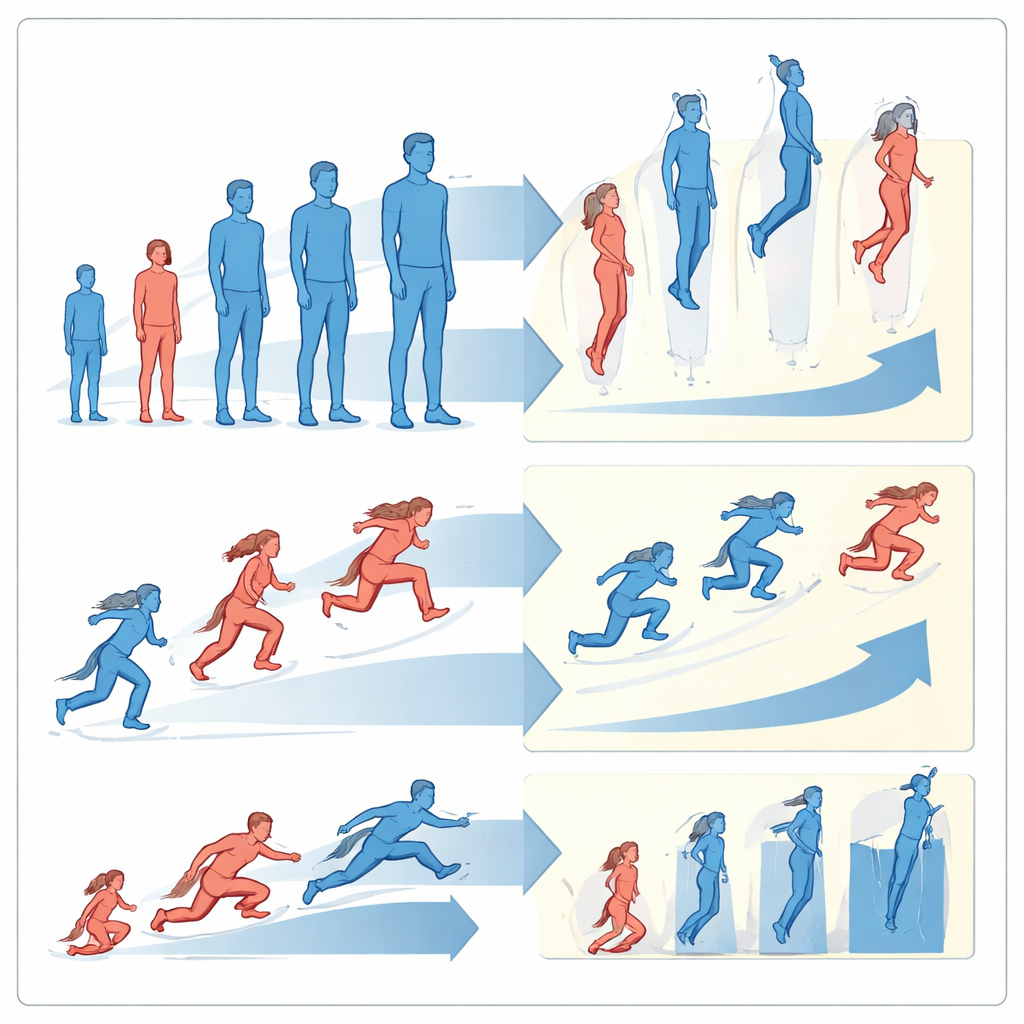
Children do not all grow at the same pace. Instead of sorting teens only by birthday, the researchers estimated how far each participant was from their personal “peak height velocity,” the time of fastest growth during the adolescent growth spurt. Using simple measurements such as body height, sitting height, leg length, and body mass, they grouped 200 healthy Tunisian students—86 boys and 114 girls—into three stages: before the growth spurt, around the growth spurt, and after it. This allowed them to compare jumping ability between boys and girls who were at similar biological stages, not just similar ages.
Different ways to measure a jump
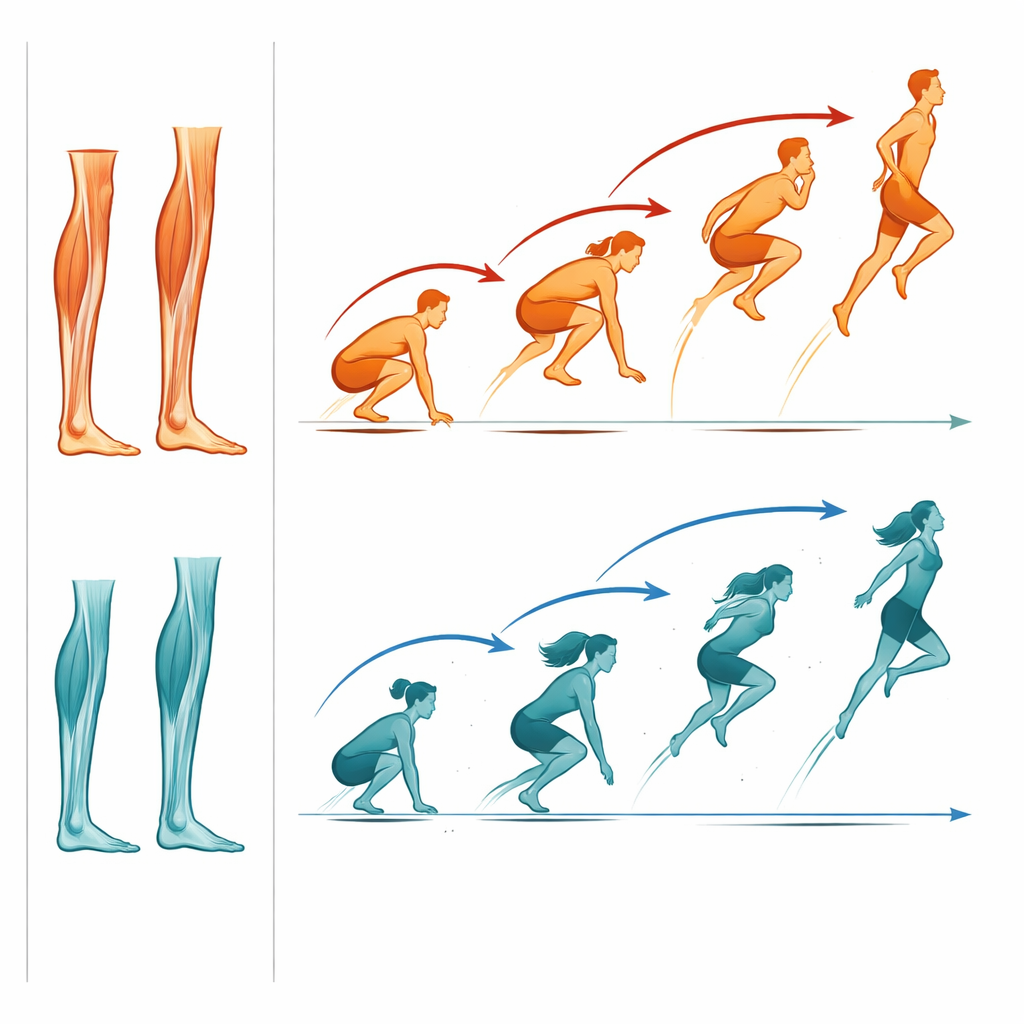
Jumping is not a single, simple action, so the team used four tests that capture different types of power and coordination. Two vertical tests measured how high the teens could rise off the ground: a countermovement jump, where they dipped quickly and sprang up, and a drop jump, where they stepped off a box and immediately rebounded. Two horizontal tests measured how far they could travel forward: a single standing long jump and a “five jump” test, in which participants bounded forward five times in a row. All students practiced the techniques beforehand, warmed up in a standard way, and then performed several attempts so the best, most reliable effort could be recorded.
What changed for boys, and what did not for girls
The results painted a clear picture. Across every kind of jump, boys outperformed girls. More importantly, boys improved sharply as they moved from before to after their growth spurt. Post-spurt boys jumped higher and farther than boys who were still approaching or just passing through that phase. Statistical analyses showed strong positive links between how far past their peak growth boys were and how well they jumped: more mature boys tended to be better jumpers. In contrast, girls showed only small and inconsistent differences between maturity groups. A girl who had already passed her growth spurt did not necessarily jump better than one who had not, and the relationship between maturity and jumping in girls was weak or absent.
Vertical versus forward jumps
Not all jumps responded to growth in the same way. For vertical jumps—which rely heavily on the muscles and tendons acting like springs—there was a notable interaction between sex and maturity. As boys matured, they seemed to gain more from the stretch‑and‑rebound action of their leg muscles, leading to larger improvements in upward jump height than girls experienced. Horizontal jumps, which depend more on whole‑body coordination and forward drive, did not show the same strong sex‑by‑maturity pattern. This suggests that the biological changes of puberty may fine‑tune certain types of explosive movement in boys more than in girls.
What this means for training and talent spotting
For coaches, teachers, and parents, these findings carry a practical message. In boys, jumping ability is tightly linked to where they are in their growth spurt; late developers may temporarily lag behind early developers even if they have similar potential. Using the same performance standards for all boys of the same age can therefore be misleading. For girls, maturity stage appears to matter less, and factors such as technique, strength balance between muscle groups, and overall neuromuscular training may play a larger role. The authors conclude that training plans and expectations for young athletes should be tailored both to sex and to biological maturity rather than age alone, helping each adolescent develop power safely and fairly while reducing the risk of overlooking late bloomers.
Citation: Bchini, S., Abdellaoui, S., Dergaa, I. et al. Sex-specific influence of maturity status on jumping performance in adolescents: a cross-sectional study. Sci Rep 16, 11400 (2026). https://doi.org/10.1038/s41598-026-41094-1
Keywords: adolescent development, jump performance, sex differences, puberty and growth, youth sports training