Clear Sky Science · en
Autoimmune disease prevalence in Ethiopian versus Non-Ethiopian type 1 diabetes patients in Israel
Why this matters for people living with diabetes
Type 1 diabetes is known to travel in the company of other immune-related illnesses, but most of what we know comes from European and North American populations. This study asks a simple but important question: do adults of Ethiopian origin in Israel, who already face a rising burden of type 1 diabetes, experience the same extra autoimmune diseases as other Israelis with type 1 diabetes? The answer has direct implications for how doctors screen, counsel, and treat people from different backgrounds.
Two communities, one shared condition
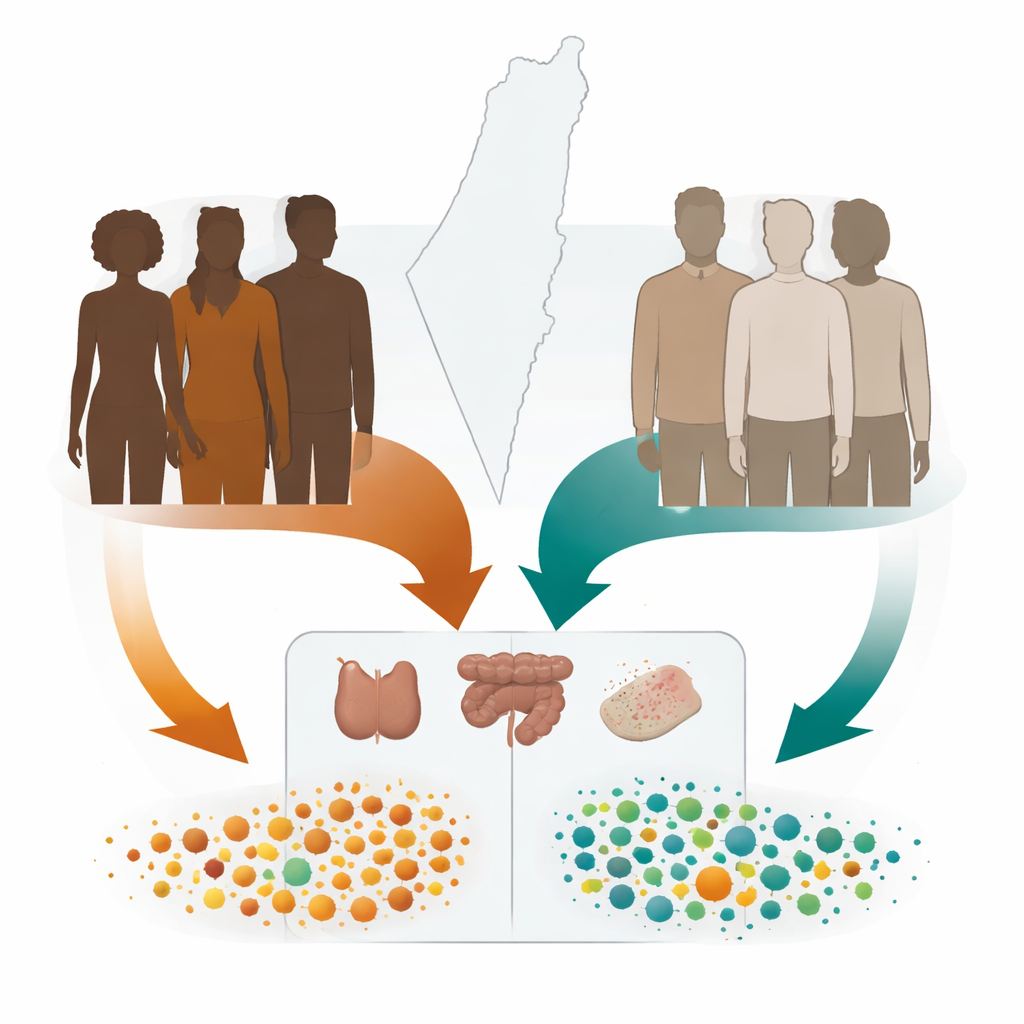
The researchers examined health records from Israel’s largest health service, covering more than half of the country’s residents. From these databases they identified 12,759 adults with type 1 diabetes between 2000 and 2022, including 672 people of Ethiopian descent. For every person, they looked for diagnoses of a wide range of autoimmune diseases, from thyroid problems and celiac disease to psoriasis, rheumatoid arthritis, and rarer conditions like Addison’s disease. They also checked blood tests for key antibodies used in screening for thyroid and celiac disease to see whether one group was being tested less often than the other.
Fewer extra immune diseases in Ethiopians with type 1 diabetes
Overall, one in four adults with type 1 diabetes in this cohort had at least one additional autoimmune disease. But when the groups were compared, a clear difference emerged: only 14% of Ethiopians with type 1 diabetes had another autoimmune disease, versus 26% of non-Ethiopians. Most people with extra conditions in both groups had just one additional disease, while a small minority had two or more; notably, none of the Ethiopian patients had three or more autoimmune diagnoses, whereas about 1% of non-Ethiopians did. Despite these differences in overall frequency, the same kinds of diseases tended to appear in both groups, suggesting a shared pattern but different intensity of risk.
The usual suspects: thyroid, gut, and skin
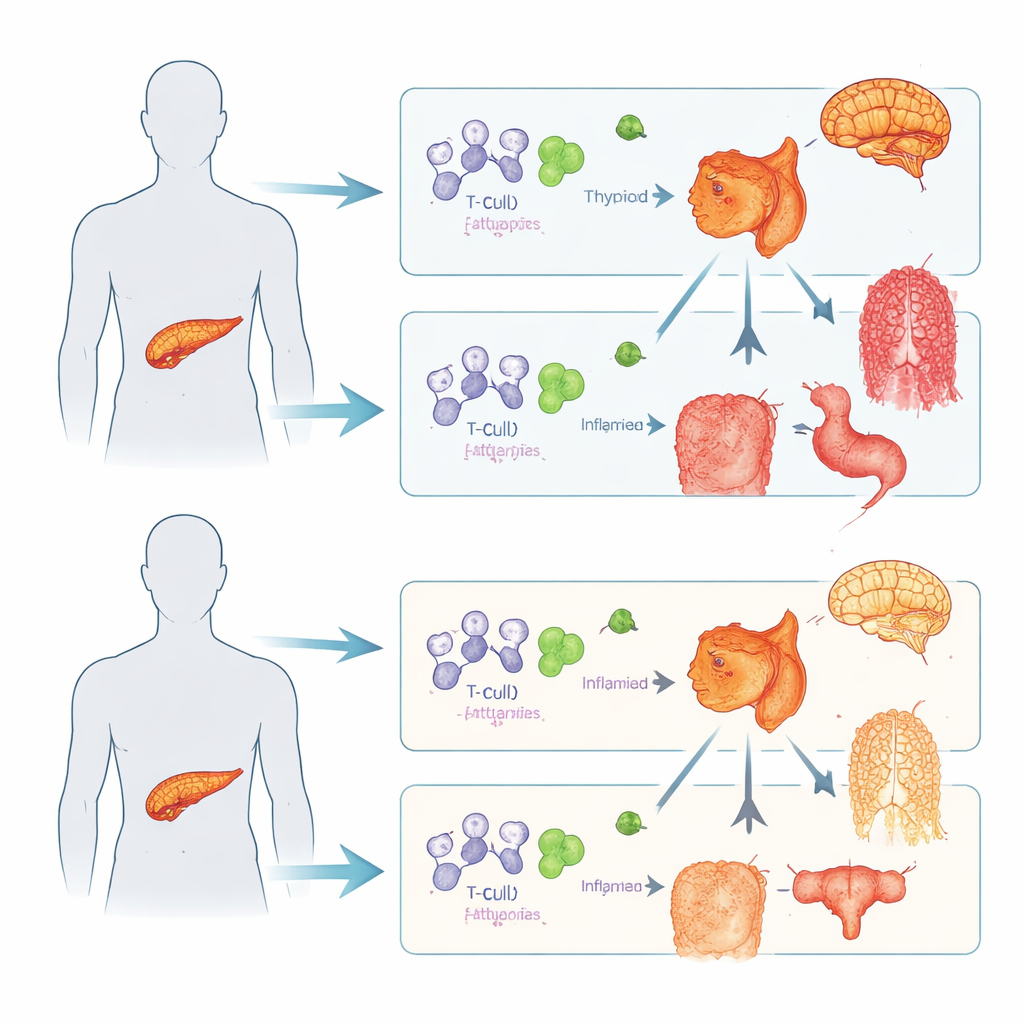
Across the entire study population, autoimmune thyroid disease was the most common partner to type 1 diabetes, followed by celiac disease and psoriasis. This held true within the Ethiopian group as well, but at lower rates: about 10% had autoimmune thyroid disease and 2% had celiac disease. For non-Ethiopians, the corresponding figures were 13% and 4%. Most thyroid and celiac diagnoses occurred after the onset of type 1 diabetes and at similar ages in both groups, indicating that the timing of disease development is broadly alike. When the Ethiopian group was split by country of birth, another nuance appeared: celiac disease was much more frequent among those born in Israel than among immigrants, hinting at the influence of diet and environment—such as moving from traditional gluten-free foods like teff-based injera to wheat-based Israeli staples.
Screening habits and hidden gaps
A natural concern is that lower disease rates might simply reflect less testing. To check this, the team compared how often doctors ordered key antibody tests for thyroid and celiac disease in each group. They found that screening levels were similarly low overall: fewer than half of all patients had ever been tested for thyroid antibodies, and only about half had been tested for celiac-related antibodies. Among those who did receive a diagnosis of thyroid disease or celiac disease, almost all had confirming antibody tests regardless of ethnicity. This pattern suggests that the lower rates in Ethiopian patients are unlikely to be explained solely by missed screening, though some under-recognition of rare conditions cannot be ruled out.
What this means for care and future research
For a lay reader, the main message is that adults of Ethiopian origin with type 1 diabetes in Israel seem less likely than other Israelis with type 1 diabetes to develop additional autoimmune diseases, even though the types of conditions that do occur are broadly similar. This points toward real differences in underlying susceptibility—possibly tied to genetics, early-life environment, or patterns of healthcare use—rather than just gaps in testing. The authors argue that as medicine moves toward more personalized care, guidelines for monitoring people with type 1 diabetes should start to consider ethnic background when deciding who to screen, for what, and how often. At the same time, better and more consistent screening for all patients is needed so that hidden illnesses can be found and treated early.
Citation: Kirzhner, A., Bashkin, A., Green, H. et al. Autoimmune disease prevalence in Ethiopian versus Non-Ethiopian type 1 diabetes patients in Israel. Sci Rep 16, 10394 (2026). https://doi.org/10.1038/s41598-026-41046-9
Keywords: type 1 diabetes, autoimmune disease, Ethiopian Israelis, ethnic differences, thyroid and celiac disease