Clear Sky Science · en
The development and validation of Direct and Indirect Prejudice Scales (DIPSs)
Why this research matters to everyday life
As more people move across borders to live, work, or study, everyday encounters between locals and foreign residents are becoming routine. Yet many of the hurts that immigrants feel are not delivered through open insults, but through quiet policies, habits, and “polite” remarks that signal they do not fully belong. This study introduces a new way to measure such attitudes in Japan, helping to reveal not only obvious prejudice but also the subtle forms that can hide behind norms and good intentions.
Looking beyond open hostility
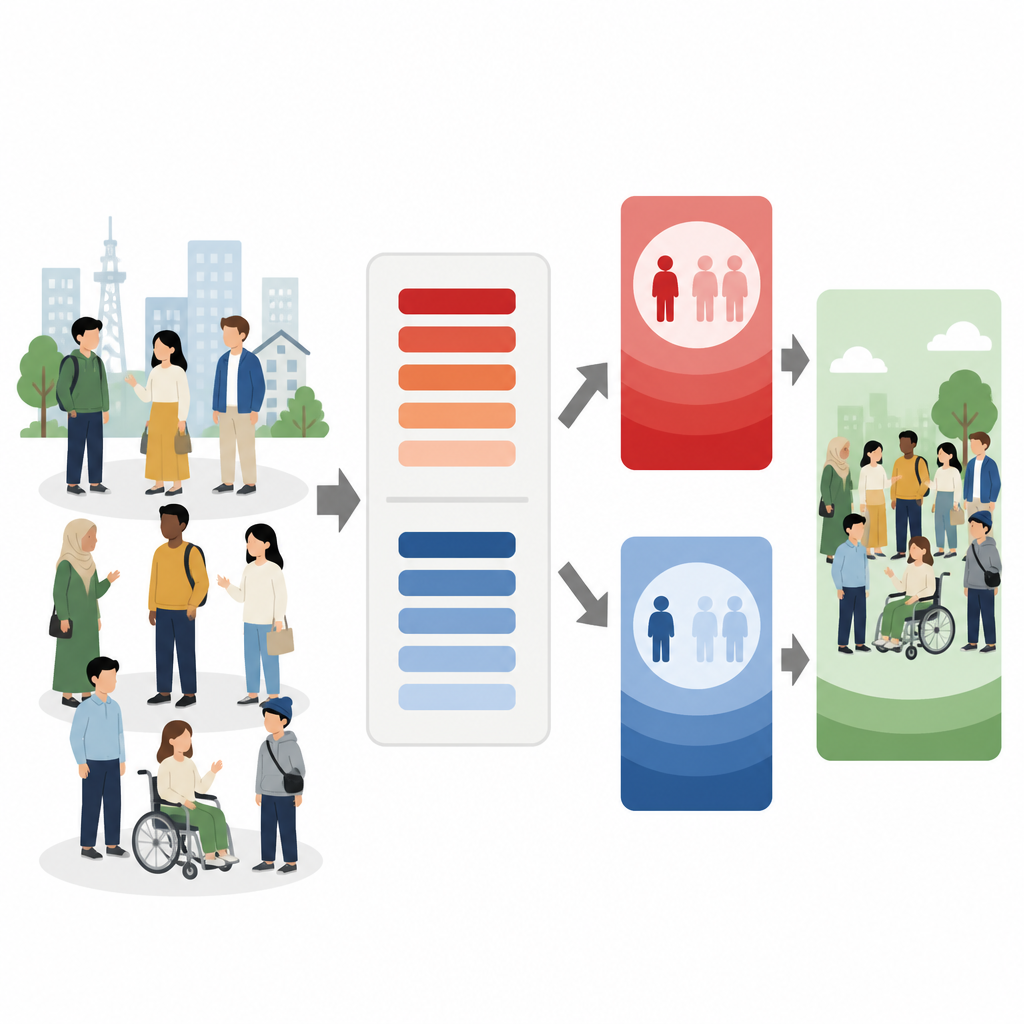
Classic research on prejudice has mostly focused on clear, hostile acts: refusing someone a job because of origin, using slurs, or blocking access to housing. Over time, however, these blatant behaviors have become less socially acceptable, especially in public. In Japan, where the number of foreign residents has passed 3.5 million, prejudice has not disappeared but often surfaces as quiet exclusion in schools, offices, and neighborhoods. The authors argue that to understand life in a multicultural Japan, we must look at both what people say openly and the softer expectations and rules that make foreigners feel like permanent outsiders.
Hearing directly from foreign residents
The project began with in‑depth group interviews with twelve long‑term foreign residents in the Tokyo area. These participants, fluent in Japanese and familiar with local customs, described situations that felt discriminatory, from difficulty renting apartments to constant reminders that they were not “really” Japanese. They distinguished between direct prejudice, such as saying foreigners should be paid less, and indirect prejudice, such as always praising a foreigner’s Japanese in a way that keeps them at arm’s length. Their stories were turned into dozens of draft survey questions designed to capture both obvious and subtle forms of exclusion.
Turning experiences into a measurement tool
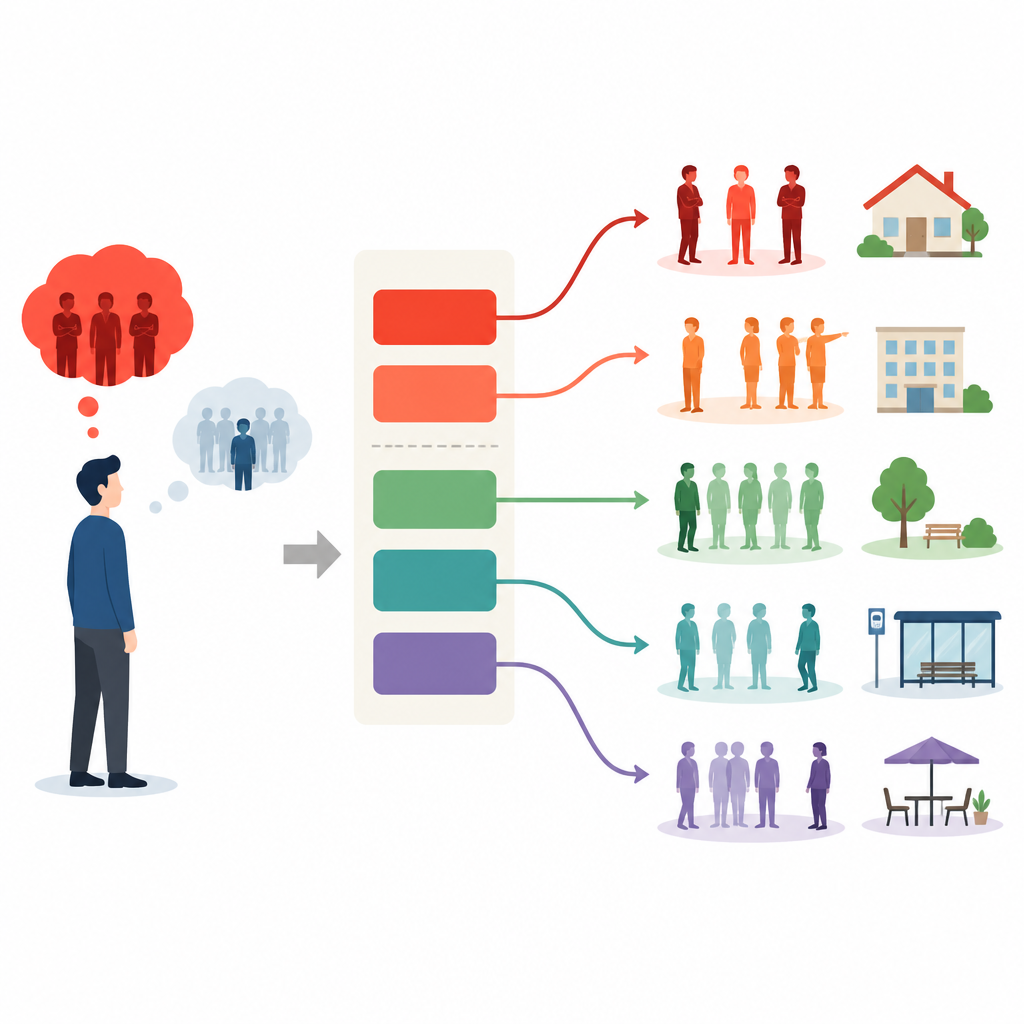
The researchers refined these questions with the help of three experts and then surveyed 770 Japanese adults aged 20 to 40 living in the Tokyo metropolitan area. Using statistical techniques, they discovered that direct prejudice could be grouped into two patterns. One, called socio‑economic exclusion, covered support for lower pay or fewer opportunities for foreigners. The other, public exclusion, reflected support for stricter checks, special rules, or restricted rights in public spaces and institutions. Indirect prejudice broke into three patterns: defensive ethnocentrism, where Japanese ways are treated as naturally superior; demand for assimilation, where foreigners are expected to behave exactly like Japanese people; and minimization of differences, where people stress similarity in ways that quietly dismiss foreign residents’ own identities.
What the numbers reveal about hidden bias
The new scale, called the Direct and Indirect Prejudice Scales, showed solid reliability, meaning that people’s answers were consistent across similar items. Scores on the five prejudice patterns were strongly linked to existing measures of racism and negative views of other cultures, and they were lower among people who expressed warmer attitudes toward foreigners. One striking result concerned the “minimization of differences” pattern. Many Japanese respondents saw comments like “your Japanese is good” as friendly and tied them to positive feelings about other cultures. But earlier interviews showed that foreign residents often experienced the same remarks as subtle reminders that they do not quite belong. This mismatch highlights how prejudice today can mix positive and negative tones, and how hurtful experiences may be invisible to those who cause them.
How this can help build a fairer society
The study offers a practical tool for policymakers, educators, and community groups who want to understand and track attitudes toward foreign residents in Japan. By separating direct and indirect prejudice and breaking them into five clear patterns, the scale makes it easier to see where interventions are most needed: from pay and housing practices to everyday speech and expectations about “fitting in.” For a lay reader, the central message is that prejudice is not only about loud insults or explicit rules. It also lives in small habits, compliments, and assumptions that feel normal to one person but exclusionary to another. Making these patterns visible is a first step toward designing education, dialogue, and policy that support genuine inclusion rather than surface‑level harmony.
Citation: Shin, J., Lim, H. The development and validation of Direct and Indirect Prejudice Scales (DIPSs). Sci Rep 16, 15597 (2026). https://doi.org/10.1038/s41598-026-40675-4
Keywords: prejudice, immigration, Japan, social attitudes, multiculturalism