Clear Sky Science · en
Altered NGF and GDNF levels reveal neuroimmune dysregulation in COVID-19 patients
Why the Brain and the Immune System Matter in COVID-19
COVID-19 is usually thought of as a lung infection, but many people also experience brain fog, fatigue, and nerve problems during and after the illness. This study looks at two small protein messengers that help both nerve cells and immune cells communicate, asking how they change in people hospitalized with COVID-19. By following these messengers in the blood over time, the researchers hope to understand how the nervous system and the immune system talk to each other during infection, and whether these signals might help doctors track recovery or predict lingering problems. 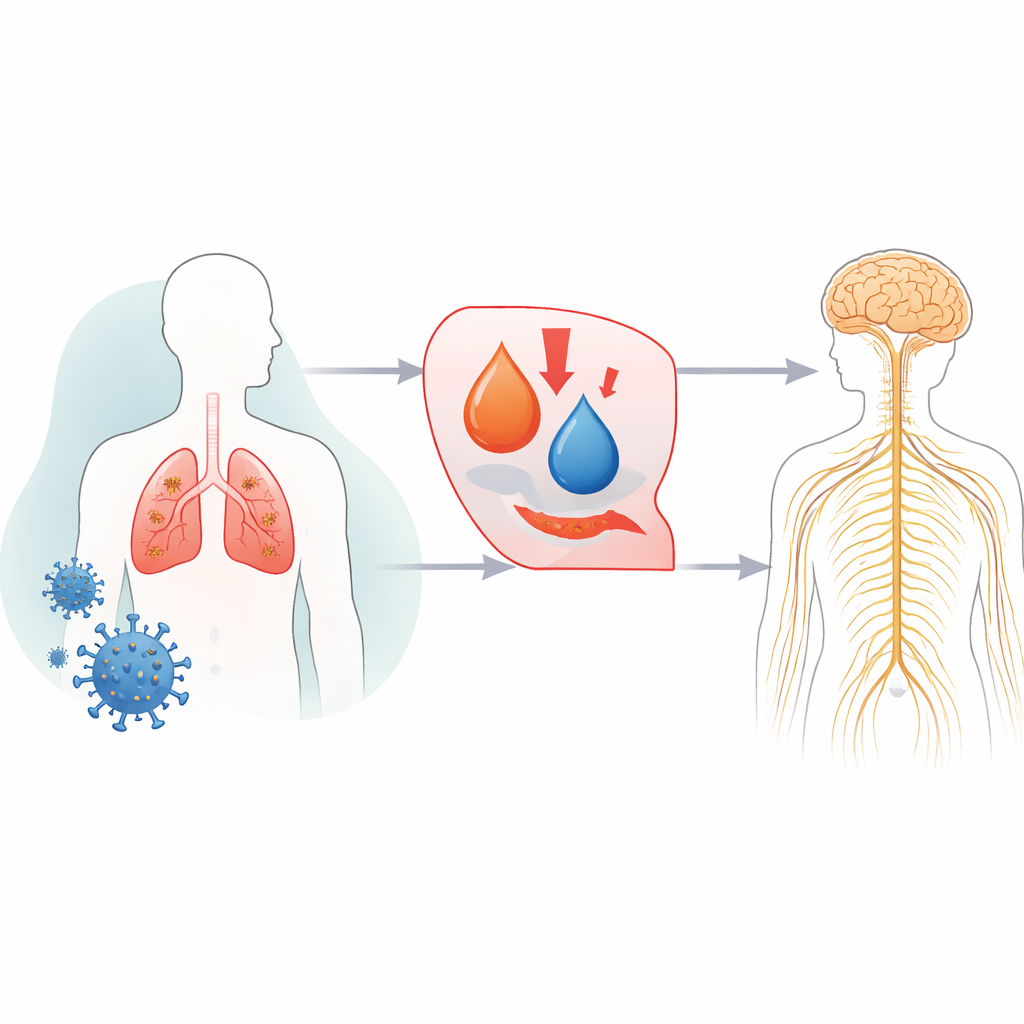
Two Helpful Messengers in the Body
The study focuses on nerve growth factor (NGF) and glial cell line-derived neurotrophic factor (GDNF). These messengers are best known for helping nerve cells survive, grow, and repair themselves, but recent work shows they also influence immune cells and inflammation. Changes in their levels have been seen in autoimmune diseases, chronic lung conditions such as asthma, and other viral infections. That background led the authors to ask whether COVID-19 might disturb these signals in a way that reveals hidden stress on the brain–immune connection.
How the Study Was Carried Out
The researchers followed 30 adults hospitalized with confirmed COVID-19 pneumonia and compared them with 37 healthy volunteers. Blood was drawn from the patients on the first day of admission, again on the fourth day, and once more when they were discharged, usually between one and two weeks later. From these samples, the team measured standard blood markers of inflammation and clotting, such as C-reactive protein, sedimentation rate, fibrinogen, ferritin, and D-dimer, along with blood cell counts. At the same time, they measured NGF and GDNF levels in the blood, using the same laboratory methods in both patients and healthy controls to allow fair comparison.
What Changed During Illness
At the time of hospital admission, patients with COVID-19 showed the expected pattern of high inflammation: their C-reactive protein and sedimentation rate were much higher than in healthy people, and their platelet counts were lower. Against this background of immune activation, both NGF and GDNF levels were clearly reduced compared with healthy volunteers, suggesting that the infection and the resulting inflammation suppress these nerve-related messengers. As patients recovered, classic inflammatory markers such as C-reactive protein and fibrinogen gradually fell, while white blood cell and platelet counts rose toward normal. 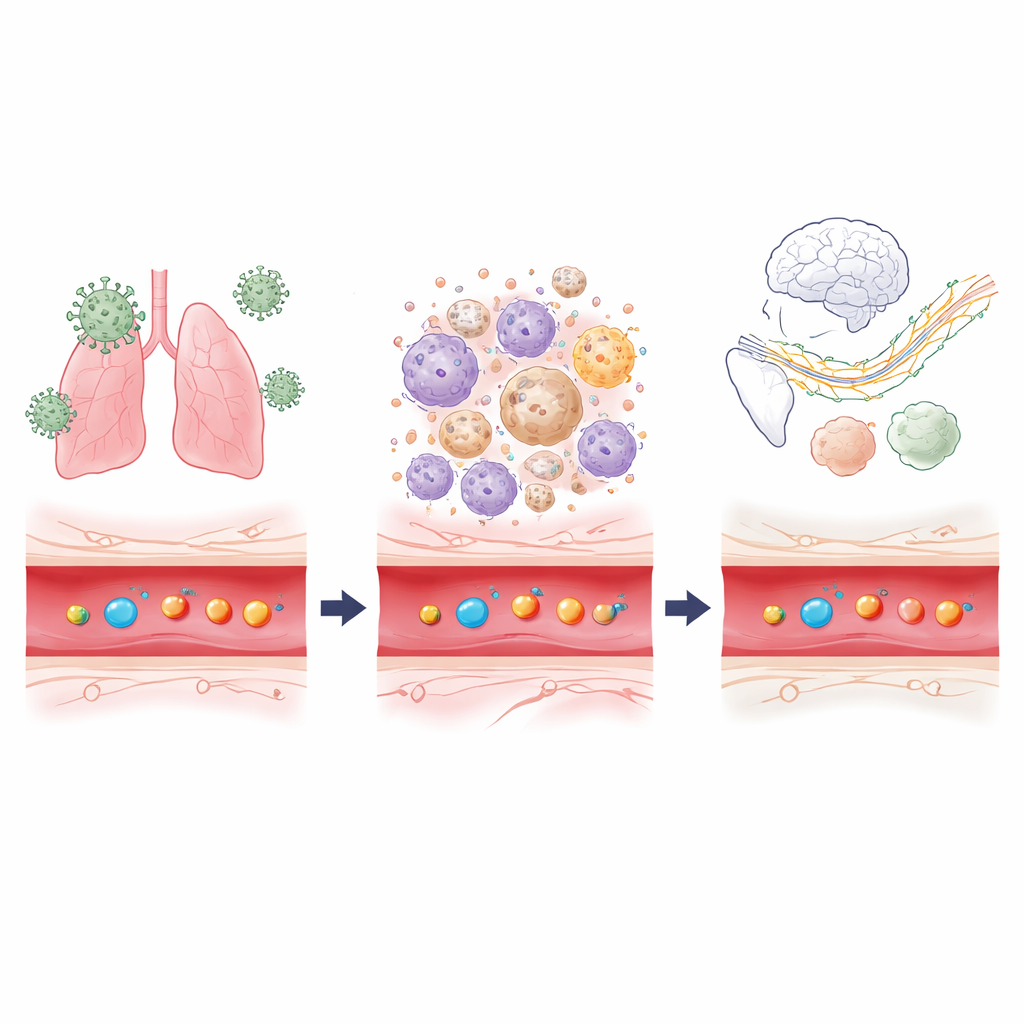
Different Stories for the Two Messengers
When the team looked more closely at NGF and GDNF over time, a subtle but important difference emerged. NGF showed a modest dip from day one to day four, followed by a partial rebound by the time of discharge. Although this pattern did not reach strong statistical significance in every test, it hints that NGF responds dynamically to the early surge and later calming of inflammation. GDNF, on the other hand, stayed low and relatively stable throughout the hospital stay. It did not mirror the sharp changes seen in the usual inflammatory markers, which may mean it reflects a slower, more lingering disturbance in the neuroimmune system rather than rapid ups and downs.
What This Means for Patients and the Future
To a lay reader, the key message is that COVID-19 does not just inflame the lungs and blood; it also appears to dampen important signals that help nerves and immune cells stay in balance. NGF may act as a flexible indicator of the body’s early inflammatory storm and its gradual resolution, while persistently low GDNF may flag a longer-lasting strain on the brain–immune connection. Although this small study cannot prove cause and effect or guide treatment yet, it points toward NGF and GDNF as potential blood markers and future drug targets for understanding, monitoring, and perhaps easing the nerve-related and long-lasting complications of COVID-19.
Citation: Baraz, L.S., Ataca, E., Oflas, N.D. et al. Altered NGF and GDNF levels reveal neuroimmune dysregulation in COVID-19 patients. Sci Rep 16, 9919 (2026). https://doi.org/10.1038/s41598-026-40236-9
Keywords: COVID-19, neuroimmune, inflammation, nerve growth factor, biomarkers