Clear Sky Science · en
Mental models of the sixth mass extinction reveal pathways for transformative sustainability action
Why this matters now
The world is losing species at a pace that rivals the great die‑offs of Earth’s past, yet most people rarely hear the phrase “sixth mass extinction.” This study asks a simple but vital question: what do ordinary citizens think is driving this crisis, and which solutions do they actually support? By peering into the public’s “mental maps” of extinction, the research reveals surprising readiness for big societal changes—if the problem is framed in ways that make sense to people’s everyday lives.
Hidden awareness, strong concern
Using a nationally representative survey of 739 adults in the United Kingdom, the researcher first measured how familiar people were with the term “sixth mass extinction” and what they believed about it. Only about a quarter had heard of the phrase and even fewer could correctly recognize it. Yet once the concept was clearly explained—that human activities are wiping out species far faster than normal—over nine in ten participants accepted that it is happening, and almost all of them agreed that humans are largely to blame. People pointed above all to land‑use change, climate change and pollution as key culprits, and they expected the consequences to be serious for food and water, the economy and the risk of disease, especially outside the UK. 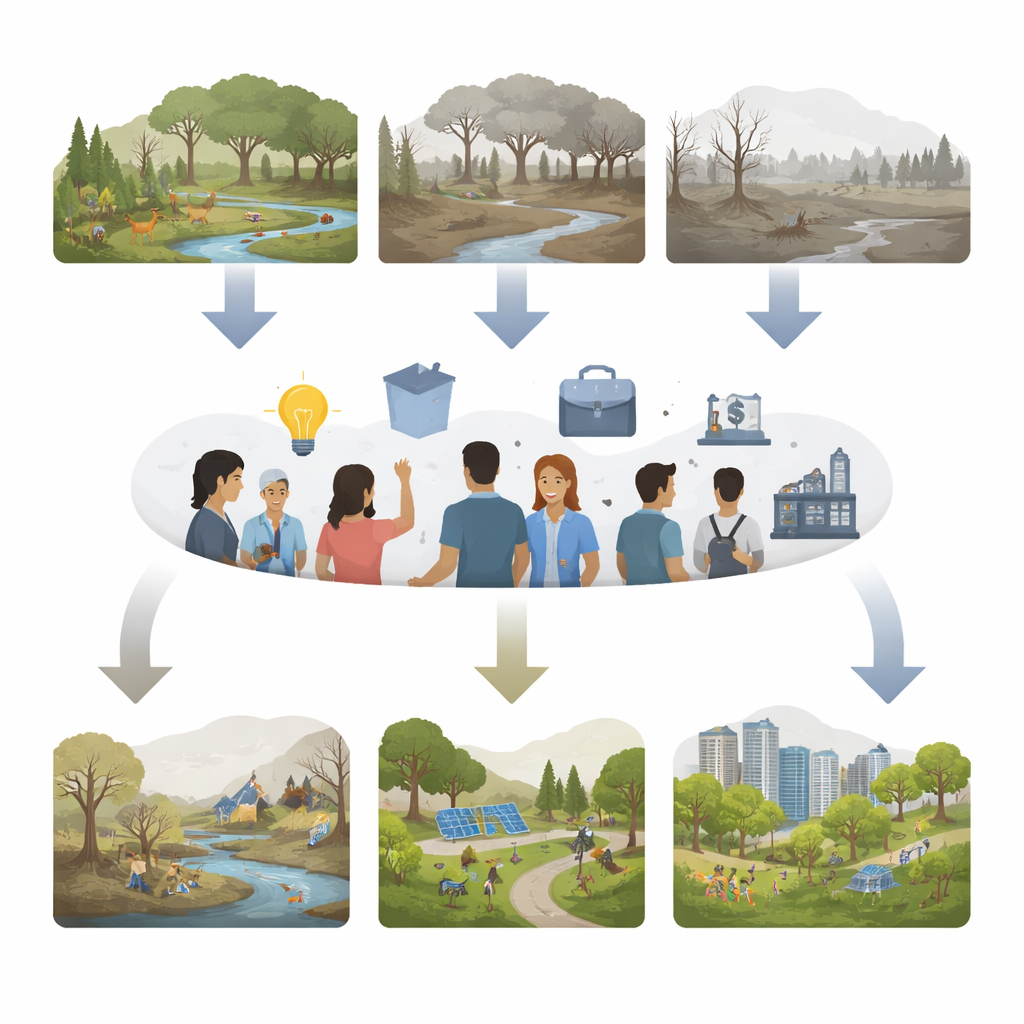
How people connect causes and consequences
The study then examined how people mentally organize the tangled web of causes and effects. Statistical analysis showed that respondents tended to group drivers of extinction into two broad bundles. One bundle focused on direct human pressures such as clearing land, extracting resources and pumping greenhouse gases into the air. The other centered on more distant or less controllable forces, such as animal diseases, wars or long‑ago historical events. Likewise, people tended to cluster expected impacts into three families: damage to ecosystems and the environment, changes to everyday living conditions and the economy, and disruptive outcomes such as conflict or displacement. These clusters form the building blocks of the public’s mental models of extinction.
Support for big shifts in how society runs
When asked what should be done, most participants endorsed far‑reaching shifts rather than small tweaks. Large majorities wanted stronger environmental protections, movement toward a carbon‑neutral society and decision‑making that involves a wide range of stakeholders instead of only powerful interests. They were wary of simply trusting economic growth or technology alone to solve the problem. People also expressed broad support for a wide menu of policies: protecting and restoring habitats, greening cities, regulating harmful products and expanding renewable energy and social measures such as wealth taxes. Some proposals—like limiting population growth, expanding nuclear energy or taxing meat—were more controversial but still found at least modest backing from half the sample.
Different paths to action in daily life
The survey also probed willingness to change personal behaviour. Most respondents said they would adopt everyday actions such as using renewable energy at home, saving water, wasting less food, recycling and voting for leaders who back environmental action. Fewer wanted to take part in citizen science projects, eat much less meat, go fully plant‑based, or have fewer children. Again, patterns emerged: people sorted possible actions into clusters around citizenship (voting, volunteering, talking with others), consumer choices (buying greener products, changing diets), cutting waste and using nuclear energy. Crucially, the belief that an action would actually make a difference was the strongest predictor of willingness to do it.
What shapes support for solutions
By linking these mental models to support for different solutions, the study uncovered powerful psychological levers. People who strongly blamed direct human activities for extinction were far more likely to back transformative changes and especially conservation‑oriented policies. Those who emphasized distant or non‑human causes tended to be less supportive. Seeing clear lifestyle and economic impacts of biodiversity loss encouraged support for change, whereas focusing mainly on disruptive outcomes like conflict slightly dampened it. Values also mattered: respondents with more socially minded, other‑regarding values and those who felt they had personally witnessed nature decline were more supportive of broad transformations. In contrast, more self‑focused values and the impression that scientists disagree about extinction were linked to lower support. 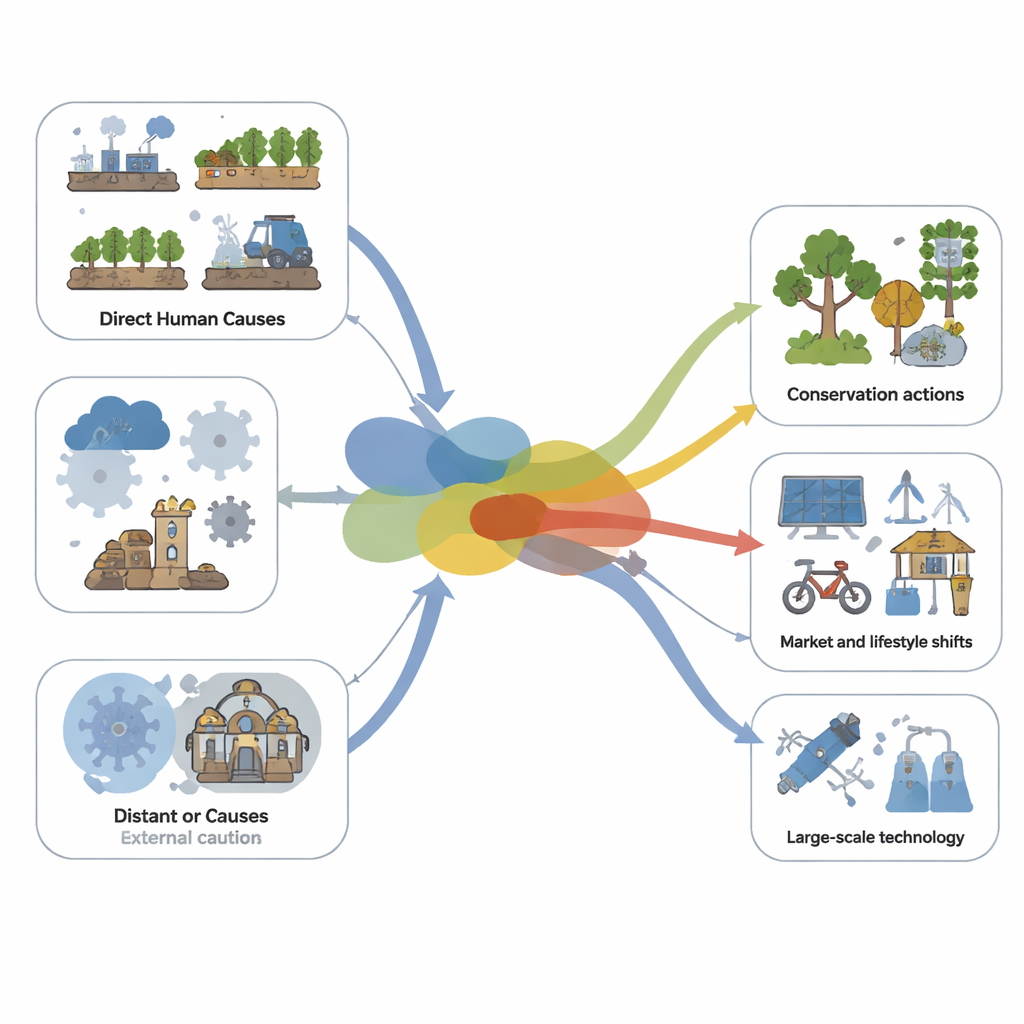
How this can guide real‑world change
Overall, the study paints a hopeful yet nuanced picture. Even though the phrase “sixth mass extinction” is unfamiliar, the public largely accepts the reality and human causes of biodiversity loss and expresses readiness for significant changes in policy and personal behaviour. The findings suggest that communication efforts can unlock this latent support by clearly explaining human responsibility, highlighting concrete effects on daily life and emphasizing that effective solutions exist. At the same time, policymakers and campaigners need to be aware that people hold different mental models of how best to act, which can lead to trade‑offs between, say, enthusiasm for high‑tech fixes and backing for conservation or lifestyle shifts. Designing messages and policies that recognize these mental maps—and that stress co‑benefits across multiple approaches—could turn quiet concern about extinction into sustained, transformative action.
Citation: Shreedhar, G. Mental models of the sixth mass extinction reveal pathways for transformative sustainability action. Sci Rep 16, 10004 (2026). https://doi.org/10.1038/s41598-026-40100-w
Keywords: biodiversity loss, sixth mass extinction, public opinion, environmental policy, behaviour change