Clear Sky Science · en
Longitudinal evaluation of neurocognitive outcomes in a cohort with persistent post-COVID olfactory dysfunction
Why lingering loss of smell matters for the mind
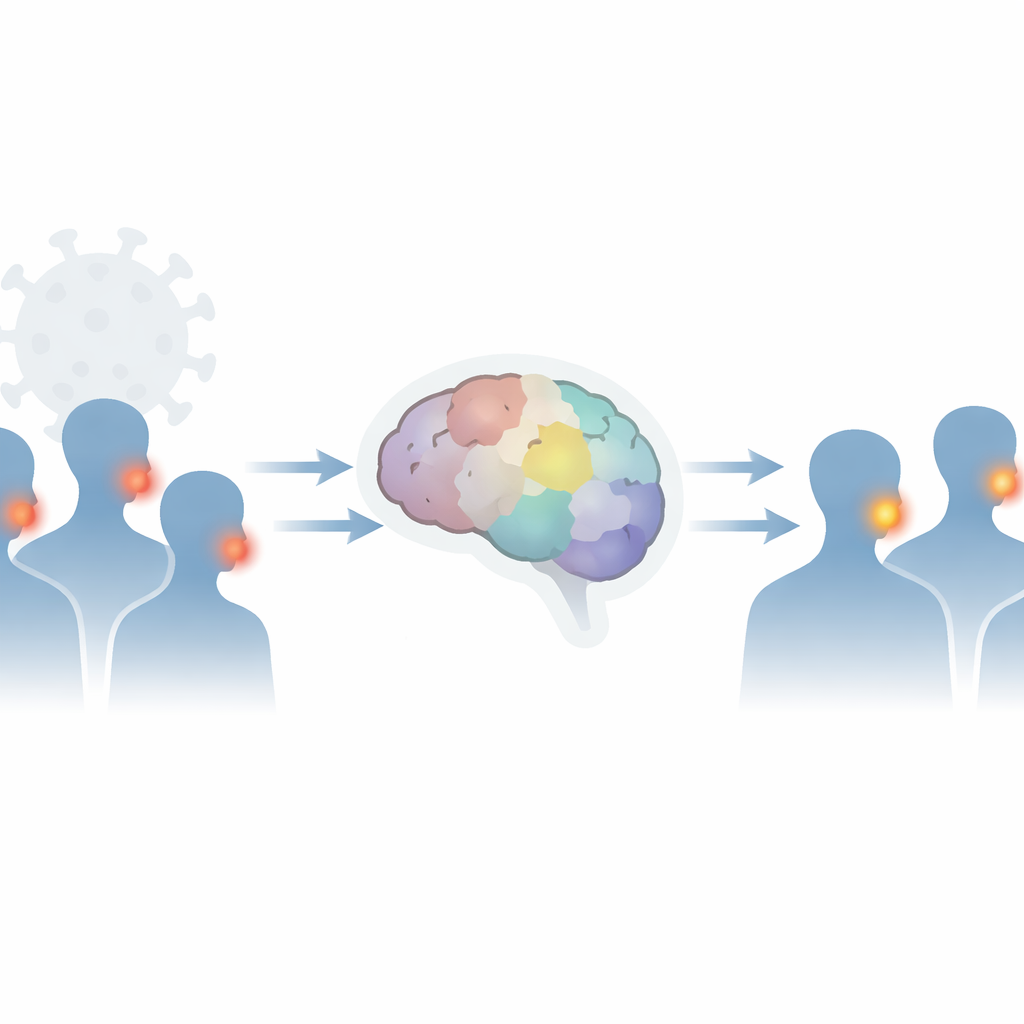
Many people who caught COVID-19 were left with a dulled or distorted sense of smell that never fully returned. At the same time, a troubling number reported “brain fog” – trouble focusing, slowed thinking, and memory lapses. This study followed adults with long‑lasting smell loss after COVID-19 to ask a pressing question: does this sensory problem go hand in hand with lasting changes in thinking, or does the brain eventually bounce back?
A closer look at long COVID and brain fog
Loss of smell became one of the hallmark signs of COVID-19, and for some, it persisted well beyond the initial illness. Because the brain areas that process smell are closely linked to regions involved in memory and decision-making, scientists worried that chronic smell problems might signal deeper or more permanent damage. Earlier reports hinted that people with post-COVID smell loss performed worse on thinking tests, but many of those relied on self-reported symptoms rather than precise measurements. This study set out to track people over time, using detailed smell testing and a broad set of standardized thinking and memory assessments.
How the researchers tested smell and thinking
The research team enrolled 120 adults who had previously tested positive for COVID-19 and had no history of smell disorders or neurological disease. At an initial visit, on average more than a year after infection, each person completed a battery of smell tests that measured how faint an odor they could detect, how well they could tell smells apart, and how accurately they could identify them. Based on these objective scores, participants were classified as having normal smell, reduced smell, or near-total loss. They also completed a suite of thinking tests that probed attention, mental speed, language, problem‑solving, and both immediate and delayed memory, along with a widely used screening exam of overall cognition.
Early signs of slower thinking in those with smell loss
At that first evaluation, people with objectively measured smell loss performed worse than those with normal smell on many of the thinking tests. They showed lower scores on global cognitive screening, weaker performance on tasks that require holding and manipulating information in mind, slower mental processing, and poorer verbal fluency and story recall. When the researchers accounted for age, sex, education, and the time since COVID-19 infection, key differences – especially in overall cognitive function and a combined score across tests – remained. In short, during the early long‑COVID phase, persistent smell loss tended to travel together with measurable brain fog across several thinking domains.
One year later: smell still lagging, thinking improved
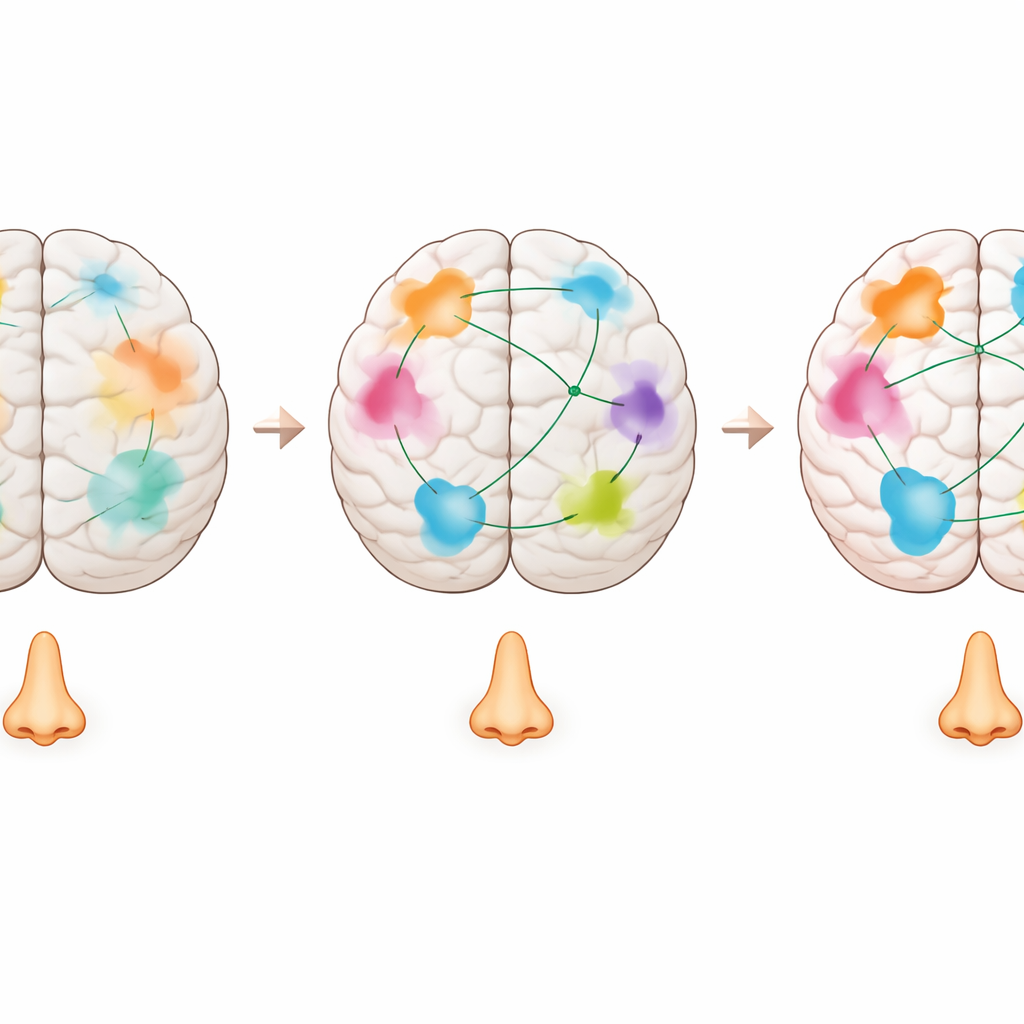
About half of the original group, 54 people, returned roughly a year later for repeat testing. By this time, more participants had recovered their sense of smell, but a substantial share still had lingering dysfunction. Importantly, when the researchers again compared people with and without smell problems at this second visit, the earlier cognitive gap had largely disappeared. Those who had started out with smell loss showed improvement in several areas, including verbal fluency, speeded tasks, and memory for stories, and their performance now matched that of peers whose smell had been normal all along. Statistical analyses of change over time suggested that while the initial deficits were real, the degree of improvement did not dramatically exceed that seen in the comparison group, pointing to a gradual, population‑wide cognitive recovery rather than a dramatic rebound in only one subgroup.
What this means for people living with long COVID
The study offers a nuanced but hopeful message. During the first few years after COVID-19, people with persistent smell loss often experience measurable thinking and memory problems, echoing what many describe as brain fog. Yet the findings suggest that these cognitive difficulties tend to ease over time, even when smell does not fully recover. In other words, ongoing changes in smell do not necessarily signal permanent damage to thinking abilities. At the same time, because this was a relatively small, exploratory study with some participants lost to follow-up, the authors stress the need for larger, longer-term research. For now, their results indicate that while long‑COVID brain fog is real and linked to smell loss early on, the brain appears capable of substantial recovery, offering reassurance to patients worried about lasting mental decline.
Citation: Saak, T.M., Tervo, J.P., Jacobson, P.T. et al. Longitudinal evaluation of neurocognitive outcomes in a cohort with persistent post-COVID olfactory dysfunction. Sci Rep 16, 12499 (2026). https://doi.org/10.1038/s41598-026-39663-5
Keywords: long COVID, smell loss, brain fog, cognitive recovery, neurocognition