Clear Sky Science · en
Lay beliefs about the badness, likelihood, and importance of human extinction
Why the End of Humanity Matters to Everyday Life
Human extinction sounds like the stuff of science fiction, but it would mean the loss of everything humans have built and everyone who might ever live. This paper asks a surprisingly down-to-earth question: what do ordinary people actually believe about the chances of human extinction, how bad it would be, and how much effort society should spend to prevent it compared with familiar problems like health care, poverty, or education?
How People Feel About Humanity Disappearing
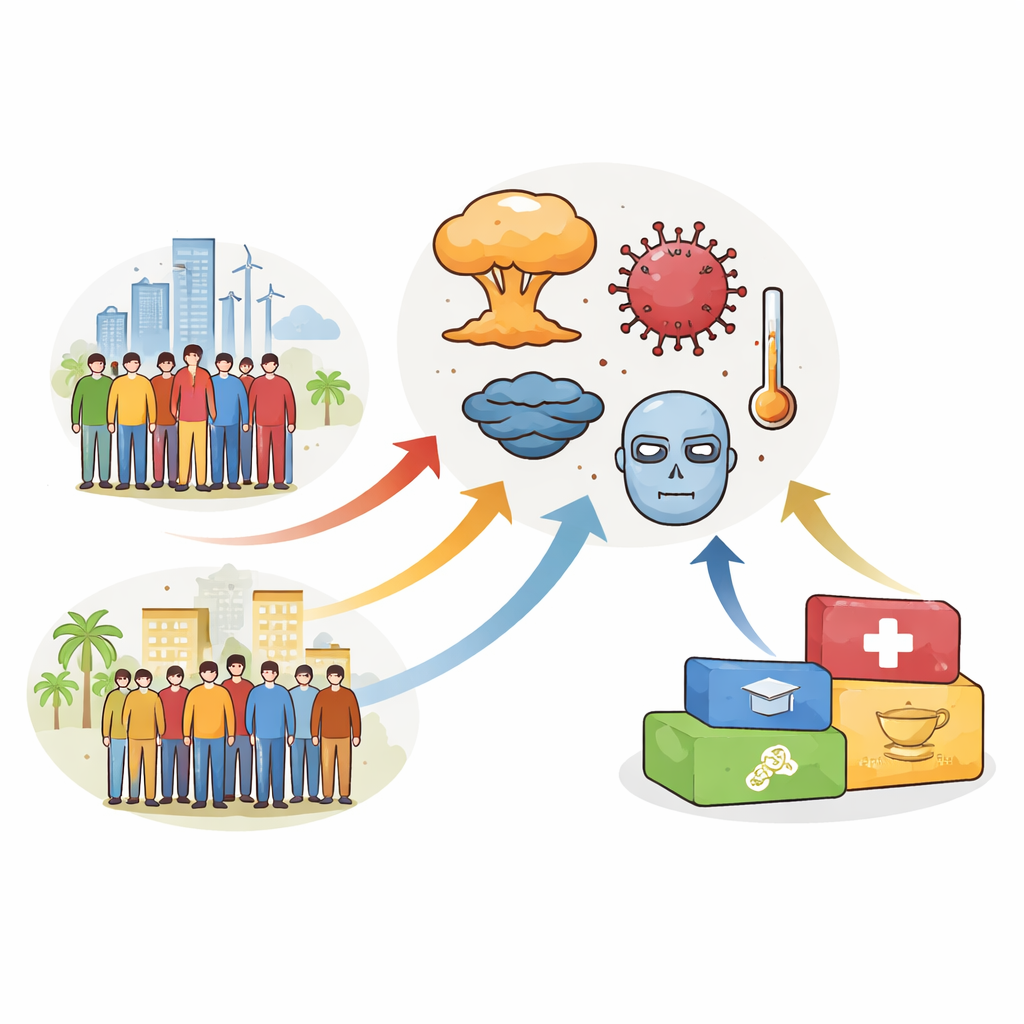
The researchers surveyed more than 2,000 people in the United States and China to probe their attitudes toward human extinction in general, without focusing on any single cause such as nuclear war or runaway climate change. Most respondents said that the permanent end of humanity in the next century would be a bad outcome, and many rated it as very bad. They gave several reasons: it would wipe out all human progress, betray a duty to protect future generations, and, in many imagined scenarios, involve enormous suffering for those who die. Even when people imagined a painless end, they still tended to judge extinction as bad because of what would be lost forever.
Can We Do Anything About It, and Should We?
People in the studies generally believed that human extinction is not inevitable and that society can meaningfully reduce the risks. A strong majority thought that there are at least some actions humanity could take to lower the chances, and many said governments in particular have the power to make a real difference. When asked about spending, respondents thought far more of the world’s resources should go toward preventing extinction than they believed is currently being spent. At the same time, when forced to compare extinction prevention with other priorities, they did not place it at the very top of the list.
How People Judge the Chances and Set Their Priorities
Respondents gave surprisingly high estimates of the likelihood that humanity could go extinct this century. The typical American in these surveys put the chance at around 5 percent, while the typical respondent in China put it closer to 15 percent—figures broadly in line with some expert forecasts. Yet people said the risk would have to be much higher before they would consider it the single most important task for governments and society. On average, they felt extinction would need to be roughly one-third likely this century before it deserved absolute top priority. As a result, when they ranked different issues, participants generally placed extinction prevention below improving health care, reducing poverty, and strengthening education, though above matters like transportation and car safety.
Why Rational Arguments Did Not Change Minds
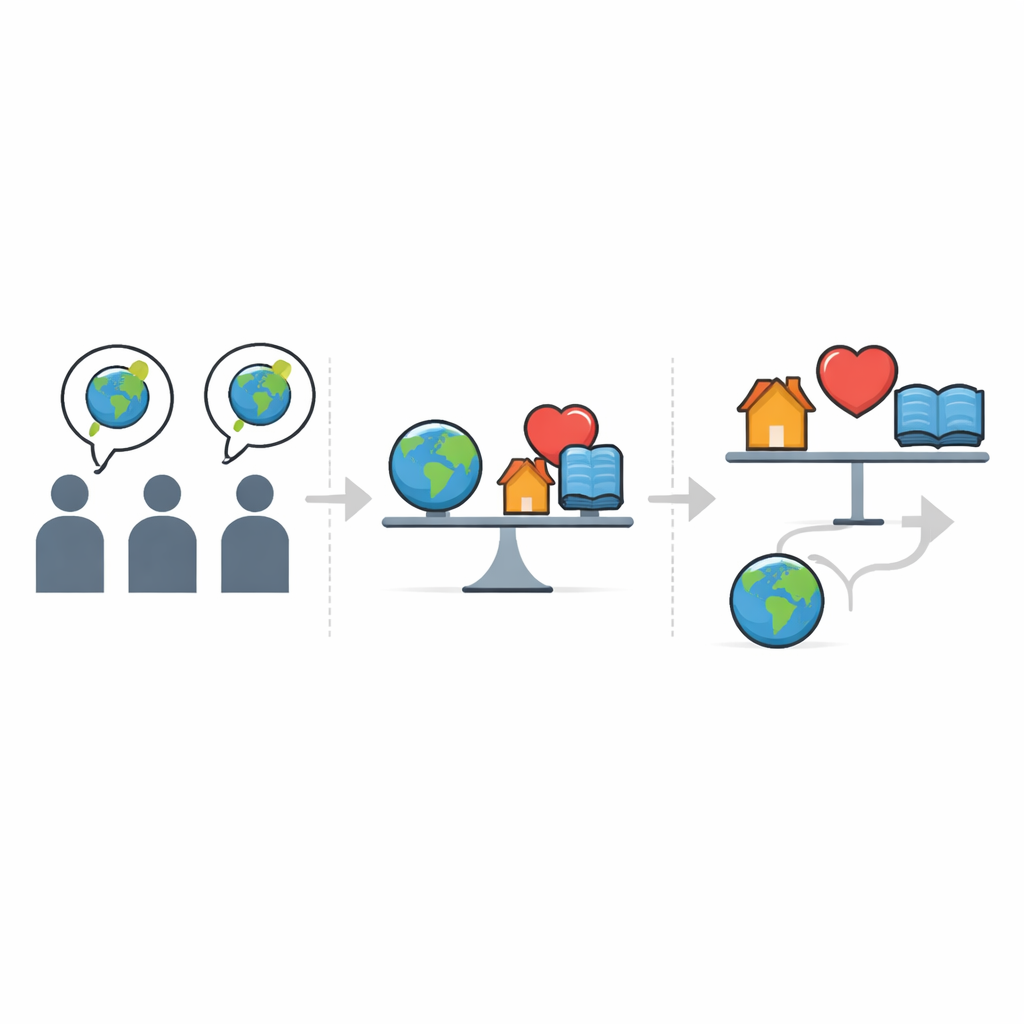
To explore whether people’s views could be shifted by reasoning, the authors ran two experiments. In one, they used a technique that first asked about saving a single city before asking about saving all of humanity, which successfully lowered the minimum risk people said was needed for extinction prevention to be the top priority. In another, they trained participants in a simple “expected value” way of thinking that weighs how likely an event is against how big its impact would be. This training even led people to lower their estimates of how likely extinction is. However, in both experiments, these changes in numbers did not translate into changes in how participants ranked extinction prevention relative to other social issues. Their sense of what should matter most seemed largely unmoved by abstract reasoning.
What This Means for Our Shared Future
Overall, the study suggests that people do see human extinction as bad and believe that reducing its risk is a real societal priority, deserving more resources than it currently gets. But they also view it as only one important problem among several, not the one that should overshadow all others. Moreover, their priorities appear fairly stable, resisting attempts to reshape them with logical arguments about risk and long-term consequences. For anyone trying to build support for policies that address global catastrophic risks, this research implies that appealing to raw calculations may not be enough; understanding the deeper values and intuitions behind people’s priorities will be just as crucial.
Citation: Coleman, M., Caviola, L., Lewis, J. et al. Lay beliefs about the badness, likelihood, and importance of human extinction. Sci Rep 16, 10020 (2026). https://doi.org/10.1038/s41598-026-39070-w
Keywords: human extinction, global catastrophic risk, public attitudes, risk perception, societal priorities