Clear Sky Science · en
Rumen bacteria, feed utilization, and milk production of Damascus goats fed different levels of azolla meal
Why a Tiny Water Fern Matters for Goat Milk
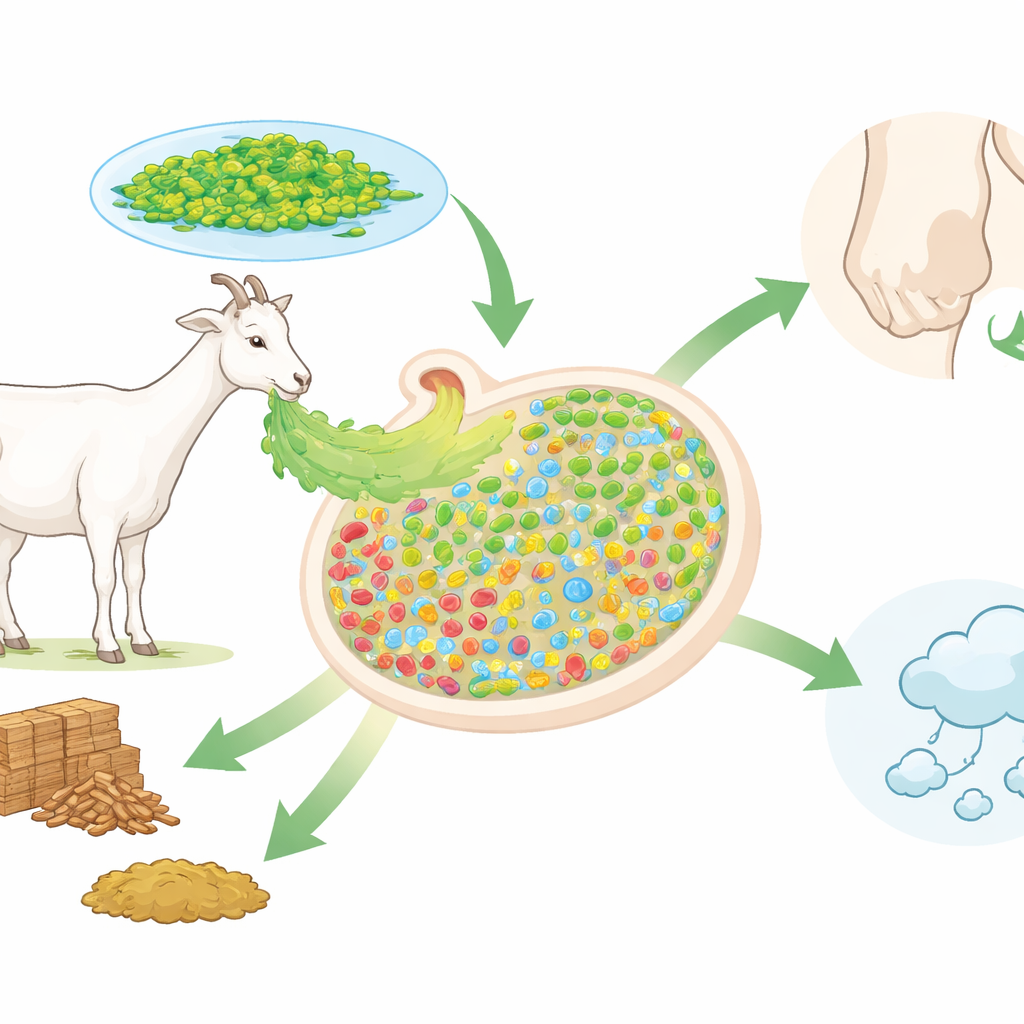
Feeding farm animals is getting harder and more expensive as climates change and traditional feeds become less reliable. This study explores whether a small floating water fern called Azolla can partly replace standard grain-based feed for dairy goats. The researchers wanted to know if Azolla could keep goats healthy, change the microbes in their stomachs in useful ways, and even boost milk production while cutting feed costs and environmental impact.
A New Kind of Feed for Hardy Goats
Goats are already champions at coping with harsh, dry environments and poor-quality forage, which makes them vital for food security in many regions. The team worked with 32 lactating Damascus goats and divided them into four groups. All animals received the same base diet of concentrate feed and clover hay, but in three groups the researchers replaced part of the concentrate with dried Azolla. These goats received 10%, 20%, or 30% Azolla in place of the usual concentrate mix, while a control group received none. Over 100 days, the scientists carefully tracked what the goats ate, how well they digested it, what was happening inside their stomachs, and how much milk they produced.
Inside the Goat’s “Fermentation Vat”
Like cows, goats rely on a large stomach compartment called the rumen, home to an immense community of bacteria that break down tough plant fibers. The researchers collected rumen fluid from the goats and used DNA-based methods to identify which microbes were present and how diverse they were. Adding Azolla made the rumen community richer and more varied. Two major groups of bacteria, Bacteroidota and Firmicutes, remained dominant, but important shifts occurred. Bacteria known for digesting fiber, such as Prevotella, Ruminococcus, and the Christensenellaceae R-7 group, were more abundant in goats eating Azolla. At the same time, potentially troublesome microbes such as Escherichia-Shigella and some spiral-shaped bacteria declined when Azolla was included, suggesting a healthier and more stable internal ecosystem.
From Microbes to Energy and Emissions
These microbial changes showed up in the rumen’s chemistry. The Azolla-fed goats produced more volatile fatty acids—simple energy-rich molecules like acetate, propionate, and butyrate that serve as the animal’s main fuel source. Despite this, overall feed intake and most measures of digestibility stayed similar among groups. One exception was protein digestion, which dropped at the highest Azolla level, likely because plant compounds in Azolla bind to protein and make it harder for microbes to access. Interestingly, the patterns of fermentation hinted at a climate benefit: goats given Azolla were predicted to generate less methane per unit of feed. That is important because methane from ruminant animals is a major greenhouse gas and also represents energy lost instead of turned into milk or meat.
Milk Output and the Sweet Spot
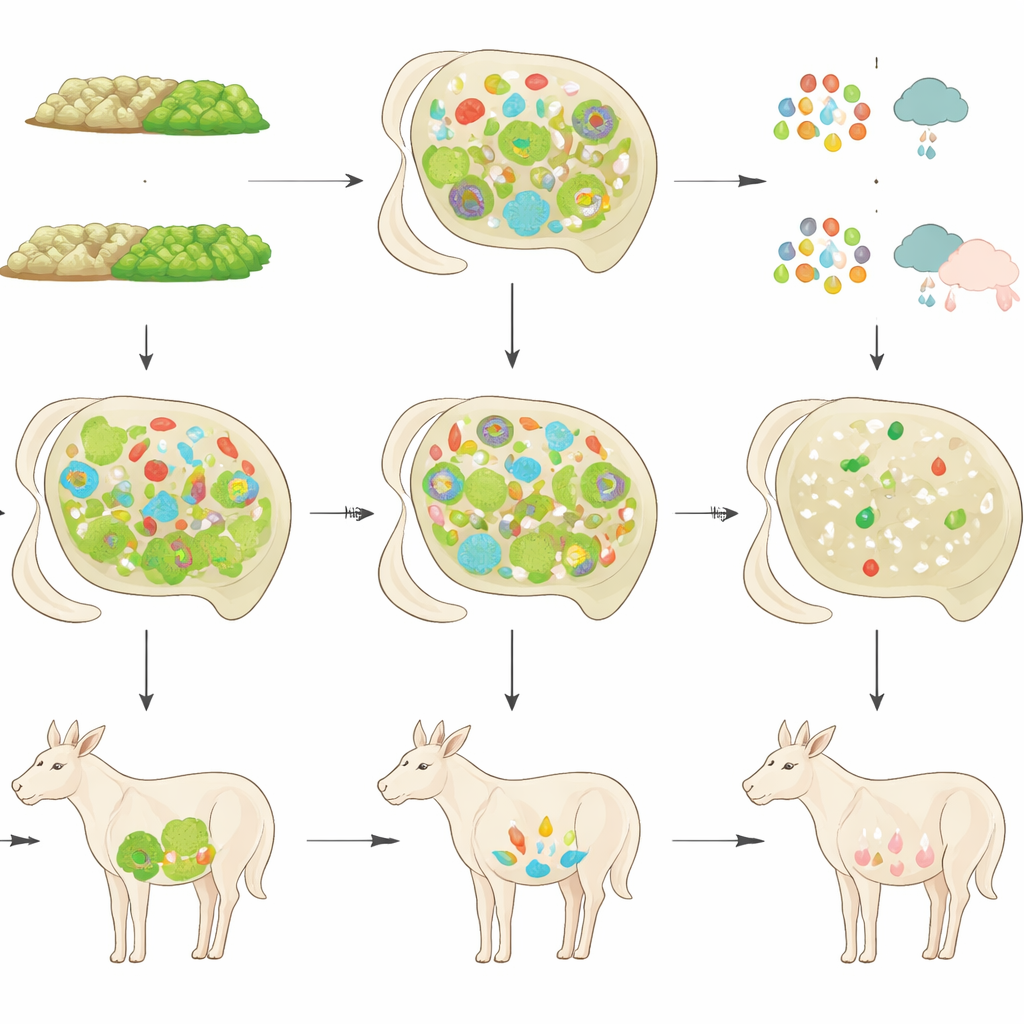
For farmers, the most practical question is simple: does Azolla help produce more milk? Here, the medium level of Azolla replacement—20% of the concentrate feed—stood out. Goats on this diet made more milk and more fat-corrected milk than the control group, without any notable change in milk fat, protein, or sugar percentages. Their feed efficiency, meaning how much milk they produced per kilogram of feed eaten, was also the best. At 10% Azolla, the goats showed modest gains. But when Azolla was pushed to 30%, the benefits faded: protein digestion dropped further and both milk yield and feed efficiency declined, showing that more is not always better.
What This Means for Farmers and the Planet
To a lay reader, the message is clear: in this study, Azolla worked best as a partial, not total, replacement for standard goat concentrates. At around 20% of the concentrate mix, Azolla helped rumen bacteria shift toward fiber-loving, energy-generating species, increased the useful fermentation products that fuel the animal, reduced predicted methane losses, and improved milk yield without harming milk quality. At very high levels, however, Azolla’s natural plant chemicals likely interfered with protein use and limited performance. Overall, the findings suggest that moderate inclusion of Azolla can be a practical, home-grown way to cut dependence on costly conventional feeds, support milk production, and lessen the environmental footprint of dairy goats—especially in regions facing feed shortages.
Citation: Abd-Elgwad, A.F.A., Bakr, S.A., Sabra, E.A. et al. Rumen bacteria, feed utilization, and milk production of Damascus goats fed different levels of azolla meal. Sci Rep 16, 13279 (2026). https://doi.org/10.1038/s41598-026-38113-6
Keywords: Azolla feed, lactating goats, rumen microbes, milk yield, methane emissions