Clear Sky Science · en
A Dataset of University Students' Stress and Anxiety Levels based on Questionnaires and Wearable Sensors
Why this matters for students and parents
Stress and anxiety are a daily reality for many university students, quietly shaping their grades, sleep, and even whether they stay in school. Yet most of what we know about student mental health comes from occasional surveys that miss the ups and downs of real life. This study introduces a new open dataset that tracks students across an entire semester using both daily check in questions and wearable devices, offering a more detailed picture of how campus life and mental strain move together. 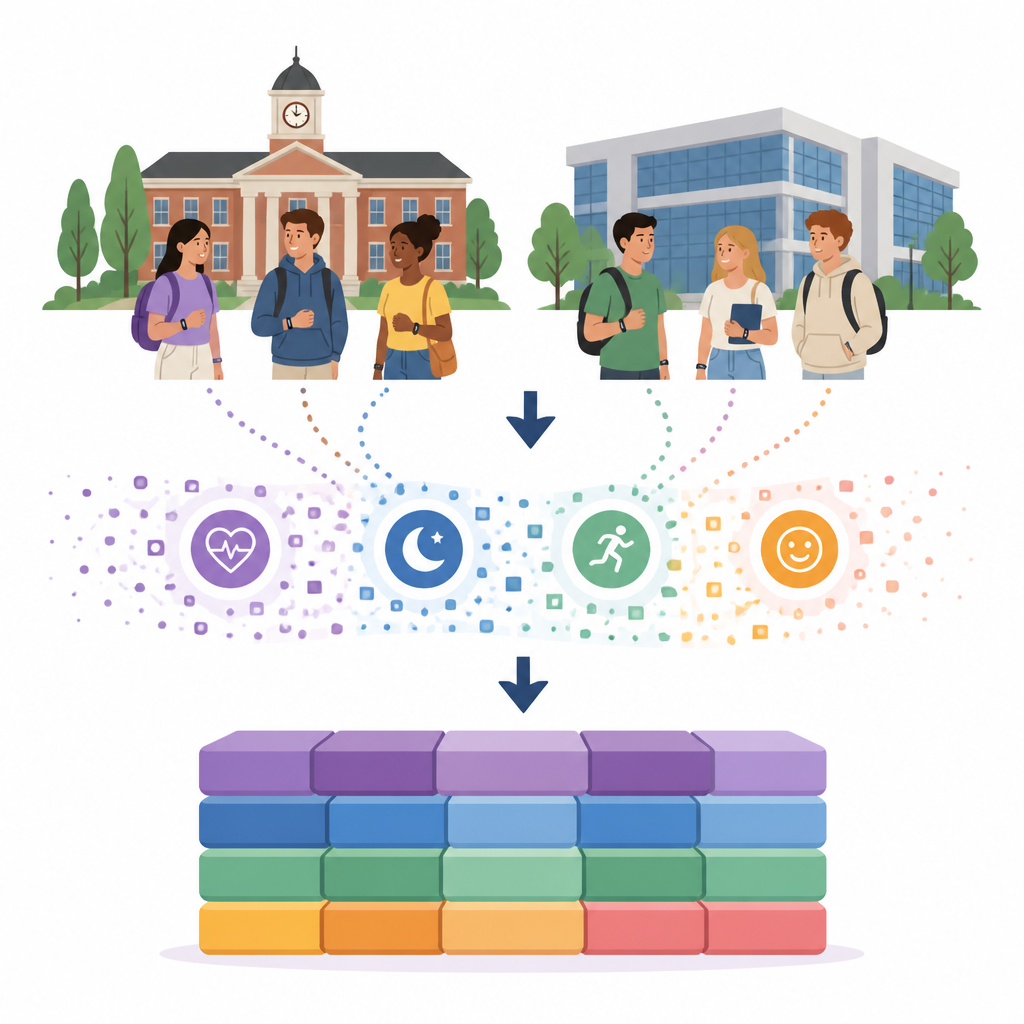
Student life under quiet pressure
University years are often described as exciting and full of opportunity, but they can also be marked by constant pressure. Students juggle heavy coursework, money worries, changing social circles, and uncertainty about their future. Previous research shows that many undergraduates and graduate students report moderate to severe stress and anxiety, which are linked to lower grades, missed classes, and a higher chance of dropping out. First year students seem especially at risk, and medical and health science students often face an even higher load due to clinical duties and long training paths.
From one time surveys to daily tracking
Most existing studies still depend on rare, look back style questionnaires or clinic visits. These tools capture only a snapshot of how students feel and are vulnerable to memory gaps, since people must recall how they felt over days or weeks. They also miss those in greatest distress, who may not answer long surveys at all. In contrast, new wearable devices can quietly collect heart and activity signals around the clock in everyday settings. Combined with short daily questions, they promise a way to follow stress and anxiety as they rise and fall through exams, holidays, and ordinary weeks.
How the new dataset was built
The authors created the SSAQS dataset by following undergraduate volunteers from two Mexican universities over one semester from February to July 2025. Students in computer science and mathematics engineering courses were invited to join, gave informed consent, and could leave the study at any time. They watched a video and attended a talk from a psychologist to clarify what stress and anxiety mean. Each evening between 8 and 10 pm they received a short phone questionnaire asking them to rate their average stress and anxiety during that day on a 0 to 100 scale. Reminder alerts helped keep response rates high, and on average students answered more than 80 percent of the daily questions.
What the wearables recorded
Alongside the questionnaires, each participant wore a Fitbit Inspire 3 device day and night. The watches collected measures related to daily movement, sleep, and body signals. These included activity level categories such as sedentary or very active, heart rhythm changes during sleep, estimated oxygen saturation at night, minutes spent in deep sleep, daily step counts, and a stress score produced by Fitbit based on several internal signals. The data were downloaded monthly by students, anonymized with scripts, and organized into separate files per person, with precise timestamps that allow researchers to line up physical patterns with self reported feelings. 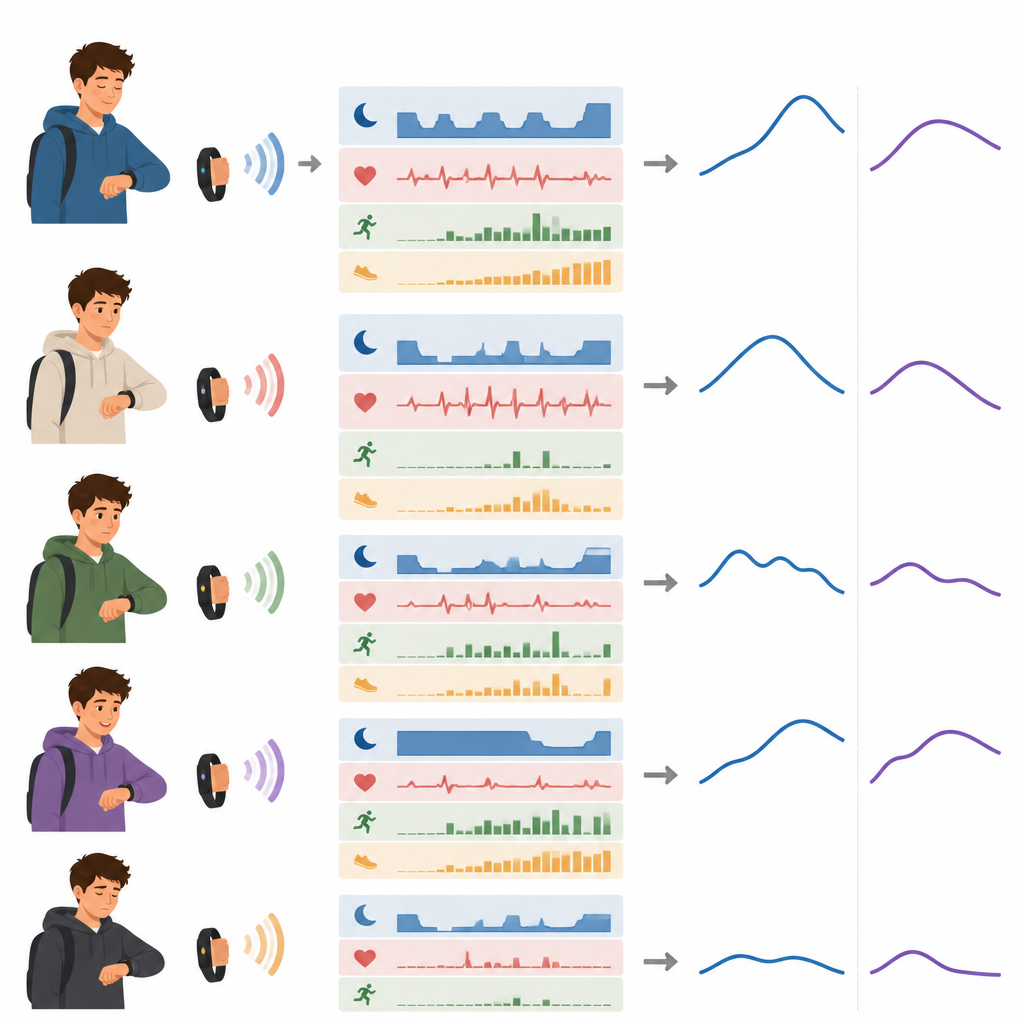
Checking data quality and limits
The team carefully examined the data to understand its strengths and weak spots. Histogram plots showed that most values fell in realistic ranges, though some oxygen readings clustered at low values that likely reflect times when students removed the device. The Fitbit stress score contained many zero values marked as failed calculations, which the authors recommend filtering out. When the researchers compared daily averages of the device based stress score with the students own stress ratings, the correlation was very low. This suggests that what the watch senses in the body and what students feel in their minds do not always move together, and each offers a different window on stress.
What this resource offers for the future
The SSAQS dataset fills an important gap by providing a public, semester long record of stress and anxiety related signals in real campus life, and it is one of the first such resources from Latin America. Researchers in mental health, data science, and wearable technology can now test and compare methods for detecting stress, explore how sleep, movement, and mood interact, and design smarter tools to support students before problems escalate. While the data rely in part on proprietary algorithms and daily summary ratings, they offer a rich starting point for building more precise and fair systems to understand and ease the mental load carried by university students.
Citation: Garcia-Ceja, E., Alvarado-Uribe, J., Escamilla-Ambrosio, P.J. et al. A Dataset of University Students' Stress and Anxiety Levels based on Questionnaires and Wearable Sensors. Sci Data 13, 732 (2026). https://doi.org/10.1038/s41597-026-07085-7
Keywords: student stress, anxiety, wearable sensors, Fitbit data, mental health monitoring