Clear Sky Science · en
Modifiable risk factors attenuated longevity genetic predisposition on life expectancy in the oldest old
Why this study matters for long life
People often wonder whether their lifespan is written in their genes or shaped by everyday choices. This study followed more than 1500 adults in China who were at least 80 years old, many of them over 100, to see how much healthy habits and medical risk factors still matter at such advanced ages. The researchers show that even in our later years, how we live can add many years to life, and in some cases can outweigh the advantages of “long life” genes. 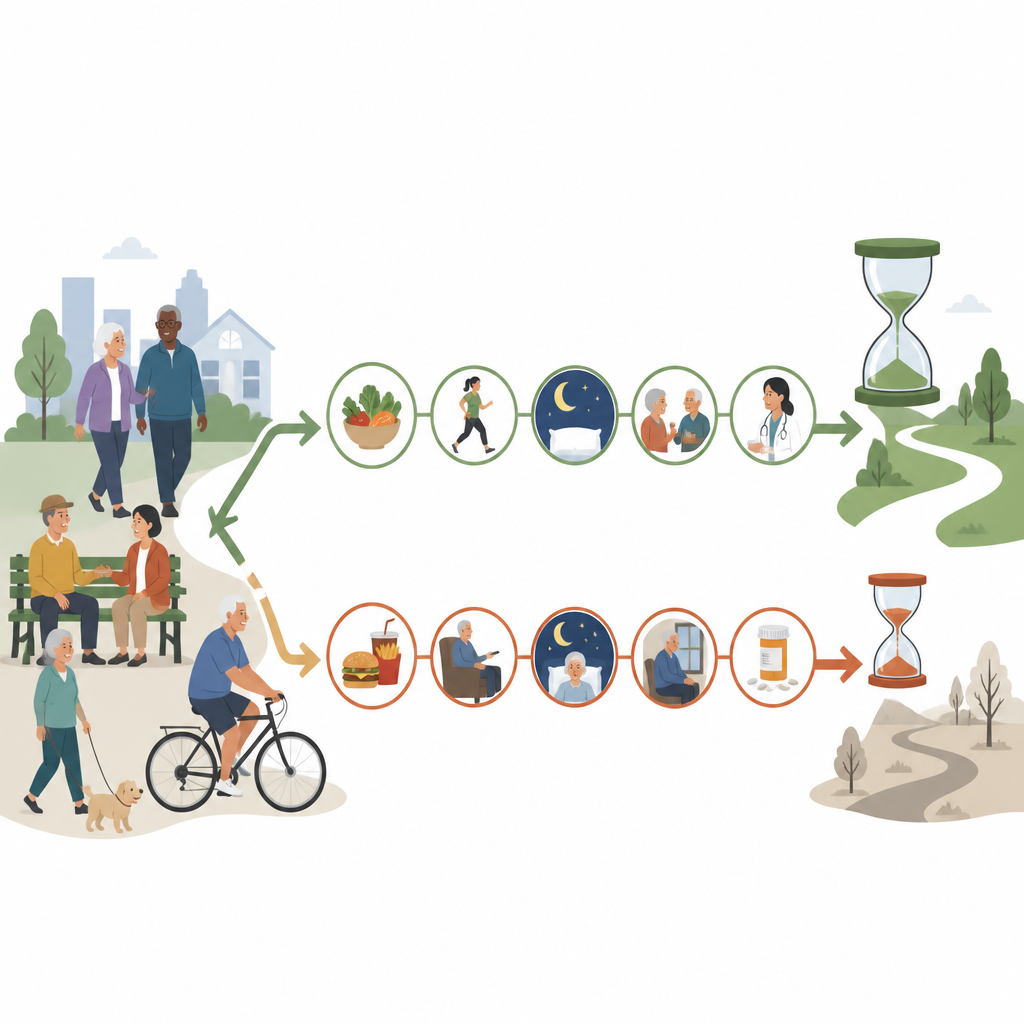
Who was studied and what was measured
The research drew on the China Hainan Centenarian Cohort Study, one of the largest single-center groups of very old adults in the world. Participants were between 80 and 116 years old when they entered the study. Each person answered detailed questions and had exams covering education, mood, smoking and drinking, exercise, diet, sleep, weight, blood sugar, blood pressure, and blood fats. From these 11 items the team built a modifiable risk factor score, where a low score meant a more favorable health profile. They also used genetic data to build a polygenic risk score, which summarizes how strongly a person’s many small gene variants are linked with exceptional longevity.
How lifestyle and medical factors affected survival
Participants were followed for just over four years on average, during which 1020 deaths occurred. Those with a favorable modifiable risk profile had a 40 percent lower risk of death compared with those with an unfavorable profile, even after accounting for age, sex, existing major illnesses, and genetic predisposition. The relationship was graded: as the risk factor score worsened, the chance of dying rose steadily. The finding held up across many additional checks, including using a simpler unweighted score and examining different subgroups by age, sex, work history, marital status, and disease history.
What role genes played in long life
The polygenic risk score for longevity also mattered. People with a higher genetic predisposition to long life had about a 13 percent lower risk of death than those with lower genetic predisposition. However, the genetic score and the modifiable risk score were largely independent of one another. Some individuals had both favorable genes and favorable habits, while others had one but not the other. This separation allowed the researchers to clearly see how these two forces combine to influence survival.
When genes and habits work together
Looking at genes and modifiable factors jointly revealed the most striking results. Participants who had both a favorable risk profile and a high longevity genetic score had the lowest death rates of all. At age 80, this group was estimated to live about 18.3 more years on average, compared with 11.4 more years for those with both an unfavorable risk profile and a low genetic score, a difference of nearly seven additional years. Crucially, people with good genes but an unfavorable modifiable profile did not live longer than those with poor genes, showing that unhealthy habits and medical risks can cancel out much of the benefit of a favorable genetic hand. 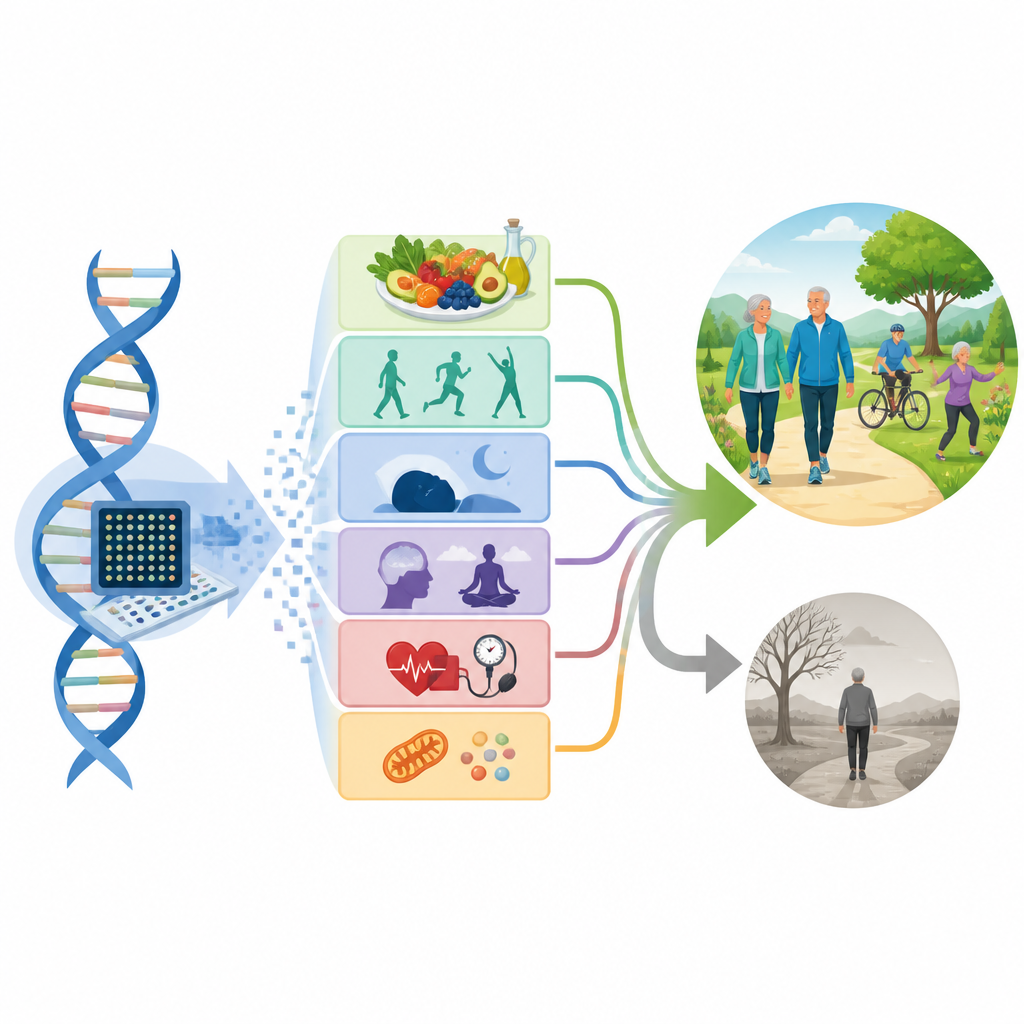
What this means for adding years to life
The study’s message for the public is clear: it is not too late, even at 80 or 100, to gain meaningful years of life by improving everyday health factors. Managing mood, staying active, eating well, sleeping adequately, and controlling weight, blood pressure, blood sugar, and blood fats were all part of the favorable profile linked to longer survival. While our genes do contribute to how long we may live, this research in some of the world’s oldest adults shows that practical, modifiable factors remain a powerful lever for extending life expectancy and improving the chances of reaching very old age.
Citation: Chen, S., Han, K., Wang, S. et al. Modifiable risk factors attenuated longevity genetic predisposition on life expectancy in the oldest old. npj Aging 12, 66 (2026). https://doi.org/10.1038/s41514-026-00393-7
Keywords: longevity, healthy aging, modifiable risk factors, genetics, life expectancy