Clear Sky Science · en
Educational disparities in STEM during COVID-induced distance learning and a potential strategy to address them
Why this story matters
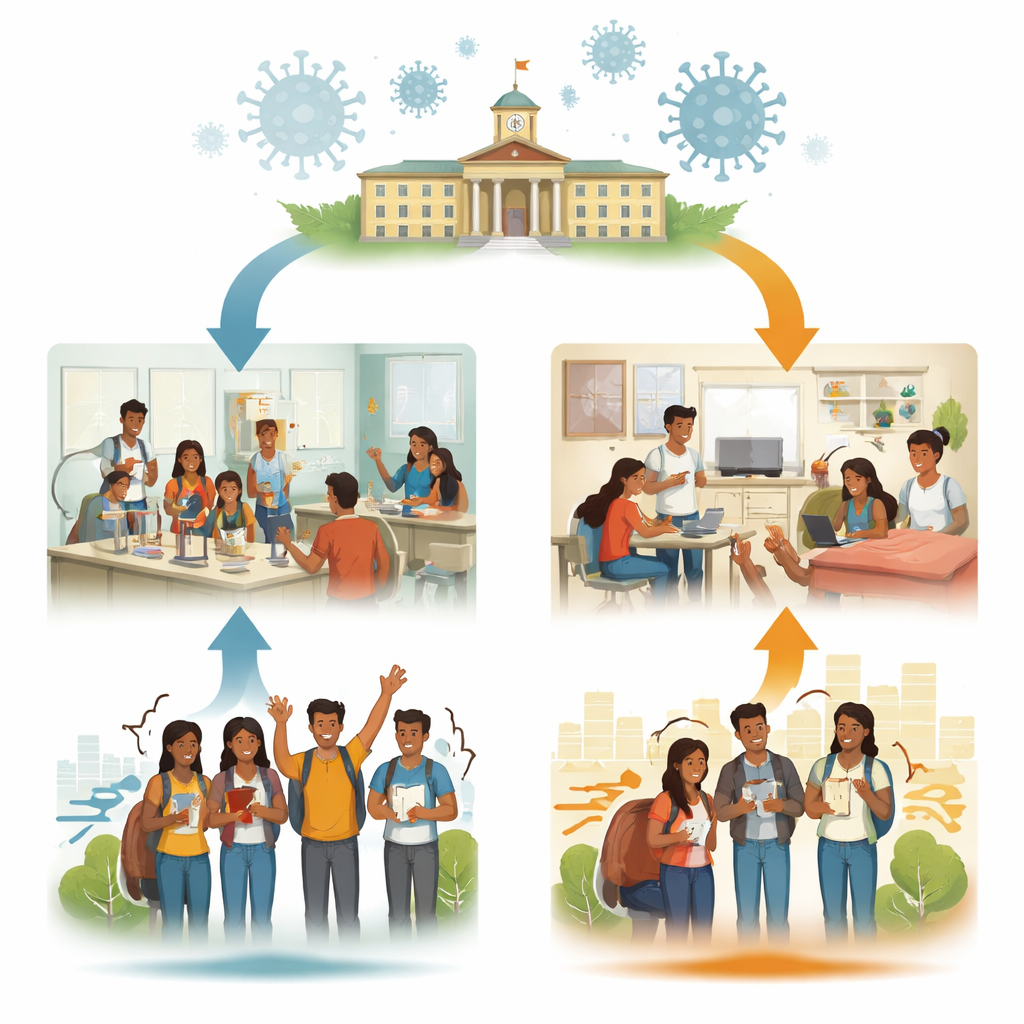
The sudden shift to online classes during the COVID-19 pandemic raised worries that some college students might be left further behind, especially in demanding science and math courses. This study follows more than 600,000 course records from a large U.S. public university to ask two big questions: Did COVID-era distance learning widen achievement gaps in STEM, and if so, can smarter course design help close them? The answers shed light on how universities can make online and hybrid learning fairer for students from less advantaged backgrounds.
Who faces the steepest climb
The researchers focus on two groups of undergraduates who already face hurdles in higher education: low-income students (from families earning less than $25,000 a year) and first-generation students (whose parents do not hold a four-year degree). Nationally, these students are less likely to finish college on time and less likely to complete degrees in STEM fields, which are often gateways to stable, high-paying jobs. Low-income and first-generation students tend to have fewer academic resources, more family obligations, and less access to technology. All of these challenges can be intensified when learning moves from campus labs and classrooms into crowded homes and unstable internet connections.
What the data reveal about online STEM learning
Using detailed records from 2016 to 2022, the authors compare grades in STEM courses taught in person, at a distance, and in hybrid formats. Rather than looking only at average performance, they zoom in on the bottom fifth of students in each course—the ones at greatest risk of failing, landing on academic probation, or dropping out. They find that when STEM classes shifted online during COVID-19, students in this lower-performing group saw their grades fall more sharply if they were low-income or first-generation. For these students, distance learning was linked to additional drops of about 0.11 and 0.06 grade points, respectively, compared with similar peers who were not low-income or not first-generation.
Why small grade drops can have big consequences
On a four-point grading scale, a tenth of a point might sound minor, but for students already clustered around a 2.0 average—the threshold for good academic standing at many colleges—such a loss can be pivotal. The study notes that the mean grade in the bottom fifth of STEM students was about 2.48 overall, and even lower for those who were low-income or first-generation. A further decline of a few hundredths to a tenth of a point can be the difference between meeting minimum requirements for key courses and being placed on academic probation, which can delay graduation. The negative impact of distance learning was especially strong in lab- and math-heavy areas like physical and natural sciences, engineering, and health-related fields, where hands-on work and specialized tools are harder to replicate online.
A classroom redesign that made a difference
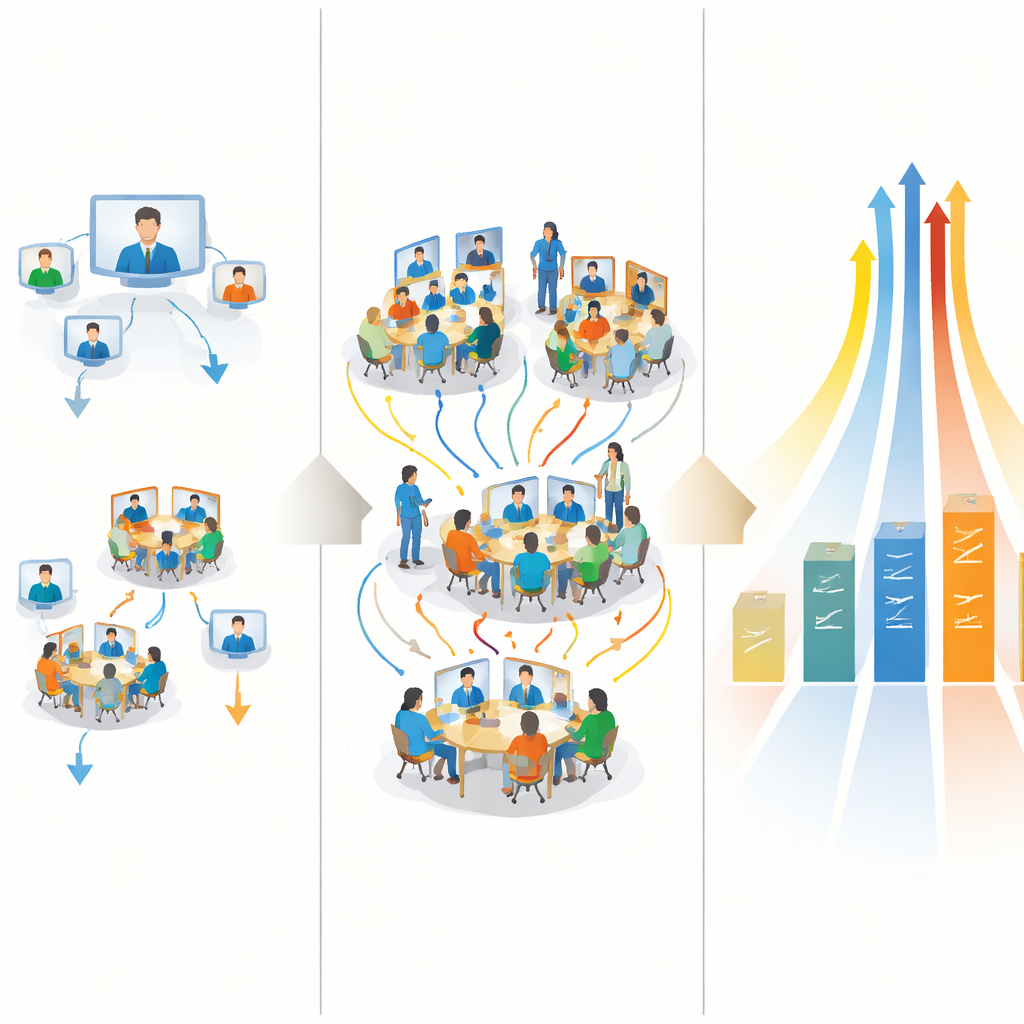
The researchers then investigate an introductory physics course that had been overhauled as part of a teaching initiative called the Foundational Course Initiative. In these special sections, students worked in small, stable groups with learning assistants, spent more class time on problem-solving instead of lectures, and continued to interact frequently with instructors and classmates even when the course moved online using tools like video breakout rooms and virtual collaboration spaces. Comparing these sections with standard versions of the same course, the authors find that the extra structure and interaction were associated with a much weaker negative link between distance learning and grades for low-income and first-generation students. In other words, when the course was intentionally designed to support collaboration and instructor contact, disadvantaged students’ performance during online terms more closely matched that of their better-resourced peers.
What this means for the future of college learning
This work suggests that the problem is not online learning itself, but how it is implemented—especially for students with fewer resources. COVID-era distance learning, as it was hastily rolled out, appears to have widened grade gaps in STEM for students already struggling near the bottom of the grading scale. Yet the success of the redesigned physics course shows that thoughtful choices—such as building in regular peer discussion, close instructor support, and systems that monitor progress—can narrow those gaps even when classes are remote. For colleges and universities likely to keep offering online and hybrid options, the lesson is clear: with deliberate design focused on interaction and support, STEM education can be made more equitable rather than less.
Citation: Man, R., Li, J. & Tan, K.M. Educational disparities in STEM during COVID-induced distance learning and a potential strategy to address them. Nat Commun 17, 3239 (2026). https://doi.org/10.1038/s41467-026-69925-9
Keywords: STEM education, distance learning, low-income students, first-generation students, COVID-19 pandemic